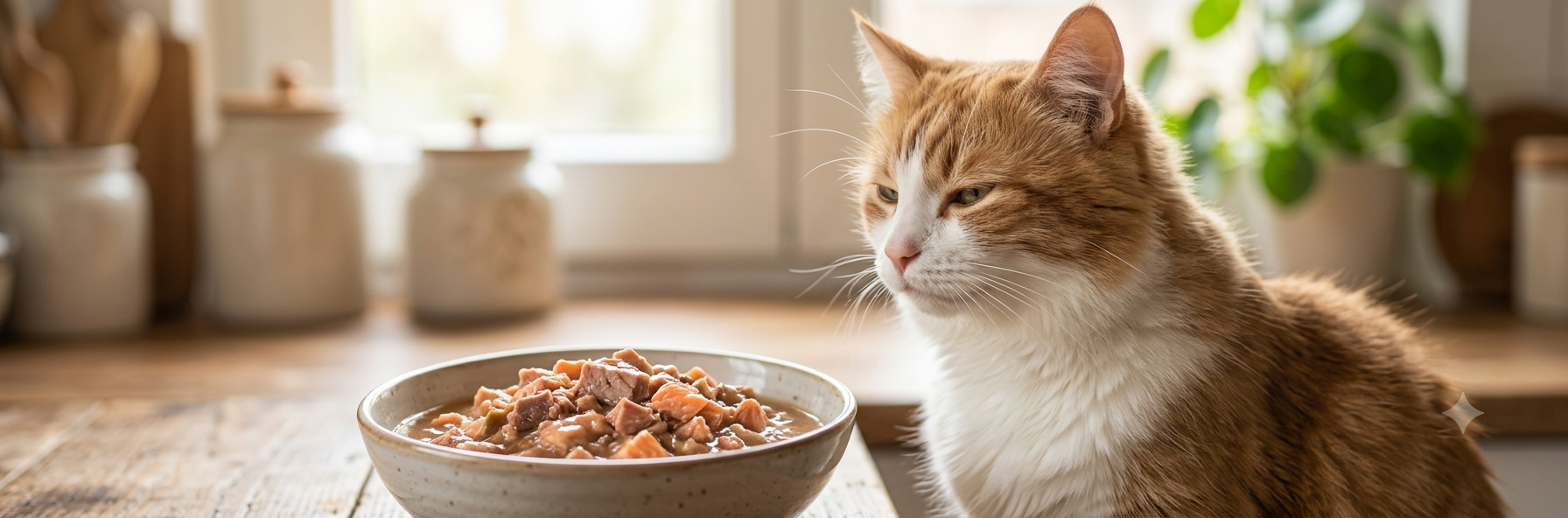
You open a fresh, premium can of wet food. It boasts human-grade ingredients, an optimal protein-to-fat ratio, and stellar online reviews. You confidently place the bowl on the floor, expecting your feline companion to rub against your legs in gratitude. Instead, your cat walks over, sniffs the meal with an expression of pure disgust, performs a symbolic scratching motion on the floor to “bury” it, and stalks away.
It is a frustrating cycle that almost every cat owner experiences. Why do felines turn up their noses at premium options? The truth is that cats do not care about price tags, marketing, or human health trends. Understanding the psychology and biology of feline appetite is the secret to ending the dinner-time standoff.
The Biology Behind Feline Pickiness
To fix your cat’s eating habits, you must first realize they are not trying to be dramatic. Their ancestral programming drives their refusal of specific meals.
Texture and Mouthfeel Triumph Over Flavor
Humans possess around 9,000 taste buds, while dogs have about 1,700. Cats have a mere 470. Because their sense of taste is limited, they rely heavily on texture and mouthfeel. If a premium food is too dense, too sticky, too watery, or too smooth, a cat will reject it instantly. Many cats develop a preference for specific textures, like smooth pâtés or minced pieces in gravy, during their first year of life. If you introduce a new texture abruptly, they simply do not recognize it as food.
The Power of Scent and Temperature
Since taste is a minor factor, scent does the heavy lifting. A cat’s sense of smell is roughly fourteen times stronger than a human’s. If a meal does not smell strongly of animal fat or fresh meat, it is a non-starter. Temperature also plays a massive role. In the wild, wolves, lions, and domestic cats eat prey that is freshly killed and warm. Cold food straight from the refrigerator signals to their brain that the meat is old or unsafe.
Neophobia: The Fear of the New
Cats are creatures of habit. Neophobia is an evolutionary survival mechanism where an animal rejects unfamiliar food to avoid poisoning. If your cat grew up eating a specific commercial brand, switching them to a premium, natural formula can trigger this defense mechanism.
Decoding Commercial Food vs. Premium Nutrition
The most common reason a cat rejects high-quality options is that they are essentially addicted to lower-grade commercial formulas. Many mainstream options are heavily coated with animal digests, artificial flavor enhancers, and fats designed to make the food hyper-palatable. It is the feline equivalent of fast food.
When you switch to a premium formula, these artificial enhancers are missing. The food smells different, looks different, and lacks the intense chemical scent your cat associates with mealtime. To successfully make the switch, you need options that rely on clean, meat-first palatability.
When looking for the best wet cat food, prioritizing pure meats, natural broths, and minimal fillers will align with your cat’s natural biological needs. Instead of relying on random choices, reading structured wet cat food reviews can reveal which textures and protein sources consistently appeal to finicky eaters.
Top-Tier Wet Cat Food Options for Discerning Felines
If you are looking to restock your pantry with premium solutions that target different feline preferences, several highly-rated options cater directly to picky palates.
Weruva Wx Phos Focused Hydrating Purée
For cats that are exceptionally sensitive to texture, chunky meats can sometimes be a deterrent. Weruva focuses on ultra-smooth, hydrating purées that glide easily off the tongue. The Tilapia & Tuna Formula provides a highly aromatic, smooth texture that mimics the moisture-rich diet cats naturally crave, making it an excellent transitional food for felines who dislike traditional dense pâtés.
Natural Balance Original Ultra Indoor Canned Formula
If your cat prefers a classic, structured meal but turns away from low-quality fillers, this chicken-based formula offers a balanced, nutrient-dense profile. It focuses on high-quality real meat proteins without the aggressive artificial flavorings that disrupt a cat’s digestive tract, making it a reliable staple for indoor cats who need weight maintenance and clean energy.
Tiki Pets Cat Born Carnivore Toppers
Sometimes, you do not need to replace the entire meal; you just need to alter the scent profile to kickstart their appetite. Utilizing a functional topper, such as the Salmon Skin & Coat formula, adds a burst of fresh, fish-derived aroma and moisture to the bowl. This tricks the feline nose into recognizing the meal as fresh, high-value prey.
Practical Fixes for the Picky Eater
Transitioning your cat to a healthier diet requires strategy rather than a battle of wills.
1. Ditch the Free-Feeding Method
Leaving dry kibble out all day creates a perpetually semi-satiated cat. A cat that is never truly hungry has zero incentive to try something new or challenging. Move your cat to scheduled feeding windows two to three times a day. When the food bowl is only available for twenty minutes, your cat will approach mealtime with a sharper appetite.
2. Warm It Up
Never serve wet food straight from the fridge. Microwave the portion for a few seconds or mix in a tablespoon of warm water or bone broth to bring it up to body temperature (around 38°C). Warming the food releases the natural fat aromas, making it instantly more attractive to your cat’s olfactory senses.
3. The Gradual Micro-Mix
Do not switch foods overnight. Start by adding a microscopic amount of the new premium food—think half a teaspoon—directly into their favorite old food. Thoroughly blend them so the cat cannot separate the textures. Over the course of two weeks, slowly increase the ratio of the new food while decreasing the old one. This bypasses their neophobic defense mechanisms.
4. Play with Elevation and Bowls
Cats are prone to whisker fatigue, a stressful sensation caused when their highly sensitive whiskers constantly rub against the sides of a deep food bowl. Switch to a flat, shallow dish or a wide saucer. Additionally, raising the bowl a few inches off the ground can create a more comfortable, ergonomically natural eating posture for older or anxious cats.
FAQS
Why does my cat scratch the floor around the food bowl?
This is an instinctual behavior known as caching. In the wild, cats bury their leftover prey to hide their scent from potential predators and competitors. When your cat scratches the floor around their bowl, they are either communicating that they are full and saving the rest for later, or expressing that they dislike the food and want to bury it away.
How long can I safely leave wet food sitting out?
Wet food should not sit out at room temperature for more than four hours. Because it lacks heavy synthetic preservatives, open meat formulas can quickly become a breeding ground for bacteria. If your cat has not touched the food within thirty minutes, cover it and place it back in the refrigerator to keep it fresh.
Can a cat suddenly become a picky eater due to a medical issue?
Yes. If a previously unproblematic eater suddenly stops eating their favorite food, it is often a sign of an underlying medical problem rather than a sudden shift in attitude. Dental pain, kidney issues, urinary tract infections, and gastrointestinal distress can all cause a sharp drop in appetite. Always consult a veterinarian if the refusal happens abruptly.
Is it safe to mix dry kibble with wet food to encourage eating?
Mixing dry kibble with wet food is an excellent way to transition your cat. The kibble provides a familiar crunch and a strong scent, while the wet food introduces vital hydration. Just ensure you blend them well so your cat doesn’t simply pick out the dry pieces and leave the wet food behind.
Why does my cat love treats but reject premium wet food?
Treats are formulated to be hyper-palatable, often using strong fats, sodium, and flavor coatings that appeal directly to a cat’s primitive scent drives. Premium wet food focuses on clean, whole-food nutrition, which tastes less intense initially. Think of it as trying to convince a child to eat a grilled chicken breast when they are accustomed to fast-food chicken nuggets. Consistent, gradual transitions are the only way to re-train their palate.