
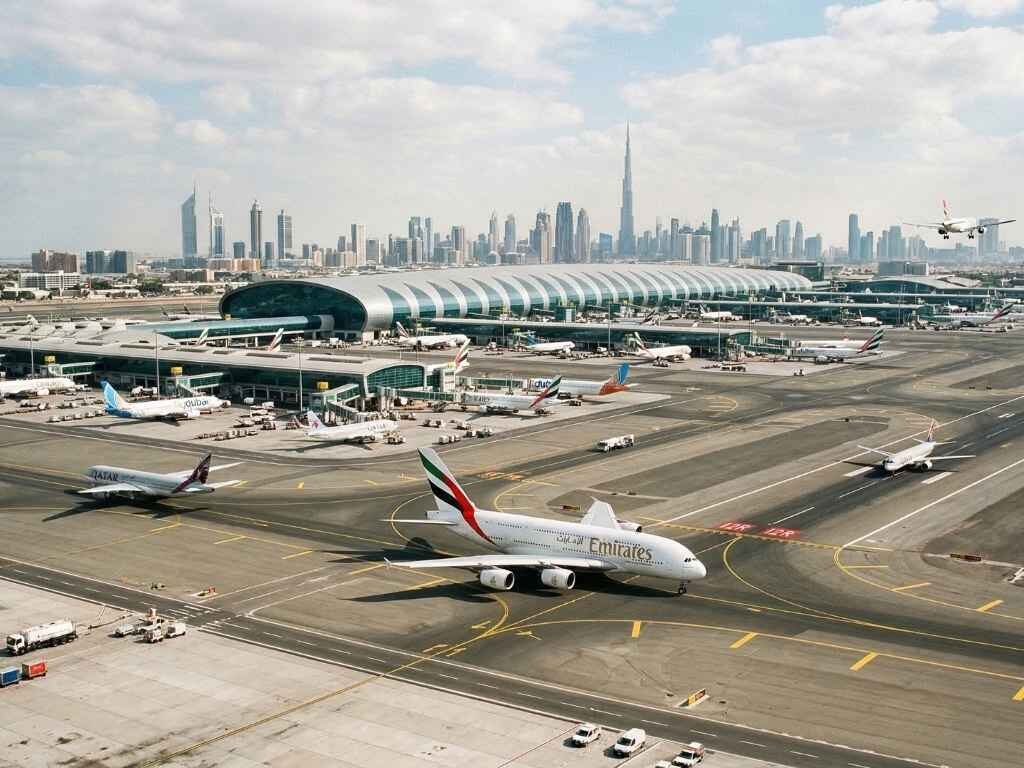
Have you ever checked your flight status hours before takeoff, only to see the dreaded red “CANCELLED” text staring back at you? For thousands of travelers passing through the Middle East this week, that nightmare became a reality.
On March 17, 2026, the United Arab Emirates enacted a sudden and complete closure of its airspace, sending shockwaves through the global aviation network. The immediate result? Dubai Airport flights face massive delays and cancellations, leaving passengers stranded and airlines scrambling to adjust.
If you’re currently holding a ticket to or through Dubai International Airport (DXB) or Al Maktoum International (DWC), you’re probably wondering what this means for your travel plans. Let’s break down exactly what happened, which airlines are affected, and what you need to do next to navigate the chaos.
The Spark: Why Did the UAE Close Its Airspace?
To understand the bottleneck at the departure gates, we have to look up. The Middle East has been grappling with escalating regional tensions, and the UAE recently found itself directly in the crosshairs.
Early Tuesday morning, the UAE General Civil Aviation Authority (GCAA) took the rare step of completely shutting down the country’s airspace. This wasn’t a drill. According to the defense ministry, active missile and drone threats were approaching the region. Air defense systems worked overtime, intercepting multiple projectiles before they could reach their targets.
Adding to the anxiety, just a day prior, a drone strike triggered a fire near a fuel depot in the vicinity of Dubai International Airport. While civil defense teams quickly extinguished the blaze with no reported injuries, the message was clear: civilian aviation safety required immediate intervention. The GCAA labeled the full airspace shutdown an “exceptional precautionary measure.”
By 5:05 AM local time, authorities confirmed the situation had stabilized and reopened the airspace. But in the aviation industry, a two-hour hard stop at the globe’s busiest international transit hub creates a domino effect that takes days to fix.
The Ripple Effect: Massive Delays and Cancellations at DXB
Dubai International Airport operates like a finely tuned clock. When you stop the pendulum, the gears jam. The temporary airspace closure forced an immediate halt to takeoffs and landings, leading to diversions, grounded fleets, and severe bottlenecks.
If you were tracking flights on Tuesday, the radar looked wildly chaotic. For instance, an Emirates flight (EK533) that had departed Kochi, India, was four hours into its journey when it was abruptly instructed to turn around and head back to its origin following the sudden airport shutdown.
The disruption didn’t just affect local carriers. International airlines immediately pulled the plug on their Middle East routes to assess the security risks:
- Asian Carriers: IndiGo announced the cancellation of nearly 100 flights across the region, citing operational constraints. Air India and Air India Express also suspended direct services to Dubai, though they managed to operate some ad-hoc flights to neighboring airports like Abu Dhabi and Ras Al Khaimah. Cathay Pacific canceled all flights to and from Dubai until the end of March.
- European and North American Airlines: Major players including KLM, Air France, Air Canada, and the Lufthansa Group suspended flights to Dubai and other regional hubs. Many of these suspensions stretch into late March 2026, dealing a heavy blow to connecting traffic between the East and West.
The Broader Impact: Global Transit and Air Freight
It’s not just passenger holidays that are ruined. Dubai is a critical artery for global cargo. The airspace closure and subsequent flight rerouting mean that air freight rates have surged. With flights taking longer routes to avoid restricted air corridors over the Strait of Hormuz—adding up to 50 minutes to typical East-West sectors—airlines are burning more fuel and carrying less payload. This logistical headache trickles down to everything from delayed e-commerce packages to disrupted global supply chains.
How Airlines Are Responding (And What It Means for Your Wallet)
The financial hit of missing a flight or paying for last-minute hotels is a massive worry for travelers. Fortunately, local airlines are rolling out highly flexible waivers to absorb the shock.
Emirates, which uses DXB as its global fortress hub, was forced to operate a significantly reduced schedule immediately following the airspace reopening. However, they stepped up their customer service response by introducing a comprehensive disruption waiver. If you hold an Emirates ticket impacted by the current security volatility (specifically dated between late February and mid-April 2026), you can rebook your flight up to nine times without facing a penalty. They are also offering full fare refunds for those who simply want to cancel.
Etihad Airways and flydubai have introduced similar flexible rebooking policies. But there is a catch: airlines are strictly warning passengers not to show up at the airport unless they have received a confirmed rebooking notification. With city check-in points temporarily closed and airport terminals managing heavy crowds, turning up unannounced will only add to the frustration.
Navigating the Chaos: 5 Essential Tips for Affected Travelers
If your itinerary includes a stopover or final destination in Dubai right now, you need to be proactive. Here is a practical survival guide for managing the current flight disruptions:
- Do Not Head to the Airport Blindly: This is the most crucial piece of advice directly from Dubai Airports. Even though operations have officially resumed, flight schedules are highly fluid. Only leave for DXB or DWC if your airline app explicitly shows your flight as “Confirmed” and operating on time.
- Rely on First-Party Data: Third-party flight trackers are great for context, but your airline’s official app or website is the final word on your specific ticket. Turn on SMS and push notifications for your booking so you get real-time alerts.
- Explore Alternate Routing: If your European carrier canceled your DXB flight until next week, look into alternative hubs. Rebooking through Doha, Jeddah, or utilizing ad-hoc flights to nearby airports like Sharjah might be your ticket out.
- Understand Your Rights: If your flight is canceled due to airspace closures (an extraordinary circumstance), airlines are generally not obligated to pay out cash compensation for the delay itself. However, they are still required to offer you a choice between a full refund or a rerouting, and they must provide a duty of care (meals and accommodation) if you are stranded at the airport mid-journey.
- Pack Plenty of Patience: Even as operations ramp back up, the backlog of displaced passengers is massive. Security checks, baggage handling, and customer service desks will be operating under immense pressure.
Looking Ahead: When Will Dubai Airport Return to Normal?
The GCAA has officially confirmed that air navigation across UAE airspace has returned to normal. But “airspace normal” and “schedule normal” are two very different things.
Aviation analysts expect that while Emirates and flydubai will restore close-to-normal capacity within the coming days, the full recovery of international traffic will take much longer. With several foreign carriers suspending operations deep into the month, overall seat capacity at DXB will remain constrained in the short term.
The rapid response by UAE defense and civil aviation authorities prevented a disaster and allowed operations to restart swiftly. Yet, the situation serves as a stark reminder of how sensitive global travel is to regional geopolitics. If you’re flying through the Middle East anytime soon, keep your phone charged, your airline app updated, and your travel plans flexible. The skies are open again, but the turbulence on the ground is still clearing up.