
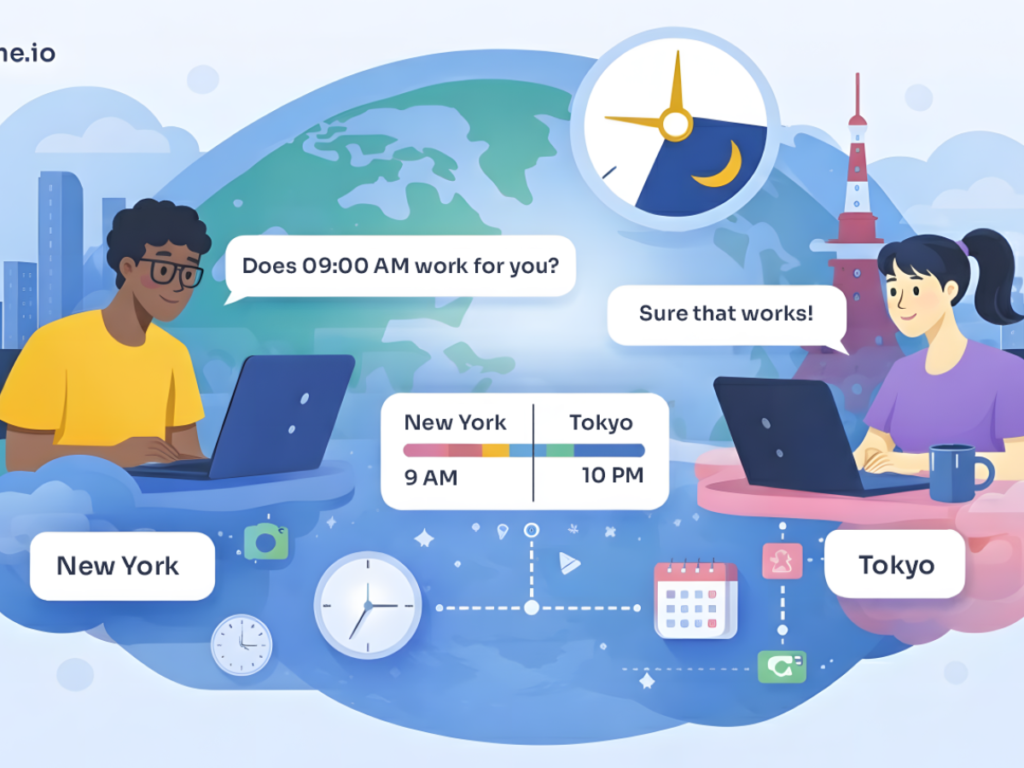
Time in NYC: Understanding Local Time, Time Zones, and Seasonal Changes
Planning a meeting across continents or scheduling a call with someone in the United States often begins with a simple question: what is the time in NYC right now? It sounds straightforward, yet many people encounter confusion especially when daylight saving time shifts the clock unexpectedly.
New York City serves as a global reference point for finance, media, and international coordination. As a result, understanding how time in NYC works is not just useful; it is essential for avoiding scheduling mistakes and maintaining clarity in cross-border communication.
What Is the Time in NYC Right Now? (Direct Answer)
New York City follows Eastern Time (ET), which changes depending on the season:
- Eastern Standard Time (EST): UTC −5 hours
- Eastern Daylight Time (EDT): UTC −4 hours
In short, time in NYC is either 4 or 5 hours behind Coordinated Universal Time (UTC), depending on whether daylight saving time is in effect.
Understanding the Time Zone Behind Time in NYC
Time in NYC is governed by the Eastern Time Zone, one of the primary time zones in the United States. This system aligns large geographic areas under a shared standard time, ensuring consistency for travel, commerce, and communication.
Why Time Zones Exist
Before the adoption of standardized time zones, cities relied on local solar time, which varied from place to place. This inconsistency created practical challenges, particularly for rail transport and communication networks.
To address this, the modern time zone system divides the Earth into segments based on longitude. Each zone typically represents a one-hour difference. New York’s position places it firmly within the Eastern Time Zone, alongside other major cities on the eastern coast of North America.
The Role of Coordinated Universal Time (UTC)
UTC serves as the global standard for timekeeping. Every time zone, including time in NYC, is defined as an offset from UTC. This framework ensures that time remains consistent and measurable across countries, regardless of local variations.
Daylight Saving Time: Why Time in NYC Changes
A key reason people struggle with time in NYC is the presence of daylight saving time (DST). This system shifts the clock forward or backward to better align daylight hours with daily activities.
How DST Works in New York
New York adjusts its clocks twice each year:
- Spring (March): Clocks move forward by one hour, transitioning to EDT
- Autumn (November): Clocks move back by one hour, returning to EST
These adjustments directly affect the time difference between New York and other regions.
Practical Impact of DST
Daylight saving changes can create temporary confusion, particularly when countries adopt different transition dates. For example, a region that does not observe DST may experience a sudden shift in its time difference with New York.
This is why relying on a fixed assumption about time differences often leads to errors.
Converting Your Local Time to Time in NYC
Understanding how to convert your local time into time in NYC is essential for accurate scheduling.
Simple Conversion Method
Follow these steps:
- Identify your local time zone and its UTC offset
- Determine whether NYC is currently on EST or EDT
- Calculate the difference between the two offsets
- Adjust your time accordingly
Example Scenario
Consider a professional working in a UTC +5 time zone:
- During EST: NYC is 10 hours behind
- During EDT: NYC is 9 hours behind
If it is 6:00 PM locally:
- In winter: 8:00 AM in NYC
- In summer: 9:00 AM in NYC
This variation highlights why awareness of seasonal changes is critical.
Common Misunderstandings About Time in NYC
Despite its importance, time in NYC is often misunderstood. Several recurring issues appear in both personal and professional contexts.
Assuming a Fixed Time Difference
Many people assume that the time difference between New York and their location remains constant. In reality, daylight saving changes can shift this difference by one hour.
Confusing EST and EDT
EST and EDT are distinct time standards. Using them interchangeably can lead to incorrect scheduling, particularly in formal communication.
Overlooking Transition Periods
When daylight saving changes occur, not all countries adjust at the same time. This creates short periods when the usual time difference does not apply.
Why Accurate Time in NYC Matters
Time in NYC is not just a matter of convenience. It plays a critical role in several real-world scenarios:
- International business operations
- Financial market activity
- Flight scheduling and travel planning
- Remote work coordination
- Global event management
Even a small miscalculation can lead to missed meetings or operational delays.
How to Check Time in NYC Reliably
While manual calculations are useful, they are not always practical especially when daylight saving transitions are involved.
Digital tools simplify the process by automatically adjusting for:
- Time zone differences
- Daylight saving changes
- Real-time updates
Platforms such as findtime.io provide an accurate way to check time in NYC and other global cities without requiring manual conversions. These tools are particularly helpful when managing multiple time zones simultaneously.
Practical Tips for Managing Time Differences
To work effectively with time in NYC, consider adopting a few practical habits:
- Always specify the time zone when scheduling
- Double-check whether daylight saving time is active
- Use digital tools instead of relying on memory
- Plan meetings during overlapping working hours
- Confirm time details clearly in written communication
These strategies help reduce ambiguity and improve coordination.
Time in NYC Compared to Other Major Cities
New York’s global importance makes it a common reference point for time comparisons.
Typical Time Differences
- London: Usually 5 hours ahead
- Tokyo: Typically 13–14 hours ahead
- Sydney: Often 14–16 hours ahead
These differences can vary during daylight saving transitions, reinforcing the need for real-time verification.
Frequently Asked Questions
What is the current time in NYC based on UTC?
Time in NYC is either UTC −5 or UTC −4, depending on the time of year. During standard time, it follows UTC −5, while daylight saving time shifts it to UTC −4. Checking the current offset ensures accuracy when converting between time zones.
Why does time in NYC change during the year?
Time in NYC changes because of daylight saving time. The clocks move forward in spring and back in autumn to make better use of daylight. This adjustment alters the city’s offset from UTC and affects global time differences.
Is time in NYC always the same difference from other countries?
No, the difference is not always fixed. Time in NYC can vary relative to other countries due to daylight saving transitions. When regions adjust clocks on different dates, the usual time difference may temporarily change.
How can I quickly check time in NYC?
You can check time in NYC using reliable world clock tools or online platforms. Services like findtime.io provide real-time updates and automatically adjust for daylight saving, making them more dependable than manual calculations.
What is the difference between EST and EDT in NYC?
EST refers to Eastern Standard Time (UTC −5), while EDT refers to Eastern Daylight Time (UTC −4). Time in NYC alternates between these two depending on whether daylight saving time is currently observed.
Does NYC follow daylight saving time every year?
Yes, time in NYC follows daylight saving time annually. The clocks typically change in March and November, although exact dates vary slightly each year. These changes affect both local time and international time differences.
Why is time in NYC important globally?
Time in NYC is widely used as a reference due to the city’s role in global finance, media, and business. Accurate knowledge of this time helps ensure smooth coordination across international teams and reduces scheduling conflicts.
Can time in NYC cause scheduling errors?
Yes, misunderstandings about time in NYC often lead to errors. These usually occur when people overlook daylight saving changes or assume a fixed time difference. Using updated tools and confirming time zones can help prevent such issues.
Conclusion
Time in NYC may seem simple at first glance, but it reflects a structured system shaped by time zones, global standards, and seasonal adjustments. Understanding how it works and why it changes provides clarity in both everyday communication and professional coordination.
By combining foundational knowledge with reliable tools, it becomes much easier to manage time differences accurately. In a world where timing often determines success, even small improvements in understanding can make a meaningful difference.