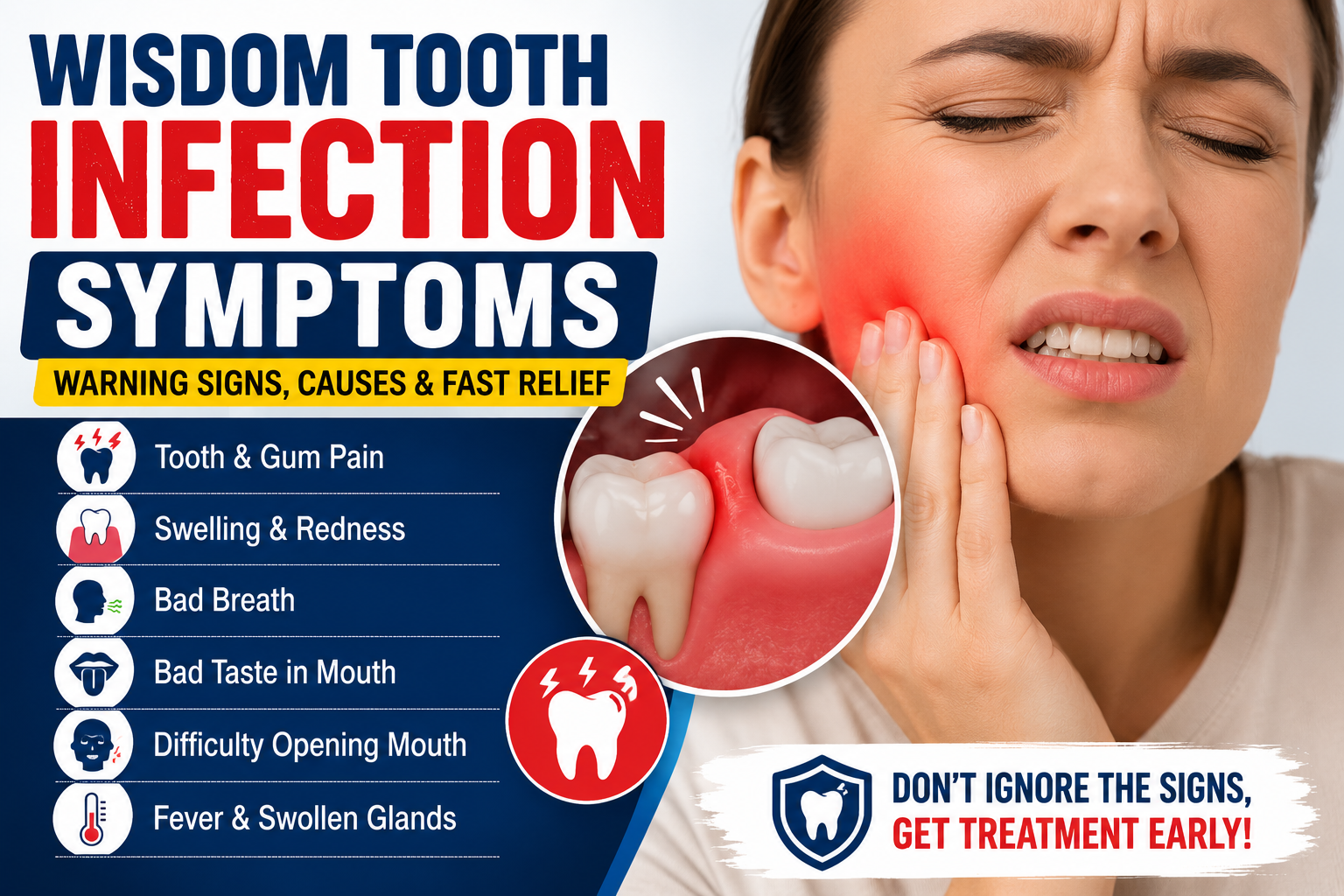
A wisdom tooth infection can start with mild discomfort and quickly develop into severe pain, swelling, and other oral health complications. Many people mistake early infection symptoms for normal wisdom tooth eruption, which can delay treatment and increase the risk of complications.
Understanding what a wisdom tooth infection looks like and recognizing the warning signs early can help you seek prompt treatment and avoid serious dental problems.
In this guide, we’ll explain the appearance of an infected wisdom tooth, common symptoms, causes, treatment options, prevention tips, and answers to frequently asked questions.
What Is a Wisdom Tooth Infection
A wisdom tooth infection occurs when bacteria become trapped around a partially erupted or impacted wisdom tooth. Since wisdom teeth are located at the very back of the mouth, they are often difficult to clean properly.
Food particles, plaque, and bacteria can accumulate around the tooth and gum tissue, leading to inflammation and infection.
Dentists commonly refer to this condition as pericoronitis, especially when the infection develops around the gum flap covering a partially erupted wisdom tooth.
What Does a Wisdom Tooth Infection Look Like?
A wisdom tooth infection usually has visible signs around the affected tooth and surrounding gum tissue.
Common visual symptoms include:
Red and Swollen Gums
The gum tissue surrounding the wisdom tooth may appear bright red, irritated, and swollen. In many cases, the swelling becomes increasingly painful over time.
Gum Flap Covering the Tooth
Partially erupted wisdom teeth often develop a flap of gum tissue called an operculum. Food and bacteria can become trapped underneath this flap, creating an ideal environment for infection.
Pus Around the Tooth
One of the most obvious signs of infection is the presence of white, yellow, or cream-colored pus near the wisdom tooth.
Pus indicates that the body is fighting bacterial infection and requires prompt dental attention.
Bleeding Gums
Inflamed gums may bleed during brushing, flossing, or eating.
Visible Swelling in the Cheek
As the infection worsens, swelling may extend beyond the gum tissue and become visible on the outside of the face.
Difficulty Opening the Mouth
Severe infections can cause jaw stiffness and limited mouth opening, a condition known as trismus.
Early Signs of a Wisdom Tooth Infection
Many infections begin with mild symptoms that are easy to ignore.
Early warning signs include:
- Mild gum tenderness
- Redness around the wisdom tooth
- Slight swelling
- Pain when chewing
- Bad breath
- Unpleasant taste in the mouth
- Sensitivity near the back molars
Recognizing these symptoms early may help prevent the infection from becoming severe.
Common Symptoms of an Infected Wisdom Tooth
The symptoms can vary depending on the severity of the infection.
Local Symptoms
- Throbbing tooth pain
- Swollen gums
- Bleeding gums
- Jaw discomfort
- Pain while chewing
- Tooth sensitivity
- Pus discharge
Advanced Symptoms
- Facial swelling
- Fever
- Swollen lymph nodes
- Ear pain
- Headaches
- Difficulty swallowing
- Difficulty opening the mouth
If you experience severe swelling, fever, or trouble breathing, seek emergency dental care immediately.
Causes of Wisdom Tooth Infections
Several factors increase the risk of developing a wisdom tooth infection.
Partially Erupted Wisdom Teeth
When a wisdom tooth only partially emerges, bacteria can easily accumulate beneath the gum tissue.
Impacted Wisdom Teeth
Impacted wisdom teeth remain trapped under the gums or jawbone, creating areas where bacteria can grow.
Poor Oral Hygiene
Inadequate brushing and flossing can allow plaque and bacteria to build up around wisdom teeth.
Food Trapping
Food particles often become lodged around wisdom teeth due to their location at the back of the mouth.
Gum Disease
Existing gum disease can increase susceptibility to bacterial infections.
Risk Factors for Wisdom Tooth Infections
You may have a higher risk if you:
- Are between 17 and 30 years old
- Have impacted wisdom teeth
- Smoke tobacco products
- Have poor oral hygiene habits
- Skip regular dental checkups
- Have a weakened immune system
How Dentists Diagnose a Wisdom Tooth Infection
A dentist typically performs:
Oral Examination
The dentist checks for redness, swelling, pus, and gum inflammation.
Dental X-Rays
X-rays help identify impacted wisdom teeth and determine whether the infection has spread.
Medical History Review
Your dentist may ask about pain levels, fever, swelling, and other symptoms.
Wisdom Tooth Infection Treatment Options
Treatment depends on the severity of the infection.
Professional Dental Cleaning
The dentist may clean the infected area and remove trapped food particles and bacteria.
Antibiotics
If the infection is spreading or severe, antibiotics may be prescribed.
Common antibiotics include:
- Amoxicillin
- Metronidazole
- Clindamycin (for certain patients)
Always follow your dentist’s instructions regarding antibiotic use.
Pain Management
Pain may be managed using:
- Ibuprofen
- Acetaminophen
- Prescription pain medication when necessary
Wisdom Tooth Extraction
If the wisdom tooth repeatedly causes infections, extraction is often the most effective long-term solution.
Removing the tooth eliminates the source of recurring bacterial buildup.
Home Remedies for Temporary Relief
Home remedies cannot cure a bacterial infection but may provide temporary comfort.
Warm Salt Water Rinse
Salt water can help reduce bacteria and soothe irritated tissues.
Cold Compress
Applying a cold compress to the cheek may help reduce swelling.
Good Oral Hygiene
Continue brushing and flossing carefully around the affected area.
Stay Hydrated
Drinking water helps maintain oral health and may assist in removing food particles.
Remember: home remedies are not substitutes for professional dental treatment.
Can a Wisdom Tooth Infection Go Away on Its Own?
A mild irritation may temporarily improve, but true bacterial infections rarely resolve completely without treatment.
Ignoring symptoms can lead to:
- Abscess formation
- Severe facial swelling
- Spread of infection
- Bone damage
- Tooth loss
- Emergency dental situations
Prompt evaluation by a dentist is always recommended.
How to Prevent Wisdom Tooth Infections
Prevention is often easier than treatment.
Brush Thoroughly
Brush twice daily using fluoride toothpaste.
Floss Daily
Flossing helps remove plaque and food particles between teeth.
Use Antibacterial Mouthwash
An antimicrobial rinse may help reduce bacterial buildup.
Schedule Regular Dental Visits
Routine dental exams allow early detection of wisdom tooth problems.
Consider Preventive Extraction
Some dentists recommend removing problematic wisdom teeth before complications develop.
When Should You See a Dentist?
Schedule a dental appointment if you experience:
- Persistent wisdom tooth pain
- Swollen gums
- Bleeding gums
- Bad breath that doesn’t improve
- Difficulty chewing
- Facial swelling
Seek emergency care if you experience:
- High fever
- Difficulty breathing
- Difficulty swallowing
- Rapidly spreading swelling
Recovery After Wisdom Tooth Infection Treatment
Recovery depends on the treatment provided.
Most patients notice significant improvement within a few days after:
- Professional cleaning
- Antibiotic therapy
- Wisdom tooth extraction
Following your dentist’s aftercare instructions is essential for successful healing.
Frequently Asked Questions
What does an infected wisdom tooth look like?
An infected wisdom tooth often appears with red, swollen gums, pus discharge, bleeding, tenderness, and surrounding tissue inflammation.
What are the first signs of a wisdom tooth infection?
Early symptoms include mild gum pain, redness, swelling, bad breath, and discomfort when chewing.
Can a wisdom tooth infection heal without antibiotics?
Minor irritation may improve temporarily, but bacterial infections often require professional dental treatment and sometimes antibiotics.
Is a wisdom tooth infection dangerous?
Yes. If left untreated, the infection can spread to surrounding tissues, cause abscesses, and lead to serious complications.
How long does a wisdom tooth infection last?
Without treatment, symptoms may worsen over time. With proper dental care, many infections improve within several days.
Can I treat a wisdom tooth infection at home?
Home remedies may reduce discomfort temporarily but cannot eliminate the underlying bacterial infection.
When should a wisdom tooth be removed?
Dentists often recommend extraction when wisdom teeth become repeatedly infected, impacted, or difficult to clean.
Can a wisdom tooth infection cause fever?
Yes. Fever may occur when the body is responding to a bacterial infection.
What causes recurring wisdom tooth infections?
Recurring infections often result from impacted teeth, partially erupted teeth, food trapping, and chronic bacterial buildup.
How can I prevent wisdom tooth infections?
Good oral hygiene, regular dental checkups, antibacterial mouthwash, and timely management of impacted wisdom teeth can help reduce risk.
Final Thoughts
A wisdom tooth infection can begin with mild symptoms such as redness, tenderness, and swelling but may quickly progress into a painful and potentially serious dental condition. Knowing what a wisdom tooth infection looks like and recognizing the warning signs early can help you seek treatment before complications develop.
If you notice persistent pain, swelling, pus, or difficulty chewing, schedule a dental examination as soon as possible. Early diagnosis and treatment are the best ways to protect your oral health and prevent long-term complications.