Modern businesses face a common marketing challenge: getting customers to notice their message. Email inboxes fill up quickly, social media feeds move constantly, and digital advertisements compete for attention every second. Even businesses with strong products and attractive offers sometimes struggle to turn online visibility into meaningful customer engagement.
We often see businesses invest heavily in digital campaigns while overlooking the value of physical marketing materials. A well-designed mail piece can give customers something tangible to explore, remember, and act on. When businesses combine thoughtful targeting, professional printing, compelling messaging, and a clear response strategy, direct mail can support a much stronger marketing approach.
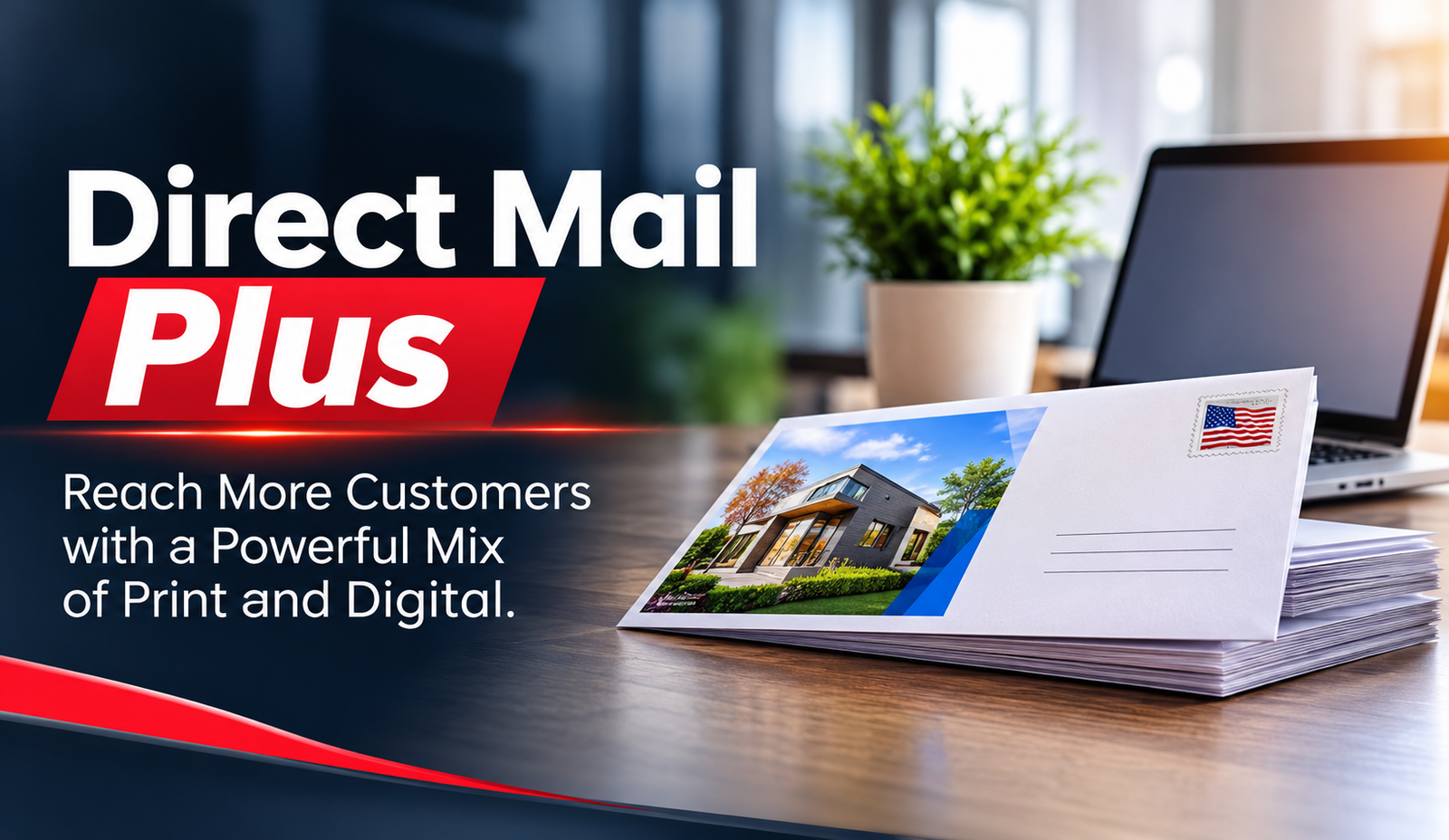
This is where Direct Mail Plus offers businesses another way to connect with their audiences. By bringing important direct mail marketing elements together, businesses can create more organized campaigns, communicate their offers clearly, and build stronger connections with potential customers.
What Is Direct Mail Plus and How Does It Work?
Direct Mail Plus represents an enhanced approach to traditional direct mail marketing. Instead of treating printed mail as a simple promotional piece, businesses can use a coordinated strategy that combines audience targeting, creative design, printing, mailing, and campaign planning.
Traditional direct mail often focuses on sending postcards, brochures, catalogs, or promotional letters to potential customers. However, successful campaigns require more than choosing a format and sending it to a mailing list. Businesses need to understand their audience, identify the right message, and give recipients a clear reason to respond.
A More Organized Approach to Direct Mail Marketing
A well-planned campaign starts with a specific marketing objective. A restaurant might want to attract more local customers, while a real estate agency might want to generate property inquiries. A retail business could focus on promoting a seasonal sale or introducing a new product.
Each objective requires a different message, design, and mailing strategy. Direct Mail Plus helps businesses approach these elements as connected parts of one marketing campaign rather than separate activities.
Combining Print Quality With Marketing Strategy
The appearance of a mail piece influences how recipients perceive a business. Poor printing, cluttered layouts, unclear offers, and inconsistent branding can weaken an otherwise valuable campaign.
We encourage businesses to think about the complete customer experience. The headline should attract attention, the design should communicate the message quickly, and the printed material should give recipients a straightforward next step.
7 Major Benefits of Direct Mail Plus for Businesses
Direct mail offers several advantages when businesses plan campaigns around customer needs and measurable marketing objectives. Here are seven practical benefits that make an enhanced direct mail approach valuable for modern marketing.
1. Helps Businesses Reach Their Target Audience
One of the biggest challenges in marketing involves reaching people who actually need a product or service. A broad advertising campaign might generate thousands of impressions without attracting enough qualified prospects.
Direct mail gives businesses more control over audience selection. Companies can use geographic areas, customer records, demographic information, and purchasing patterns to develop more relevant mailing lists.
For example, a local home improvement company might target homeowners in neighborhoods where property owners frequently renovate their homes. A dental practice could focus on households within a convenient distance of its location.
The important point involves relevance. When businesses match their mailing lists with their services, they can spend their marketing budgets more thoughtfully and avoid sending unrelated offers to unsuitable audiences.
2. Creates a Tangible Connection With Customers
Digital advertisements disappear from screens, and emails often compete with dozens of other messages. Physical marketing materials offer a different experience because recipients can hold, read, save, and share them.
A professionally printed postcard on quality paper can make a business feel more established. Similarly, a well-designed brochure gives customers room to explore services, understand product details, and review important information at their own pace.
We have seen businesses make the mistake of focusing entirely on digital visibility while ignoring how customers interact with physical materials. Both channels serve different purposes, and a thoughtful combination can create more opportunities for engagement.
3. Strengthens Brand Recognition and Professional Image
Consistent branding helps customers recognize a business across different marketing channels. When a company uses the same colors, typography, logo placement, and visual style across its website, printed materials, and advertisements, it creates a more familiar brand identity.
Direct mail provides an opportunity to reinforce that identity through physical design. Businesses can use branded postcards, promotional letters, catalogs, and brochures to communicate their personality and professional standards.
However, good branding requires consistency rather than excessive decoration. We recommend choosing a clear visual hierarchy, using readable typography, and keeping promotional messages focused.
For example, a premium restaurant should use imagery and typography that reflect its dining experience. A financial services company should prioritize clarity, trust, and professional presentation.
4. Supports Better Customer Engagement
Customer engagement depends on how easily people understand an offer and what they can do next. A mail piece should not simply announce a product or service. It should answer a customer’s questions and encourage a relevant action.
Businesses can include QR codes, website addresses, promotional codes, telephone numbers, appointment details, or personalized messages to make responses easier.
A local restaurant, for instance, might send a postcard featuring its catering services and direct recipients to an online inquiry page. Businesses looking for practical ideas can also explore restaurant print marketing ideas to understand how printed materials can support catering promotions.
The best approach gives customers one primary action instead of overwhelming them with several competing instructions.
5. Complements Digital Marketing Campaigns
Direct mail does not need to compete with email marketing, social media, or online advertising. Businesses can use these channels together to create a more connected customer journey.
Consider a company launching a new service. It might send postcards to selected households, publish supporting information on its website, and run social media advertisements to reinforce the same message.
This approach allows customers to encounter the brand through different channels. Someone who receives a postcard might later visit the website, search for the company, or follow its social media account.
Businesses can also use QR codes to connect printed materials with digital landing pages. This makes it easier to share detailed information without overcrowding the physical design.
The key involves keeping the message consistent. When a postcard promises a particular offer, the landing page should clearly explain that same offer.
6. Gives Businesses More Opportunities to Personalize Marketing
Customers respond differently to marketing messages depending on their interests, location, and previous interactions with a business. Generic promotions often fail because they do not address a specific customer need.
Personalized direct mail allows companies to make their communication more relevant. Businesses can customize recipient names, promotional messages, product recommendations, and location-specific offers when they have accurate customer information.
For example, a retail business might send different promotional postcards to existing customers and new prospects. Existing customers could receive information about loyalty offers, while potential customers might receive an introduction to the brand.
Personalization does not always require complicated technology. Even a campaign that highlights services relevant to a particular neighborhood can feel more useful than a generic promotional message.
Businesses should also handle customer information responsibly and follow applicable privacy and mailing regulations.
7. Makes Campaign Performance Easier to Evaluate
Marketing teams need to understand whether their campaigns generate meaningful results. Direct mail can support measurement when businesses establish clear tracking methods before sending materials.
For example, a company can create a unique promotional code for each mailing group. It can also use dedicated landing pages, QR codes, or campaign-specific telephone numbers to identify responses.
These methods help businesses connect customer inquiries and purchases with particular campaigns.
However, we recommend looking beyond the number of responses. A campaign that generates fewer inquiries but attracts more qualified customers might deliver better commercial value than one that produces many low-quality leads.
Businesses should compare campaign costs, response rates, conversions, and revenue to understand the complete picture.
Why Direct Mail Still Matters in a Digital Marketing Environment
Digital marketing gives businesses speed, flexibility, and access to large audiences. However, customers often experience digital advertising overload, which makes it harder for individual messages to stand out.
Physical mail offers a different way to communicate. A carefully selected postcard or brochure can reach a customer’s home or workplace without competing directly with a crowded social media feed.
Customers Can Spend More Time With Printed Materials
Unlike many digital advertisements, printed materials do not disappear when someone scrolls past them. Recipients can place a postcard on a desk, keep a brochure for later, or share a promotional catalog with another household member.
This does not guarantee that every recipient will read the material. However, it gives businesses another opportunity to present their message outside digital platforms.
Direct Mail Reaches Audiences Across Different Age Groups
Not every customer prefers digital communication. Some people still appreciate printed catalogs, promotional letters, and physical coupons when they research products or compare services.
Businesses that serve multiple age groups should consider these differences when developing their marketing strategies.
For example, a local healthcare provider might use digital advertising to reach younger audiences while distributing printed informational materials to households throughout its service area.
Physical Mail Can Reinforce Digital Campaigns
Customers often need several interactions with a brand before they make a purchasing decision. Direct mail can support this process by reinforcing the messages that businesses share through their websites, email campaigns, and social media channels.
A coordinated campaign gives customers multiple opportunities to understand the offer and recognize the business.
Which Businesses Can Benefit From Direct Mail Plus?
Direct mail can support a wide range of industries, but each business should select a format and strategy that match its customers and objectives.
Retail Stores and Ecommerce Businesses
Retailers can use postcards and promotional mailers to announce seasonal sales, introduce new collections, and encourage repeat purchases.
Ecommerce companies can also use printed inserts, product catalogs, and special promotional offers to strengthen customer relationships beyond their online stores.
Return on Marketing Investment
Businesses can compare the revenue generated through a campaign against its total marketing costs.
However, not every campaign produces immediate sales. Some campaigns build brand awareness, encourage future inquiries, or support customer retention. Businesses should consider these objectives when evaluating performance.
The Future of Direct Mail in Modern Business Marketing
Direct mail continues to evolve as printing technology, customer data, and digital marketing tools create new opportunities for businesses.
Variable data printing, for example, allows companies to customize different elements of a mail piece within the same print run. Businesses can use this approach to personalize recipient names, images, promotional offers, and other relevant details.
QR codes also connect physical materials with digital experiences. A customer can scan a postcard and visit a landing page, view a product catalog, request an appointment, or explore additional information.
Another important development involves more responsible printing practices. Businesses increasingly consider recycled paper, appropriate material selection, efficient print quantities, and reduced mailing waste when planning campaigns.
These developments do not change the fundamentals of successful direct mail. Businesses still need accurate targeting, relevant messaging, professional design, and a clear understanding of their customers.
Frequently Asked Questions About Direct Mail Plus
1. What is Direct Mail Plus in business marketing?
Direct Mail Plus refers to an enhanced direct mail marketing approach that brings together audience targeting, creative design, professional printing, mailing, and campaign planning. Businesses use these elements to communicate relevant offers and connect with potential customers through physical marketing materials.
2. Is direct mail still effective for modern businesses?
Yes, direct mail can support modern marketing strategies when businesses select relevant audiences, create useful content, and track campaign performance. It also complements digital channels by giving customers another way to interact with a brand.
3. What types of printed materials can businesses use for direct mail campaigns?
Businesses can choose postcards, brochures, catalogs, promotional letters, flyers, and other printed materials. The right format depends on the campaign objective, amount of information, target audience, and available marketing budget.
4. How can businesses measure direct mail marketing results?
Businesses can measure results through response rates, QR code scans, promotional codes, dedicated landing pages, phone inquiries, conversions, and customer acquisition costs. These indicators help marketing teams understand campaign performance and improve future mailing strategies.
Conclusion: Make Direct Mail a Valuable Part of Your Marketing Strategy
Modern businesses need marketing strategies that reach customers in meaningful ways. Digital advertising offers convenience and speed, while physical marketing materials provide a tangible opportunity to communicate with potential buyers. When businesses combine these channels thoughtfully, they can create a more consistent and engaging customer experience.
With the right strategy, direct mail can become a useful part of a broader marketing plan and help businesses build stronger customer connections over time.