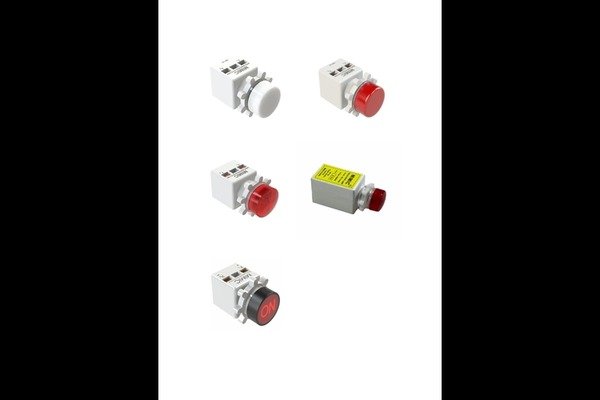
In an industrial workplace, information needs to be communicated quickly and clearly. Operators regularly interact with electrical panels, machines, switchgear, and automated equipment. A well-organized indication system helps them recognize selected operating conditions through simple visual signals.
An LED Indicator Lamp plays an important role in this process. Its illuminated colour can help distinguish one indication from another, making it easier for personnel to understand the information displayed on a control panel.
However, choosing colours should not be an arbitrary decision. A consistent colour arrangement, supported by proper labels and electrical documentation, helps make panel operation more understandable.
Why Colour Matters in Electrical Indication
Imagine a control panel containing ten indicator lamps. If all lamps use the same colour without clear labels, operators may need to read each description carefully to identify the relevant condition.
Using an organized colour scheme can make the panel easier to interpret. Different colours can represent different categories of status or warning, depending on the applicable standards and the panel’s design.
The colour should always be supported by a clear label or legend. It should not be the only way of communicating a critical condition.
Common LED Indicator Lamp Colours
Different colours are used for different indication purposes. Their exact meanings should follow the applicable equipment standards and project-specific colour conventions.
Red: Commonly used for selected fault, trip, or abnormal-condition indications where defined by the control design.
Green: Often used for normal operating or running indications.
Amber or yellow: Can be assigned to warning, attention, or caution-related conditions.
Blue: May be used for special operating conditions or functions requiring a specific operator action.
White: Can be assigned to general information or supply-related indications, depending on the panel convention.
The designer should document the meaning of each colour so that operators and maintenance personnel interpret it consistently.
Single-Colour and Bi-Colour Indication
A single-colour lamp displays one selected colour. It is useful when a panel needs to communicate one defined condition through a dedicated indicator.
A bi-colour model can display two colours within one indicator arrangement. This may be useful where a compact panel needs to communicate two related states from a suitable control circuit.
For example, a machine panel may use different colours to represent two selected operating states. The control logic and wiring must be designed to activate the correct indication.
Mimic Products offers single-colour and bi-colour options in its LED indicating lamp range, subject to the specifications of each model.
Selecting Colours for Different Applications
The correct colour arrangement depends on the purpose of the panel.
Motor Control Panels
Motor control panels may display supply availability, running status, stopped status, and trip conditions. Each indication should have a defined colour and label.
Distribution Boards
Distribution boards may use lamps to communicate selected circuit or supply conditions. The colour arrangement should remain consistent across similar panels.
Automation Panels
Automation systems can contain many operating states. Colour selection should make important information easy to distinguish without creating unnecessary visual complexity.
Instrumentation Panels
Instrumentation panels may display status information from different measuring and monitoring circuits. Clear labels and a planned colour scheme help prevent confusion.
Other Factors to Consider Along with Colour
Colour is only one part of selecting an LED Indicator Lamp. Users should also consider voltage rating, mounting dimensions, brightness, lighting function, and environmental requirements.
Mimic Products lists different lamp styles and configurations, including round and square bodies, selected panel cut-outs, steady and flashing functions, and different voltage options. Individual models should be checked for their exact specifications.
Explore Mimic Products LED Indicator Lamps
Mimic Products provides LED indicating lamps for electrical control panels, switchgear, and industrial automation applications.
The available range can be explored by colour, body style, mounting size, and function. Reviewing these details helps panel designers choose an indicator that matches their electrical and visual requirements.
Visit the LED Indicator Lamp to view the product range.
Conclusion
A consistent colour scheme makes electrical panels easier to understand and supports clear communication between equipment and operators. Selecting the right LED Indicator Lamp involves considering the meaning of each colour, the application, and the requirements of the connected control circuit.
With different colour and function options available, Mimic Products offers solutions for a variety of industrial indication requirements. Always combine colour coding with suitable labels, documentation, and correct electrical design.
FAQs
1. Why are different colours used in LED indicating lamps?
Different colours help distinguish selected operating conditions and make panel information easier to recognize.
2. Which colour is commonly used for a trip indication?
Red is commonly assigned to selected trip or fault indications, subject to the applicable standard and panel design.
3. What is a bi-colour LED indicator?
It is an indicator designed to provide two colours, allowing two defined states to be communicated through one lamp arrangement.
4. Can I select any colour for a control panel?
Colour selection should follow applicable standards, project requirements, and a consistent indication scheme.
5. Is colour alone enough to identify a machine condition?
No. Clear labels, electrical drawings, and properly designed control logic are also important.