
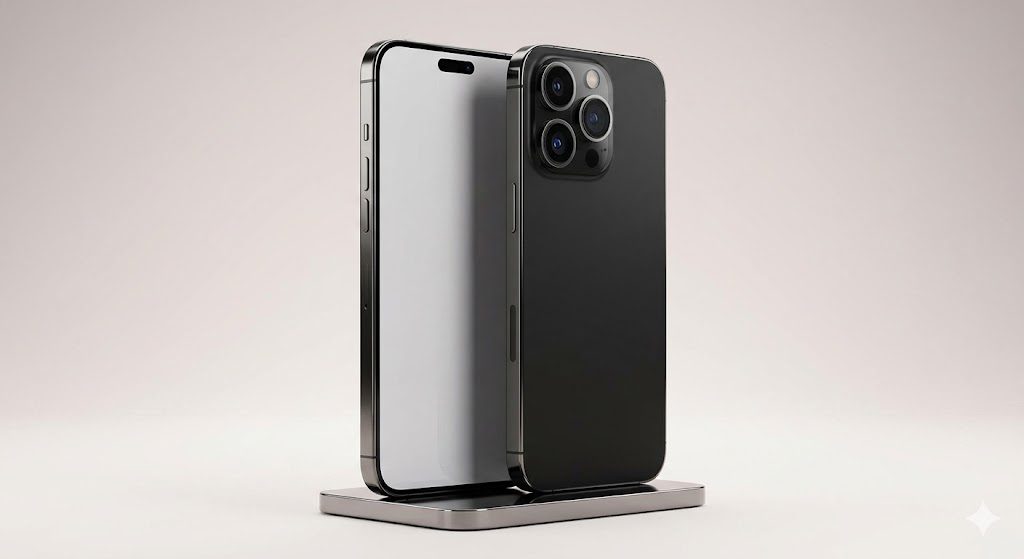
The evolution of modern smartphones has reached a fascinating crossroads where incremental updates no longer satisfy global tech enthusiasts. Consumer expectations are soaring, and users demand true foundational engineering breakthroughs rather than minor cosmetic updates.
As we approach the third quarter of 2026, the global tech industry has its eyes firmly fixed on Cupertino, California. The rumor mill and supply-chain leaks have provided a strikingly clear picture of what Apple is cooking up next for its premium tier.
The upcoming launch of the Apple iPhone 18 Pro is shaping up to be one of the most consequential hardware shifts in recent history. Alongside its larger sibling, the iPhone 18 Pro Max, this generation is set to introduce structural silicon architecture improvements, radical physical camera mechanics, and a refined front profile.
This deep dive breaks down the top 10 most anticipated features of the upcoming flagship series, providing comprehensive analytical context for media professionals and worldwide customers alike.
1. The Next-Gen 2nm A20 Pro Chip: Redefining Mobile Silicon
The absolute crown jewel of the upcoming hardware refresh is the introduction of Apple’s next-generation system-on-a-chip architecture. The new processor is widely expected to be built on TSMC’s trailblazing 1-st generation 2-nanometer (N2) manufacturing process.
Moving down from the traditional 3nm architecture represents a monumental leap forward for mobile computing limits. By shrinking the gate size of transistors to the atomic level, Apple can pack billions more calculation units onto a single slice of silicon.
Furthermore, supply-chain reports from Taiwan indicate that Apple is adopting a highly advanced Wafer-Level Multi-Chip Module (WMCM) packaging technology. This process integrates the main SoC and high-speed DRAM directly at the wafer level rather than after dicing.
- 10% to 15% Faster CPU Speeds: Enhances immediate app launch performance, multi-tasking, and heavy processing workloads.
- Up to 30% Greater Power Efficiency: Drastically curtails thermal generation and limits idle power consumption.
- Advanced Thermal Packaging: WMCM packaging places memory physically closer to the processor cores, reducing processing latency and minimizing localized heat spots.
For power users in tech-heavy global hubs from Tokyo to Silicon Valley, this translates into sustained peak performance without the aggressive thermal throttling that has plagued ultra-thin flagships in recent years.
2. Revolutionary Variable Aperture Main Camera
For years, smartphone manufacturers have relied almost entirely on computational photography algorithms to simulate depth of field and exposure flexibility. The upcoming premium tier aims to shatter this reliance by introducing a physical variable aperture lens system to the primary 48-megapixel Fusion camera.
Unlike fixed-aperture lenses that lock light intake at a single setting, a variable aperture system physically moves internal blade elements to contract or expand the iris. Leaks point to a wide adjustment range that gives creators granular mechanical control over incoming light levels.
This mechanical upgrade allows the camera to adapt on a physical level to vastly different environments. Whether capturing a dimly lit street scene in London or a blindingly bright afternoon landscape in Sydney, the lens element can expand or contract to achieve perfect exposure.
- True Natural Bokeh: Creamy, organic background separation that eliminates the messy edge artifacts often caused by software-based portrait modes.
- Expanded Exposure Control: Photographers can stop down the lens in bright environments to preserve rich highlights without resorting to ultra-fast electronic shutter speeds.
- Sharper Low-Light Capture: Opening the lens wide allows maximum light gathering, reducing low-light grain and accelerating night-mode capture speeds.
3. A 35% Smaller Dynamic Island Cutout
When the Dynamic Island debuted, it successfully turned an unsightly screen cutout into a functional, interactive user interface element. However, it still occupies a notable portion of screen real estate during video playback and immersive mobile gaming.
Recent screen protector leaks shared by supply chain channels in Asia indicate that the front profile of the Apple iPhone 18 Pro is undergoing its biggest structural adjustment in years. The Dynamic Island cutout is rumored to become roughly 25% to 35% narrower.
This dramatic reduction in footprint is made possible by relocating key sensor components beneath the active pixels of the OLED panel. Specifically, leaks suggest that Apple is moving the Face ID flood illuminator component entirely under the screen.
- Maximizing Viewable Display: Frees up valuable screen real estate for wide aspect ratio media streaming and uninterrupted multitasking.
- Clean Front Profile: Moves closer to a flawless, uninterrupted piece of glass without abandoning secure biometric authentication.
- Refined Software Integration: The interactive software “island” bubbles can shrink dynamically, creating a far less intrusive heads-up display.
4. Groundbreaking Samsung Three-Layer Stacked Image Sensor
To complement the physical variable aperture system, Apple is diversifying its sensor supply chain to integrate a highly advanced three-layer stacked image sensor developed by Samsung. This marks a significant departure from older dual-layer or non-stacked structures.
A three-layer stacked layout separates the photodiodes, the pixel transistors, and the digital processing logic circuit into independent layers sandwiched directly on top of each other. This structural reorganization drastically maximizes the surface area dedicated to light collection.
By separating the digital logic components from the pixel array, the sensor runs noticeably cooler and processes incoming visual data at blistering speeds. This hardware architecture upgrade delivers immediate benefits across all shooting modes.
- Substantial Noise Reduction: Cleaner dark areas and shadows in high-contrast images, even when shooting at high ISO sensitivities.
- Expanded Dynamic Range: Captures fine, intricate details simultaneously in the brightest clouds and the deepest shadows.
- Blistering Data Throughput: Faster sensor readout speeds eliminate the jelly-effect or rolling shutter distortion when filming high-speed moving subjects.
5. Stunning New “Dark Cherry” Colorway & Redesigned Ceramic Shield
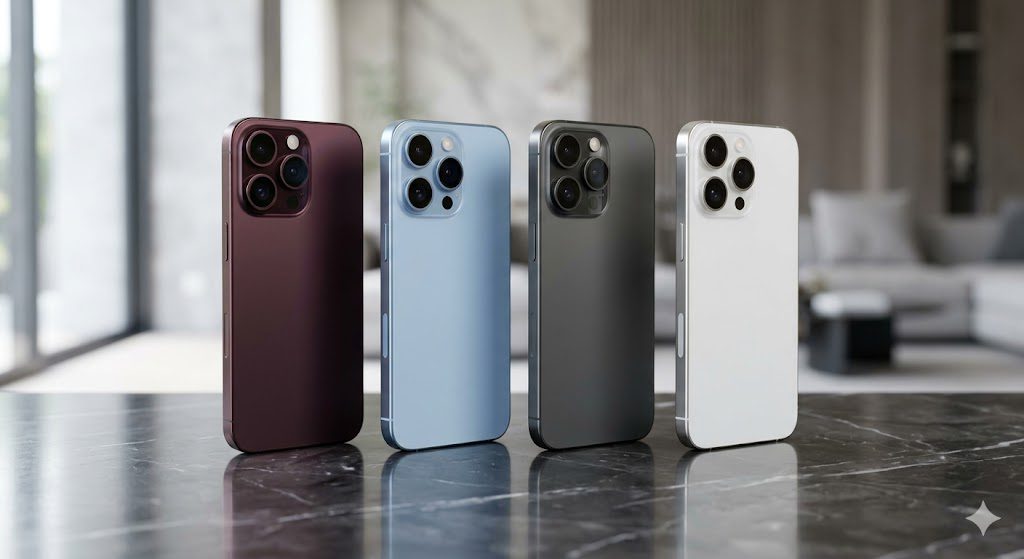
Premium aesthetics are a core component of the hardware’s global appeal, and the upcoming series introduces a dramatic stylistic pivot. CNC-machined dummy models leaked in late May 2026 reveal a striking new signature colorway named “Dark Cherry.”
This finish is described as a deep, sophisticated blend of rich burgundy, wine red, and deep purple tones. The premium shade is set to replace older, brighter colors, establishing a mature design identity for the premium models.
Beyond the paint options, the structural layout of the rear glass panel is receiving a subtle design overhaul. The rear Ceramic Shield area surrounding the MagSafe charging coils is being redesigned to create a seamless, cohesive frosted look.
- The 2026 Color Palette: Dark Cherry, Sky Blue (Light Blue), Dark Gray, and Classic Silver.
- Seamless Glass Design: The old two-tone look between the main back panel and the wireless charging zone is replaced by a uniform matte texture.
- Improved Structural Durability: The updated Ceramic Shield blend offers enhanced scratch resistance against keys, coin edges, and rough surfaces.
6. Massive Battery Upgrades and Increased Capacities
Battery endurance remains a critical metric for global consumers, especially as power-hungry localized AI models run continuously in the background. To counter this drain, Apple is opting for larger physical battery packages across both premium form factors.
The massive Apple iPhone 18 Pro Max is rumored to feature an expansive battery capacity hovering between 5,100 mAh and 5,200 mAh. This represents one of the single largest energy reservoirs ever integrated into an Apple mobile device.
To fit these dense cells into the chassis, CAD drawings indicate that the phone’s frame thickness will increase slightly by a fraction of a millimeter. However, this minor thickness trade-off is offset by monumental real-world longevity gains.
- Dense Silicon-Carbon Cells: Maximizes energy density per cubic millimeter without increasing the internal footprint excessively.
- LTPO+ Display Optimization: The implementation of next-generation LTPO+ OLED panels allows more granular, power-efficient control over localized light emission.
- True Two-Day Longevity: The pairing of a 5,200 mAh cell with the ultra-efficient 2nm A20 Pro chip allows light-to-moderate users to easily clear 48 hours of use.
7. The New Custom Apple C2 Modem with Satellite Web Access
One of the most profound shifts occurring under the hood is Apple’s ongoing multi-year transition toward entirely proprietary in-house wireless connectivity hardware. The upcoming launch is poised to debut the second-generation custom 5G modem, codenamed the Apple C2 chip.
Moving away from third-party basebands allows Apple to deeply integrate wireless network processing directly into the main iOS software stack. This yields dramatic improvements in network handshake speeds, power drain, and signal retention in poor coverage zones.
The absolute headline feature of the C2 modem is its expanded support for full internet data access over satellite networks. Rather than limiting users to emergency texts or basic location pings, the hardware allows regular web browsing and mapping features when standard networks fail.
- In-House Power Savings: Drastically lowers the battery drain typically associated with scanning for weak 5G millimeter-wave signals.
- True Global Coverage: Allows adventurous travelers to access map details, check emails, and send messages from deep within remote national parks or oceanic paths.
- Third-Party App Access: Apple is reportedly opening satellite communication APIs to third-party developers, allowing global communication apps to function anywhere on earth.
8. 12GB to 16GB RAM for Next-Generation On-Device AI
As artificial intelligence models evolve from basic text tools into comprehensive, multimodal digital assistants, the underlying hardware must expand to keep pace. Localized AI models require vast quantities of ultra-fast system memory to store operational weights.
To address this need, prominent industry analysts indicate that the Apple iPhone 18 Pro and the Apple iPhone 18 Pro Max will receive a substantial memory upgrade. Starting configurations are expected to jump up to 12GB of RAM, with high-tier storage variants potentially scaling up to 16GB.
This memory increase is paired with a new wafer-level packaging technique that places the high-bandwidth memory chips physically on top of the processor logic. This maximizes data transfer bandwidth while minimizing processing delays.
- Unthrottled Local Processing: Allows massive multimodal LLMs (Large Language Models) to run completely on-device without relying on external cloud servers.
- Hyper-Contextual Siri: The system assistant can monitor cross-app data in real-time, executing complex multi-step instructions instantly and securely.
- Flawless App Retention: Eliminates aggressive background app killing, keeping heavy professional video editing tools and complex apps active in memory indefinitely.
9. Next-Gen N2 Chip: Wi-Fi 7, Bluetooth 6, and Unified Thread Protocol
Beyond the core cellular modem, Apple is overhauling short-range wireless connectivity by deploying its next-generation proprietary connectivity silicon, the N2 chip. This component handles the full spectrum of local data casting, smart home synchronization, and high-fidelity audio transmission.
The N2 chip introduces full, unthrottled hardware support for the latest Wi-Fi 7 standard across ultra-wide 320 MHz channels. This allows for unparalleled local file transfers when backing up enormous ProRes video files to local network storage arrays.
- Wi-Fi 7 Multi-Link Operation: Allows the phone to connect simultaneously to multiple wireless bands (2.4 GHz, 5 GHz, and 6 GHz) for unbreakable local network stability.
- Bluetooth 6 integration: Drastically lowers audio casting latency and expands tracking precision for next-generation smart trackers and wireless accessories.
- Native Thread Smart Home Router: The phone can act as a local border router for Thread-enabled smart ecosystems, speeding up home automation commands.
10. Pressure-Sensitive Solid-State Camera Control Overhaul
The dedicated physical button interface designed for camera control is receiving a significant hardware structural redesign. While the initial iteration incorporated a hybrid mix of mechanical movement, capacitive swipe tracking, and haptic feedback loops, the 2026 iteration leans heavily into streamlined simplicity.
Supply chain leaks suggest that Apple is removing full capacitive touch sensitivity and moving parts entirely from the side button module. Instead, it is being replaced with a completely sealed, solid-state bar driven by high-precision pressure sensors.
By eliminating moving parts and touch-swiping mechanics, Apple completely removes the issue of accidental setting adjustments caused by a user’s palm resting against the frame. The sealed design also dramatically strengthens the overall water and dust resistance of the chassis.
- Multi-Stage Pressure Triggers: A light press locks focus and exposure tracking, a firmer press releases the shutter, and a deep press launches custom shooting modes.
- Zero Mechanical Wear: With no internal moving spring elements, the solid-state interface is practically immune to mechanical degradation over years of hard use.
- Perfect Weather Sealing: Eliminates microscopic physical seams along the metal frame, protecting delicate internal circuitry from extreme environmental humidity.
Comparing the New Flagships: At a Glance
To help buyers determine which premium tier model aligns best with their specific needs, this detailed breakdown contrasts the core rumored specifications of the two high-end flagships.
| Feature / Specification | Apple iPhone 18 Pro | Apple iPhone 18 Pro Max |
| Display Size | 6.3 or 6.4 Inches | 6.9 or 7.0 Inches |
| Display Panel Tech | Next-Gen LTPO+ OLED | Next-Gen LTPO+ OLED |
| Processor Architecture | A20 Pro (2nm TSMC Process) | A20 Pro (2nm TSMC Process) |
| System Memory (RAM) | 12GB LPDDR6X | 12GB to 16GB LPDDR6X |
| Primary Camera Lens | 48MP with Physical Variable Aperture | 48MP with Physical Variable Aperture |
| Telephoto Zoom Setup | Tetraprism Optical Zoom | Enhanced Tetraprism Zoom (Longer Reach) |
| Battery Capacity | ~5,000 mAh | 5,100 to 5,200 mAh |
| Modem Hardware | Custom Apple C2 (Satellite Web) | Custom Apple C2 (Satellite Web) |
| Weight Distribution | Balanced Titanium/Aluminum Blend | Robust, Heavy Build (>235g) |
Practical Insights and Use Cases
The architectural upgrades coming to the Apple iPhone 18 Pro lineup create clear, tangible benefits for diverse groups of professional users across the globe.
For Independent Mobile Journalists and Filmmakers
The pairing of a physical variable aperture system with the lightning-fast data throughput of the Samsung three-layer stacked sensor alters field reporting setups. Journalists working on location in fast-moving environments can capture cinema-grade 4K footage with true optical depth separation. They no longer have to carry heavy external neutral-density filters or bulky standalone camera rigs.
For Remote Travelers and Outdoor Enthusiasts
The rollout of the custom Apple C2 connectivity modem offers a profound safety and utility upgrade. Hikers, researchers, and global adventurers exploring vast, unmapped expanses can maintain continuous connection to basic web infrastructure via satellite. This access removes the historical anxiety of entering dead zones far outside traditional cellular grid boundaries.
For Creative Professionals and Enterprise Multi-taskers
With a massive jump up to 12GB or 16GB of unified memory alongside the 2nm N2 A20 Pro silicon, the device functions as a fully realized pocket-sized workstation. Users can seamlessly run localized generative AI models to draft code, transcribe multi-hour meetings locally, and export multi-track 4K video projects concurrently without experiencing background app closure or stuttering.
Conclusion
The upcoming launch of the Apple iPhone 18 Pro and the Apple iPhone 18 Pro Max represents a foundational technological pivot for the smartphone industry. Rather than relying on simple cosmetic refreshes or incremental software updates, Apple has focused heavily on fundamental hardware breakthroughs.
From the atomic-scale engineering of the 2nm A20 Pro silicon to the mechanical precision of the variable aperture camera system and the unprecedented freedom of satellite-based web browsing, these devices are designed to push the boundaries of mobile productivity. For consumers demanding maximum efficiency, long-term battery endurance, and cutting-edge professional imaging tools, the wait for September 2026 is setting up to be completely worthwhile.