Modern manufacturing plants depend on machinery that can operate consistently with minimal interruptions. Production equipment includes bearings, gears, chains, shafts, pneumatic components, and other moving parts that require regular lubrication.
As production systems become more automated, maintaining lubrication manually can become increasingly difficult. This is why automatic lubrication arrangements are gaining importance in industrial maintenance.
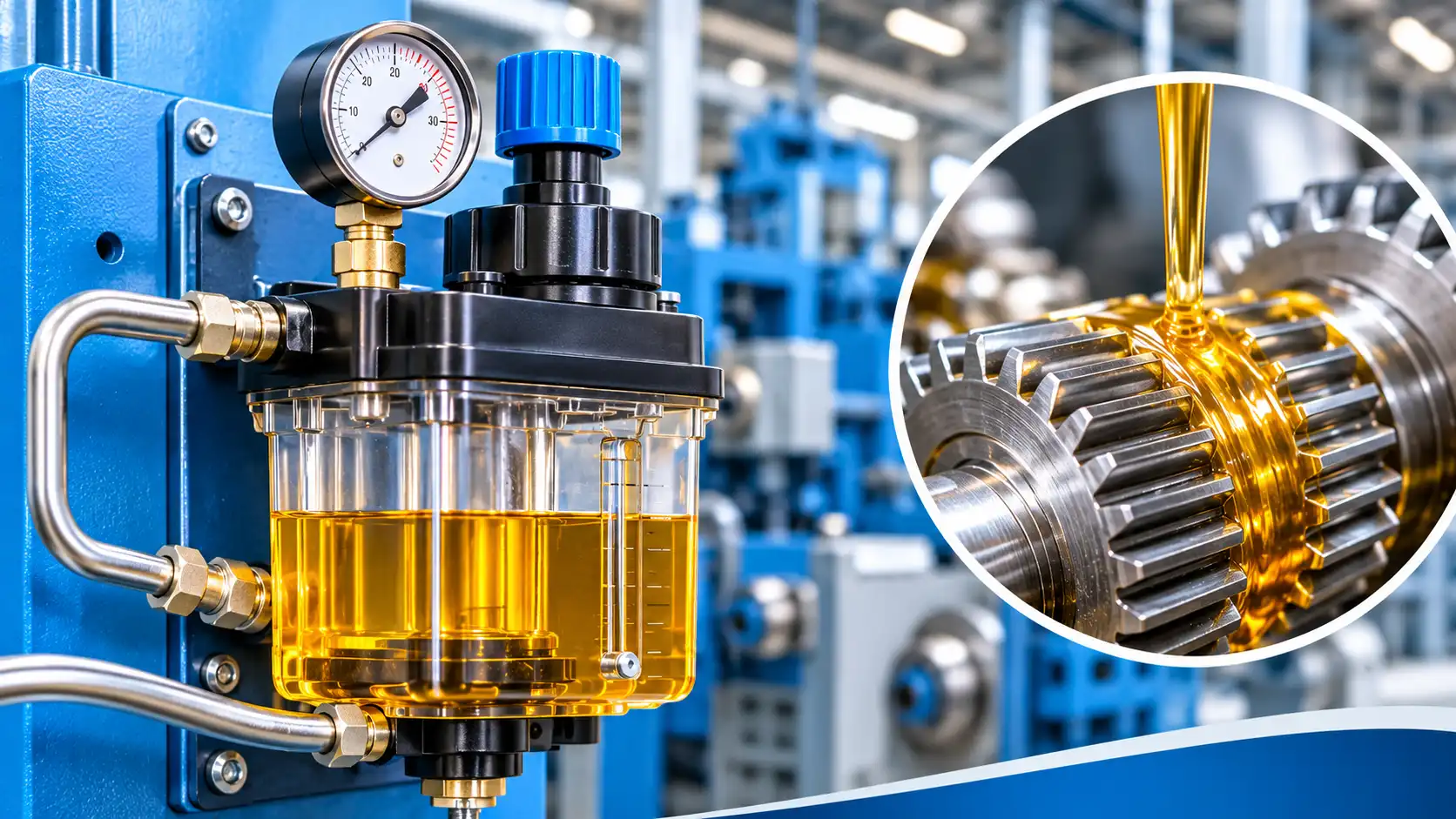
An Oil Lubricator helps supply controlled quantities of oil to selected machine components. When integrated into a suitable automatic lubrication arrangement, it can reduce manual intervention and support more consistent equipment maintenance.
The Role of Lubrication in Modern Manufacturing
Friction is a natural part of mechanical movement. However, excessive friction can lead to component wear, heat generation, vibration, and reduced machinery efficiency.
Lubricating oil helps form a protective film between moving surfaces. This reduces direct contact and supports smoother machine operation.
In manufacturing plants, proper lubrication is especially important because equipment may operate for extended production cycles.
A suitable oil lubricator helps maintain the required oil supply at designated points, supporting the overall lubrication strategy.
What Is an Automatic Oil Lubrication Arrangement?
An automatic oil lubrication arrangement delivers lubricant to selected machine components without requiring operators to apply oil manually at every lubrication point.
Depending on the system design, it may use a reservoir, metering components, distribution lines, pumps, and control mechanisms.
The arrangement can deliver oil at predetermined intervals or through an appropriately designed feeding mechanism.
The quantity of oil supplied depends on the machinery requirements, lubricant specifications, and system configuration.
Major Benefits of Automatic Oil Lubrication
1. Consistent Oil Delivery
Automatic lubrication arrangements help maintain a planned supply of oil to designated components.
This can reduce the variation that sometimes occurs with manual lubrication practices.
2. Reduced Manual Intervention
When lubrication points are difficult to access or numerous in number, manual servicing can consume considerable maintenance time.
Automatic systems reduce the need for repeated manual application, allowing maintenance personnel to focus on other activities.
3. Better Maintenance Planning
A planned lubrication schedule helps maintenance teams organise inspection and servicing activities.
It also makes it easier to monitor oil consumption and identify irregularities.
4. Improved Component Protection
Appropriate lubrication helps reduce friction between moving surfaces. This supports the protection of bearings, gears, chains, and other mechanical components.
5. Support for Continuous Production
Production interruptions caused by lubrication-related problems can affect manufacturing schedules.
A suitable automatic lubrication arrangement helps reduce the risk of inadequate lubrication when properly designed, installed, and maintained.
Where Are Automatic Oil Lubricators Used?
Automatic oil lubrication arrangements are suitable for several industrial applications.
Manufacturing Machinery: Production equipment with multiple moving components may require regular oil lubrication.
Steel Processing Plants: Selected mechanical assemblies in rolling and material-processing equipment require appropriate lubrication.
Cement Manufacturing: Industrial machinery operating under heavy-duty conditions needs suitable lubrication arrangements.
Conveyor Systems: Bearings, chains, and other moving components may require controlled oil delivery.
Industrial Automation: Pneumatic equipment may use dedicated lubricators to introduce oil into compressed-air systems where required.
Heavy Engineering: Large machinery and specialised equipment may require application-specific lubrication arrangements.
Not every application needs a fully automatic system. Equipment selection should be based on actual lubrication requirements.
Automatic vs Manual Lubrication: Which Is Better?
Manual lubrication can be suitable for machines with a small number of accessible lubrication points and relatively low lubrication frequency.
Automatic lubrication is generally more appropriate when equipment requires regular oil delivery, has multiple lubrication points, or operates in locations where manual access is difficult.
A centralised arrangement may also be considered when several components need lubrication from a common supply source.
The decision should consider installation costs, maintenance resources, production requirements, and the complexity of the machinery.
What Should Buyers Check Before Purchasing?
Before selecting an oil lubricator, industrial buyers should examine several technical factors.
- Required oil grade and viscosity.
- Number and location of lubrication points.
- Required oil flow rate.
- Operating temperature and pressure.
- Reservoir capacity.
- Control and automation requirements.
- Installation space and maintenance accessibility.
These details help determine whether a standalone lubricator or a larger lubrication arrangement is more suitable.
Selecting Experienced Oil Lubricator Manufacturers in India
Manufacturing plants need equipment that matches their machinery and operating environment.
When evaluating Oil Lubricator Manufacturers, buyers should review product specifications, manufacturing quality, technical knowledge, and the ability to recommend suitable equipment.
Reliable Oil Lubricator Manufacturers in India can help businesses understand different lubrication arrangements and make informed equipment decisions.
Technical assistance is particularly important when integrating lubrication equipment into existing machinery or production systems.
Techno Drop Engineers for Industrial Lubrication Equipment
Techno Drop Engineers offers lubrication equipment for industrial applications where controlled lubricant delivery is important.
Businesses searching for an Oil Lubricator can explore the product information and evaluate the available solution according to their machinery and maintenance requirements.
Conclusion
Automatic oil lubrication plays an important role in modern manufacturing by helping maintain planned lubricant delivery and reducing dependence on repeated manual intervention.
The right oil lubricator can support component protection, maintenance planning, and consistent machinery performance. However, its effectiveness depends on proper equipment selection, correct installation, suitable oil specifications, and regular inspection.
For industrial buyers, choosing the right lubrication equipment is an important step towards maintaining reliable production operations.