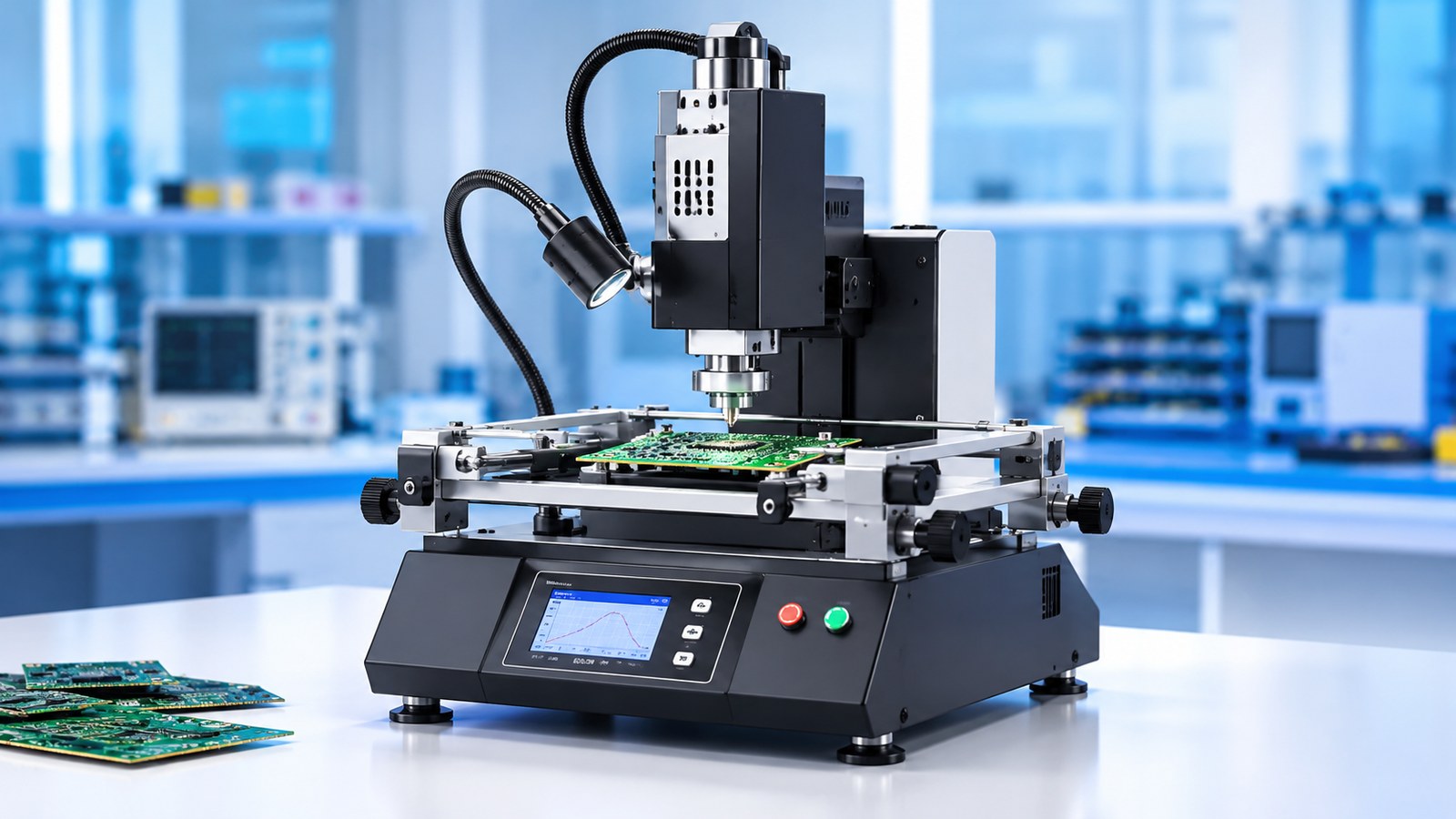
PCB repair and electronics manufacturing require specialized equipment to handle modern surface-mounted components. Ball Grid Array (BGA) packages are widely used in advanced electronic assemblies because of their compact design, high connection density, and ability to support complex circuit layouts. However, replacing or repairing these components requires controlled heating, accurate positioning, and proper temperature management.
A BGA Rework Station is specialized equipment designed to remove defective BGA components and install replacement components while maintaining control over the thermal requirements of PCB assemblies. It is widely used in electronics manufacturing facilities, PCB repair centres, and industrial electronics workshops.
For procurement managers, production engineers, and repair professionals, selecting suitable equipment requires careful evaluation of technical specifications, operational requirements, and long-term maintenance needs.
Identify Your PCB Rework Requirements
Before comparing different machines, it is important to understand the types of PCBs and BGA packages handled by your facility. Not every rework station is suitable for every application. PCB dimensions, component sizes, board construction, and daily workload can influence equipment selection.
Consider the typical PCB sizes processed in your facility and the component packages that require replacement. Also evaluate whether the equipment will be used for occasional repair work, regular production support, or high-volume industrial applications.
For example, a professional PCB repair centre may require camera-assisted alignment and flexible temperature settings, whereas a production facility may prioritize repeatability, programmable heating profiles, and operational efficiency.
Understanding these requirements helps buyers shortlist equipment that matches their actual applications rather than paying for unnecessary features.
Evaluate the Heating Configuration
The heating system is one of the most important considerations when selecting a BGA Rework Station. BGA components have solder connections underneath their packages, making controlled heating essential for successful removal and replacement.
A system with top and bottom heating zones can provide better control over the rework process. Top heating directs thermal energy towards the target component, while bottom heating supports the PCB from underneath.
PCB preheating is another useful feature. It helps reduce temperature differences across the board and can minimize thermal stress during the rework cycle.
Buyers should evaluate the heating configuration according to PCB construction, component requirements, and recommended soldering profiles. Proper thermal management helps reduce the risk of PCB warpage, damaged solder pads, and overheating of nearby components.
Check Temperature Monitoring and Control
Accurate temperature management is essential when working with sensitive electronic components. Different BGA packages, solder alloys, and PCB materials require different thermal conditions.
Look for equipment that offers programmable temperature profiles, temperature monitoring, and suitable thermocouple support. These features allow technicians to manage different stages of the heating process, including preheating, soaking, reflow, and cooling.
It is important to understand that heater settings and actual solder joint temperatures may differ. Therefore, thermal profiling should be validated using appropriately positioned thermocouples on the PCB.
Operators should follow component manufacturers’ recommended temperature limits and select suitable profiles for each application. This helps maintain better process control and reduces unnecessary thermal exposure.
Consider Alignment and Positioning Features
Component alignment is particularly important when working with fine-pitch BGA packages. Even minor positioning errors can affect the quality of solder connections and lead to electrical problems after reassembly.
Camera-assisted positioning systems can help operators align replacement components with PCB pads before soldering. These systems provide visual assistance during component placement and can improve positioning accuracy.
Buyers should evaluate camera quality, optical clarity, positioning controls, and compatibility with the component packages handled by their facility.
For repair centres dealing with different PCB designs, flexible alignment facilities can be particularly useful because they support a wider range of component replacement applications.
Compare Operating and Maintenance Requirements
A machine’s purchase price is only one part of its overall cost. Buyers should also consider operating expenses, maintenance requirements, spare parts availability, and technical support.
Check the equipment’s power requirements, compatible nozzles, heating elements, accessories, and maintenance intervals. Availability of operating manuals and technical documentation is also important for technicians responsible for machine operation.
Operator training should not be overlooked. Even advanced equipment requires trained personnel who understand component handling, PCB preparation, thermal profiling, and post-rework inspection.
Selecting equipment with suitable technical support and maintenance facilities can help businesses manage long-term operational requirements more effectively.
Applications of BGA Rework Stations in Different Industries
BGA rework equipment is used across several industries where reliable electronic assemblies are essential.
In electronics manufacturing, it supports component replacement and PCB assembly corrections. In automotive electronics, it can be used for repairing electronic control boards and other complex assemblies.
Telecommunications companies may use BGA rework equipment for maintaining communication hardware, while industrial automation facilities require specialized PCB repair capabilities for controllers and monitoring systems.
Similarly, professional PCB repair centres use these machines to handle component-level repairs in consumer electronics, computer hardware, and industrial electronic equipment.
How to Select Reliable BGA Rework Station Manufacturers
When comparing BGA Rework Station Manufacturers, buyers should examine product specifications and supplier capabilities carefully. A suitable supplier should provide clear technical information about heating zones, temperature control, PCB compatibility, alignment facilities, and available accessories.
Businesses evaluating BGA Rework Station Manufacturers in India should also consider equipment suitability, technical guidance, spare parts availability, and after-sales support.
Instead of choosing a machine based only on its advertised features or initial price, compare its capabilities with your actual PCB repair requirements.
Reliable Spares & Consumables supports electronics manufacturing businesses with industrial electronics tools and ESD protection products. With 19 years of industry experience, the company offers equipment solutions for professional PCB assembly and repair applications.
Explore the BGA Rework Station product range to review the available equipment options, including the R5860 and R6860 models.
Businesses can also explore Resistance Meters for electrical resistance testing requirements and Soldering Stations for other electronics assembly applications.
Final Thoughts
Choosing the right BGA Rework Station requires an understanding of PCB dimensions, component packages, heating requirements, alignment features, and operating workload. Each of these factors influences the suitability of equipment for professional PCB repair and electronics manufacturing.
Rather than selecting equipment based only on price, buyers should focus on technical suitability, temperature control, maintenance requirements, and long-term operational needs.
A properly selected rework system, combined with trained operators and validated thermal procedures, can support consistent component replacement, reduce avoidable PCB damage, and improve the overall reliability of electronics repair operations.