A patient arrives in an inpatient ward after receiving treatment in the emergency department. The receiving nurse can access the patient's medical record, but an important detail is missing from the transfer discussion. A laboratory result is still pending, and the incoming care team is unaware that it requires follow-up. The information may exist somewhere in the hospital's systems, yet it has not reached the people responsible for acting on it. Situations like this explain why patient handoffs remain challenging despite the widespread use of electronic health records (EHRs) and digital hospital applications. Modern hospitals generate enormous amounts of clinical information. However, making information available is not the same as ensuring that the receiving team understands a patient's condition, treatment priorities, and outstanding responsibilities. Effective patient handoffs require clear communication, reliable information exchange, and coordinated clinical workflows. Technology can support these requirements, but it cannot replace the communication and accountability needed during care transitions. Why Patient Handoffs Are Still Difficult Patient handoffs occur whenever responsibility for care moves between healthcare professionals, departments, or facilities. Common examples include nursing shift changes, emergency department transfers, ICU step-down transfers, and transitions between surgical and recovery teams. Each handoff involves different information requirements, clinical priorities, and professional responsibilities. During a shift change, an incoming nurse may need to understand a patient's recent observations, medications, treatment response, and pending care activities. During an ICU transfer, the receiving team may also need detailed information about recent changes in clinical condition, monitoring requirements, and escalation plans. The challenge becomes greater when hospital departments use different applications or documentation practices. Even when information is available electronically, care teams may spend valuable time searching for relevant details or confirming what has already been completed. A successful handoff must transfer not only patient information but also a shared understanding of what needs to happen next. Where Information Gaps Occur During Hospital Handoffs Information gaps rarely happen because hospitals collect too little data. They often develop when information is fragmented, delayed, or communicated without sufficient context. Several problems contribute to these gaps. Disconnected Clinical Systems Hospitals commonly operate separate applications for EHRs, laboratory results, medical imaging, pharmacy services, and patient monitoring. When these systems do not exchange information reliably, healthcare professionals may need to review several screens before understanding a patient's current condition. For example, a physician may document a treatment change in the EHR while related observations remain within a separate monitoring application. The receiving team must then connect these details manually. Incomplete or Delayed Documentation Clinical records may not always reflect the latest developments when a patient is transferred. A treatment decision might be communicated verbally before supporting documentation is completed. Alternatively, important information may be recorded but not highlighted during the handoff. This can make it difficult for incoming clinicians to distinguish between completed activities and actions that still require attention. Unclear Task Ownership One of the most overlooked handoff challenges is knowing who becomes responsible for pending tasks. A laboratory result may need review, a medication may require clarification, or a specialist consultation may still be outstanding. If the outgoing and incoming teams do not explicitly establish ownership, the task can remain unresolved even though both teams assume someone else will handle it. Time Pressure and Interruptions Hospital staff frequently complete handoffs during busy periods. Emergency admissions, patient deterioration, staffing constraints, and unexpected interruptions can disrupt communication. When staff must communicate information quickly, important details may be shortened or omitted. Technology alone cannot eliminate these pressures. Hospitals also need processes that protect the quality of handoff communication. How Poor Handoffs Affect Hospital Operations Incomplete handoffs can create problems beyond individual communication errors. When information is unclear, incoming staff may need to contact previous care teams, review additional records, or repeat assessments to confirm what happened earlier. This adds work to already demanding clinical schedules. Poor coordination can also affect patient transfers. A receiving department may be ready to accept a patient but lack the information necessary to continue care smoothly. Similarly, unclear responsibilities can delay pending investigations, consultations, and treatment-related activities. These problems affect clinical teams, hospital operations, and patient experience. More importantly, gaps in communication can introduce avoidable patient safety risks. Improving handoffs should therefore be treated as both a clinical communication priority and an operational workflow improvement opportunity. Why Electronic Health Records Alone Cannot Solve the Problem EHR systems have improved how hospitals store and access patient information. However, an electronic record is primarily a source of documented information. It does not automatically ensure that every important detail has been communicated, understood, and acknowledged. Consider a patient being transferred from intensive care to a general inpatient ward. The EHR may contain vital signs, medication history, and clinical notes. But the receiving team still needs to understand recent changes in the patient's condition, potential warning signs, and actions that require close attention. These details need clear communication, not simply access to more information. Hospitals should therefore use technology to support structured handoffs rather than replacing direct communication between healthcare professionals. A connected system can help organize the relevant information while ensuring the receiving team has an opportunity to review, clarify, and accept responsibility. How Hospitals Can Improve Patient Handoff Workflows Improving handoffs requires a combination of standardized communication, connected applications, and clear accountability. Establish Structured Handoff Communication Hospitals can adopt standardized approaches that guide how important patient information is communicated. The I-PASS framework, for example, emphasizes illness severity, patient summary, action items, situation awareness, contingency planning, and confirmation by the receiving clinician. A structured approach helps care teams focus on the details that matter most during transitions. It also reduces dependence on individual communication habits. Improve Clinical Information Exchange Hospital technology can make handoffs easier by connecting relevant information from EHRs, diagnostic systems, pharmacy applications, and monitoring platforms. Integration methods such as HL7, FHIR, and secure APIs can support information exchange between compatible healthcare systems. The objective is to make accurate, relevant information accessible without requiring clinicians to search through multiple disconnected applications. Introduce Shared Task Visibility A patient handoff may involve several pending activities. Shared clinical worklists can help teams identify outstanding tasks, assigned responsibilities, and required follow-up actions. For example, a pending diagnostic result could remain visible to the appropriate receiving team until it has been reviewed and addressed. Acknowledgment and escalation workflows can provide further clarity when tasks require attention. However, notifications should be designed carefully to avoid unnecessary alerts and additional administrative burden. What Hospitals Should Evaluate Before Modernizing Handoffs Hospitals do not necessarily need to replace their existing clinical systems to improve handoff coordination. The first step is understanding where communication and information exchange currently break down. Healthcare leaders should examine how patient information moves between departments, how pending tasks are assigned, and whether receiving teams can access the details needed to continue care. A practical improvement program can begin with one high-priority transition, such as emergency department to inpatient ward transfers. Hospitals can review that workflow, identify recurring problems, and introduce targeted changes. Performance can be assessed through measures such as handoff completeness, time spent clarifying missing information, unacknowledged tasks, and staff feedback. This approach allows organizations to address specific operational problems before expanding changes across the hospital. How Ditstek Innovations Supports Better Patient Handoff Workflows Improving patient handoffs requires a clear understanding of hospital operations, clinical system integration, and the technology supporting care coordination. Ditstek Innovations helps hospitals, health systems, and healthcare technology companies modernize clinical platforms, connect fragmented applications, and improve information flow across care environments. Its relevant services include: Hospital System Integration and Interoperability Ditstek Innovations supports integration between EHRs, laboratory systems, pharmacy applications, patient monitoring platforms, and other clinical technologies. These integrations help organizations make relevant information more accessible during patient transitions. Clinical Workflow Assessment and Modernization The company helps healthcare organizations evaluate existing workflows, identify manual handoffs, and define technology improvements that address communication and coordination challenges. Care Coordination Platform Engineering Ditstek Innovations supports the development of connected care coordination solutions with shared worklists, task routing, clinical notifications, and escalation workflows. These capabilities can help receiving teams identify pending responsibilities and track important follow-up activities. Legacy Healthcare Application Modernization Older hospital systems may lack the connectivity required for efficient information exchange. Ditstek Innovations supports application modernization, API enablement, and integration improvements that help organizations connect existing technology with newer clinical platforms. Its consulting-led approach focuses on improving operational workflows while making better use of established healthcare systems. Conclusion Patient handoffs remain difficult because they involve more than transferring medical records between healthcare professionals. Hospitals must ensure that critical information is communicated clearly, responsibilities are understood, and receiving teams have the context required to continue care safely. Disconnected applications, incomplete documentation, and unclear task ownership can make these transitions unnecessarily complicated. By combining structured communication with healthcare interoperability, shared task visibility, and targeted workflow modernization, hospitals can work toward more reliable patient handoffs. Healthcare organizations looking to strengthen clinical communication, improve care coordination, and modernize connected hospital systems can explore Ditstek Innovations' acute care IT services to support their technology and operational improvement requirements.

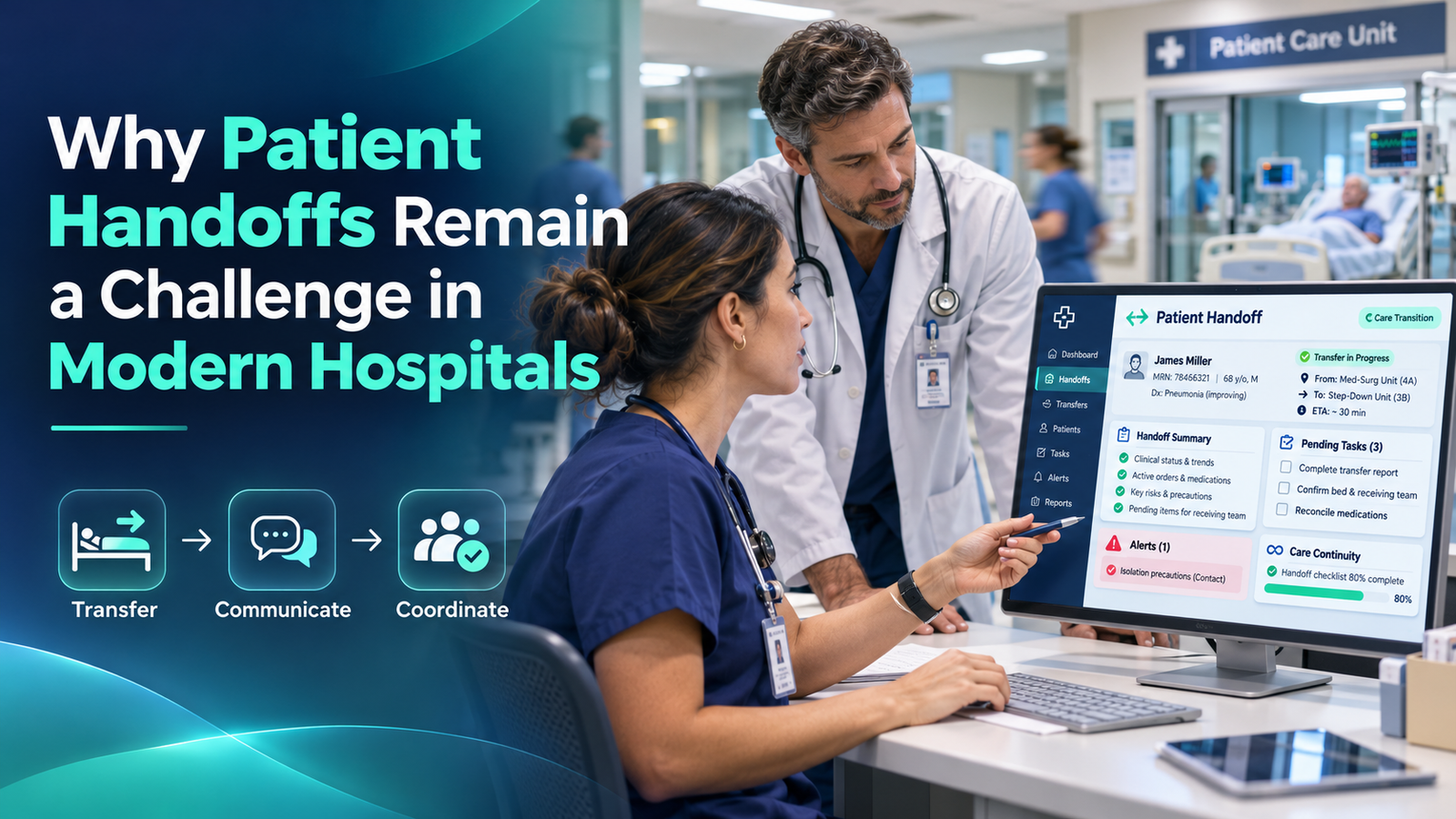
Why Patient Handoffs Remain a Challenge in Modern Hospitals

A patient arrives in an inpatient ward after receiving treatment in the emergency department. The receiving nurse can access the patient’s medical record, but an important detail is missing from the transfer discussion. A laboratory result is still pending, and the incoming care team is unaware that it requires follow-up.

The information may exist somewhere in the hospital’s systems, yet it has not reached the people responsible for acting on it.

Situations like this explain why patient handoffs remain challenging despite the widespread use of electronic health records (EHRs) and digital hospital applications.

Modern hospitals generate enormous amounts of clinical information. However, making information available is not the same as ensuring that the receiving team understands a patient’s condition, treatment priorities, and outstanding responsibilities.

Effective patient handoffs require clear communication, reliable information exchange, and coordinated clinical workflows. Technology can support these requirements, but it cannot replace the communication and accountability needed during care transitions.

Why Patient Handoffs Are Still Difficult

Patient handoffs occur whenever responsibility for care moves between healthcare professionals, departments, or facilities.

Common examples include nursing shift changes, emergency department transfers, ICU step-down transfers, and transitions between surgical and recovery teams.

Each handoff involves different information requirements, clinical priorities, and professional responsibilities.

During a shift change, an incoming nurse may need to understand a patient’s recent observations, medications, treatment response, and pending care activities.

During an ICU transfer, the receiving team may also need detailed information about recent changes in clinical condition, monitoring requirements, and escalation plans.

The challenge becomes greater when hospital departments use different applications or documentation practices.

Even when information is available electronically, care teams may spend valuable time searching for relevant details or confirming what has already been completed.

A successful handoff must transfer not only patient information but also a shared understanding of what needs to happen next.

Where Information Gaps Occur During Hospital Handoffs

Information gaps rarely happen because hospitals collect too little data. They often develop when information is fragmented, delayed, or communicated without sufficient context.

Several problems contribute to these gaps.

Disconnected Clinical Systems

Hospitals commonly operate separate applications for EHRs, laboratory results, medical imaging, pharmacy services, and patient monitoring.

When these systems do not exchange information reliably, healthcare professionals may need to review several screens before understanding a patient’s current condition.

For example, a physician may document a treatment change in the EHR while related observations remain within a separate monitoring application.

The receiving team must then connect these details manually.

Incomplete or Delayed Documentation

Clinical records may not always reflect the latest developments when a patient is transferred.

A treatment decision might be communicated verbally before supporting documentation is completed. Alternatively, important information may be recorded but not highlighted during the handoff.

This can make it difficult for incoming clinicians to distinguish between completed activities and actions that still require attention.

Unclear Task Ownership

One of the most overlooked handoff challenges is knowing who becomes responsible for pending tasks.

A laboratory result may need review, a medication may require clarification, or a specialist consultation may still be outstanding.

If the outgoing and incoming teams do not explicitly establish ownership, the task can remain unresolved even though both teams assume someone else will handle it.

Time Pressure and Interruptions

Hospital staff frequently complete handoffs during busy periods.

Emergency admissions, patient deterioration, staffing constraints, and unexpected interruptions can disrupt communication.

When staff must communicate information quickly, important details may be shortened or omitted.

Technology alone cannot eliminate these pressures. Hospitals also need processes that protect the quality of handoff communication.

How Poor Handoffs Affect Hospital Operations

Incomplete handoffs can create problems beyond individual communication errors.

When information is unclear, incoming staff may need to contact previous care teams, review additional records, or repeat assessments to confirm what happened earlier.

This adds work to already demanding clinical schedules.

Poor coordination can also affect patient transfers. A receiving department may be ready to accept a patient but lack the information necessary to continue care smoothly.

Similarly, unclear responsibilities can delay pending investigations, consultations, and treatment-related activities.

These problems affect clinical teams, hospital operations, and patient experience.

More importantly, gaps in communication can introduce avoidable patient safety risks.

Improving handoffs should therefore be treated as both a clinical communication priority and an operational workflow improvement opportunity.

Why Electronic Health Records Alone Cannot Solve the Problem

EHR systems have improved how hospitals store and access patient information.

However, an electronic record is primarily a source of documented information. It does not automatically ensure that every important detail has been communicated, understood, and acknowledged.

Consider a patient being transferred from intensive care to a general inpatient ward.

The EHR may contain vital signs, medication history, and clinical notes. But the receiving team still needs to understand recent changes in the patient’s condition, potential warning signs, and actions that require close attention.

These details need clear communication, not simply access to more information.

Hospitals should therefore use technology to support structured handoffs rather than replacing direct communication between healthcare professionals.

A connected system can help organize the relevant information while ensuring the receiving team has an opportunity to review, clarify, and accept responsibility.

How Hospitals Can Improve Patient Handoff Workflows

Improving handoffs requires a combination of standardized communication, connected applications, and clear accountability.

Establish Structured Handoff Communication

Hospitals can adopt standardized approaches that guide how important patient information is communicated.

The I-PASS framework, for example, emphasizes illness severity, patient summary, action items, situation awareness, contingency planning, and confirmation by the receiving clinician.

A structured approach helps care teams focus on the details that matter most during transitions.

It also reduces dependence on individual communication habits.

Improve Clinical Information Exchange

Hospital technology can make handoffs easier by connecting relevant information from EHRs, diagnostic systems, pharmacy applications, and monitoring platforms.

Integration methods such as HL7, FHIR, and secure APIs can support information exchange between compatible healthcare systems.

The objective is to make accurate, relevant information accessible without requiring clinicians to search through multiple disconnected applications.

Introduce Shared Task Visibility

A patient handoff may involve several pending activities.

Shared clinical worklists can help teams identify outstanding tasks, assigned responsibilities, and required follow-up actions.

For example, a pending diagnostic result could remain visible to the appropriate receiving team until it has been reviewed and addressed.

Acknowledgment and escalation workflows can provide further clarity when tasks require attention.

However, notifications should be designed carefully to avoid unnecessary alerts and additional administrative burden.

What Hospitals Should Evaluate Before Modernizing Handoffs

Hospitals do not necessarily need to replace their existing clinical systems to improve handoff coordination.

The first step is understanding where communication and information exchange currently break down.

Healthcare leaders should examine how patient information moves between departments, how pending tasks are assigned, and whether receiving teams can access the details needed to continue care.

A practical improvement program can begin with one high-priority transition, such as emergency department to inpatient ward transfers.

Hospitals can review that workflow, identify recurring problems, and introduce targeted changes.

Performance can be assessed through measures such as handoff completeness, time spent clarifying missing information, unacknowledged tasks, and staff feedback.

This approach allows organizations to address specific operational problems before expanding changes across the hospital.

How Ditstek Innovations Supports Better Patient Handoff Workflows

Improving patient handoffs requires a clear understanding of hospital operations, clinical system integration, and the technology supporting care coordination.

Ditstek Innovations helps hospitals, health systems, and healthcare technology companies modernize clinical platforms, connect fragmented applications, and improve information flow across care environments.

Its relevant services include:

Hospital System Integration and Interoperability

Ditstek Innovations supports integration between EHRs, laboratory systems, pharmacy applications, patient monitoring platforms, and other clinical technologies.

These integrations help organizations make relevant information more accessible during patient transitions.

Clinical Workflow Assessment and Modernization

The company helps healthcare organizations evaluate existing workflows, identify manual handoffs, and define technology improvements that address communication and coordination challenges.

Care Coordination Platform Engineering

Ditstek Innovations supports the development of connected care coordination solutions with shared worklists, task routing, clinical notifications, and escalation workflows.

These capabilities can help receiving teams identify pending responsibilities and track important follow-up activities.

Legacy Healthcare Application Modernization

Older hospital systems may lack the connectivity required for efficient information exchange.

Ditstek Innovations supports application modernization, API enablement, and integration improvements that help organizations connect existing technology with newer clinical platforms.

Its consulting-led approach focuses on improving operational workflows while making better use of established healthcare systems.

Conclusion

Patient handoffs remain difficult because they involve more than transferring medical records between healthcare professionals.

Hospitals must ensure that critical information is communicated clearly, responsibilities are understood, and receiving teams have the context required to continue care safely.

Disconnected applications, incomplete documentation, and unclear task ownership can make these transitions unnecessarily complicated.

By combining structured communication with healthcare interoperability, shared task visibility, and targeted workflow modernization, hospitals can work toward more reliable patient handoffs.

Healthcare organizations looking to strengthen clinical communication, improve care coordination, and modernize connected hospital systems can explore Ditstek Innovations’ acute care IT services to support their technology and operational improvement requirements.