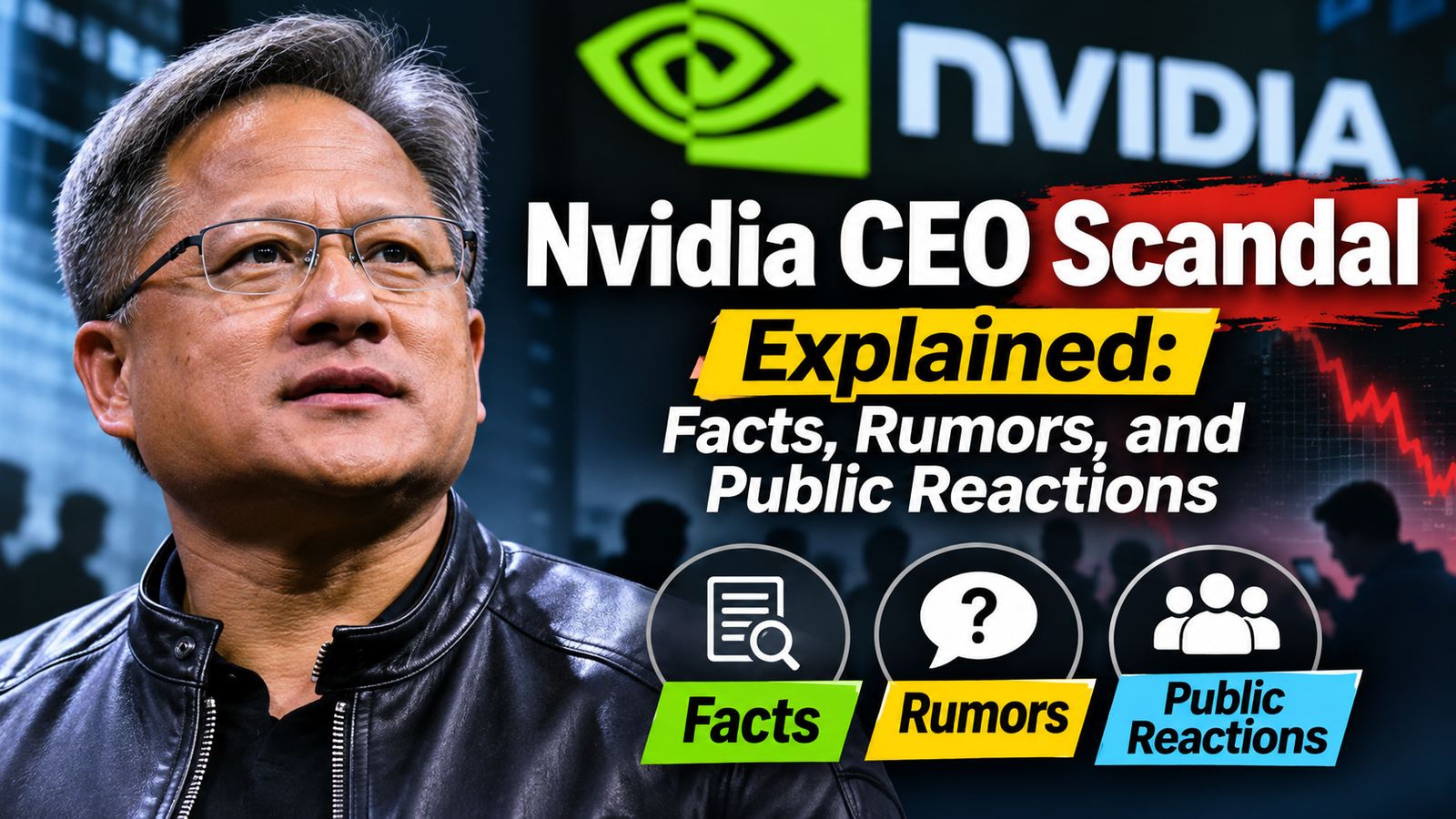
In recent years, Nvidia has transformed from a prominent graphics processing unit (GPU) manufacturer into one of the most valuable technology companies in the world. At the center of this remarkable rise is co-founder and Chief Executive Officer Jensen Huang, whose signature leather jacket and charismatic keynote presentations have made him one of the most recognizable figures in modern business. However, as Nvidia’s market capitalization skyrocketed due to the artificial intelligence boom, search queries regarding an alleged "Nvidia CEO scandal" began circulating across search engines and social media platforms.
When a high-profile executive becomes a household name, rumors, misunderstood corporate filings, regulatory scrutiny, and viral internet content can easily merge into misleading narratives. This detailed analysis examines the facts, separates reality from internet rumors, clarifies actual corporate regulatory challenges, and explores public reactions surrounding Nvidia and its leadership.
The Profile of Jensen Huang and Nvidia’s Unprecedented Growth
To understand why online discussions around Nvidia leadership draw intense public focus, it is essential to look at the scale of the company’s growth. Founded in 1993, Nvidia initially focused on 3D graphics for video games. Over the decades, the company pioneered parallel processing architectures, culminating in the development of CUDA (Compute Unified Device Architecture) in the mid-2000s.
This technical foundation positioned Nvidia perfectly for the generative AI explosion. High-performance accelerators like the A100, H100, and newer Blackwell architectures became the essential infrastructure for training large language models. As tech giants invested tens of billions of dollars into AI infrastructure, Nvidia’s valuation surged past multi-trillion-dollar thresholds. With unprecedented financial dominance comes heightened public, regulatory, and media scrutiny, where every executive transaction, market decision, or rumor is placed under a microscope.
Fact vs. Fiction: Deconstructing the Scrutiny and Rumors
Online search trends mentioning a "scandal" regarding Nvidia’s CEO often stem from three main categories: routine financial transactions that are misinterpreted online, legitimate regulatory antitrust inquiries into the broader company, and malicious deepfake scams circulating on video platforms. Understanding the distinction between these categories is crucial.
1. Executive Stock Sales and Rule 10b5-1 Trading Plans
One recurring source of online speculation involves reports of Jensen Huang selling significant blocks of Nvidia stock. Sensationalized social media headlines occasionally frame executive stock sales as a sign of internal panic, insider wrongdoing, or an imminent market crash.
The Reality: Federal securities regulations in the United States govern executive stock sales to prevent insider trading. Executives commonly establish pre-arranged trading plans under SEC Rule 10b5-1. These plans are set up months in advance, specifying predetermined dates and conditions under which shares will be sold automatically. When public filings (Form 4) show that Huang or other executives sold shares, these transactions are typically routine executions of pre-approved, legally compliant 10b5-1 plans designed precisely to avoid market manipulation or insider conflicts. They reflect standard wealth management and equity compensation realization, not a corporate scandal.
2. Regulatory Inquiries and Antitrust Scrutiny
Another area often conflated with executive misconduct is corporate regulatory pressure. As Nvidia achieved an estimated 80% to 90% share of the data-center AI chip market, regulatory bodies around the world began paying close attention to its business practices.
The Reality: Government agencies, including the U.S. Department of Justice (DOJ), the Federal Trade Commission (FTC), and European regulators, have initiated preliminary inquiries and regulatory reviews into the AI hardware market. Topics under scrutiny include:
- Supply Allocation: Questions regarding how scarce AI GPUs are allocated among customer cloud providers and tech firms.
- Software Lock-in: Whether the proprietary CUDA software platform unfairly deters developers from switching to rival hardware platforms.
- Acquisitions: Regulatory oversight regarding Nvidia’s strategic investments and technology acquisitions.
While antitrust investigations represent significant corporate challenges that require legal defense and strategic adaptation, they are matters of corporate competition law rather than personal criminal scandals or moral misconduct by the executive leadership.
3. AI Deepfake Video Scams and Impersonation
Perhaps the most deceptive driver of rumor trends is the surge of AI-generated deepfake videos featuring Jensen Huang. Cybercriminals regularly create synthetic video clips mimicking the CEO’s voice and appearance to run fraudulent investment schemes.
The Reality: Bad actors post these altered videos on platforms like YouTube, X (formerly Twitter), and live-streaming sites. The deepfakes typically depict a fake keynote speech where "Jensen Huang" promises to double viewers’ cryptocurrency or asks for deposits into fraudulent AI trading programs. When victims fall for these scams or when platforms take down thousands of fake videos, online chatter often references the CEO’s name alongside scam reports, creating confusion among casual observers who mistake criminal impersonation for genuine news about the executive.
Public and Industry Reactions
Public reaction to Nvidia and its CEO varies significantly depending on the audience, spanning Wall Street analysts, tech developers, and retail investors.
Investor Confidence vs. Governance Vigilance
Institutional investors largely view Nvidia’s leadership through the lens of execution and governance transparency. Because executive stock disclosures are filed transparently with the SEC, market analysts evaluate sales within the context of total ownership holdings. Huang continues to retain a massive stake in the company he co-founded, reassuring investors that his financial interests remain tightly aligned with long-term shareholder value.
Developer Ecosystem Perspectives
Within the developer community, discussion centers primarily on Nvidia’s dominant ecosystem. While some open-source advocates argue that Nvidia’s closed CUDA framework limits hardware flexibility, many acknowledge that Huang’s multi-decade bet on parallel computing created the foundation that made current AI breakthroughs possible. The company’s engineering leadership continues to command strong technical respect.
The Impact of Viral Clickbait
In the modern media environment, digital outlets frequently use provocative headlines combining high-profile executive names with emotional trigger words like "scandal," "investigation," or "warning." This practice capitalizes on public curiosity, often taking minor events, standard legal disclosures, or completely unrelated deepfake scams out of context to generate page views.
How to Verify Corporate News and Avoid Misinformation
To navigate rumors surrounding high-profile corporate leaders effectively, readers should adopt key news verification practices:
- Check Official SEC Filings: Financial disclosures, insider stock sales, and material litigation must be formally reported on the U.S. Securities and Exchange Commission EDGAR database (e.g., Form 4 for stock transactions, Form 8-K for major corporate events).
- Verify Primary Sources: Distinguish between primary corporate communications (Nvidia Newsroom) and commentary from unverified social media accounts.
- Recognize Deepfake Red Flags: Be skeptical of any video content where an executive requests cryptocurrency transfers, promotes guaranteed investment returns, or offers exclusive giveaways.
- Distinguish Antitrust from Criminality: Understand that regulatory scrutiny regarding market share and competition policy is a common aspect of large-scale corporate success, distinct from personal financial or ethics violations.
Conclusion: Separating Fact from Media Hype
While search trends mentioning an "Nvidia CEO scandal" may suggest widespread drama, a detailed examination of the evidence reveals a different picture. The primary drivers behind these search terms are a combination of routine, pre-planned executive stock sales, standard regulatory antitrust reviews facing a dominant tech industry leader, and external deepfake scams created by online fraudsters.
Jensen Huang remains one of the tech industry’s most influential figures, leading Nvidia through an epochal shift in global computing power. As AI technology continues to evolve, Nvidia and its executive leadership will undoubtedly face ongoing public, media, and regulatory scrutiny. However, staying informed requires separating verified corporate facts from viral internet noise and clickbait narratives.