Anxiety disorders affect millions of people worldwide and can significantly impact daily life, relationships, and overall health. While occasional stress is a normal part of life, persistent anxiety that interferes with routine activities may require professional support. The good news is that various anxiety disorder treatments are available today, helping individuals regain confidence, emotional balance, and a better quality of life.
Understanding Anxiety Disorders
Anxiety disorders are mental health conditions characterized by excessive fear, worry, or nervousness. These feelings often persist for extended periods and may become overwhelming. Common types of anxiety disorders include Generalized Anxiety Disorder (GAD), Panic Disorder, Social Anxiety Disorder, and specific phobias.
Some common symptoms include:
- Constant worrying or overthinking
- Restlessness and irritability
- Difficulty concentrating
- Sleep disturbances
- Rapid heartbeat
- Feelings of panic or fear
Recognizing these symptoms early can help individuals seek appropriate anxiety treatment before the condition worsens.
Why Early Treatment Matters
Many people ignore anxiety symptoms, assuming they will disappear on their own. However, untreated anxiety can affect personal relationships, work performance, physical health, and overall happiness.
Seeking professional help at an early stage allows healthcare providers to identify the root causes and create personalized treatment plans. Early intervention often leads to faster recovery and prevents complications such as chronic stress, depression, and social withdrawal.
Common Anxiety Disorder Treatments
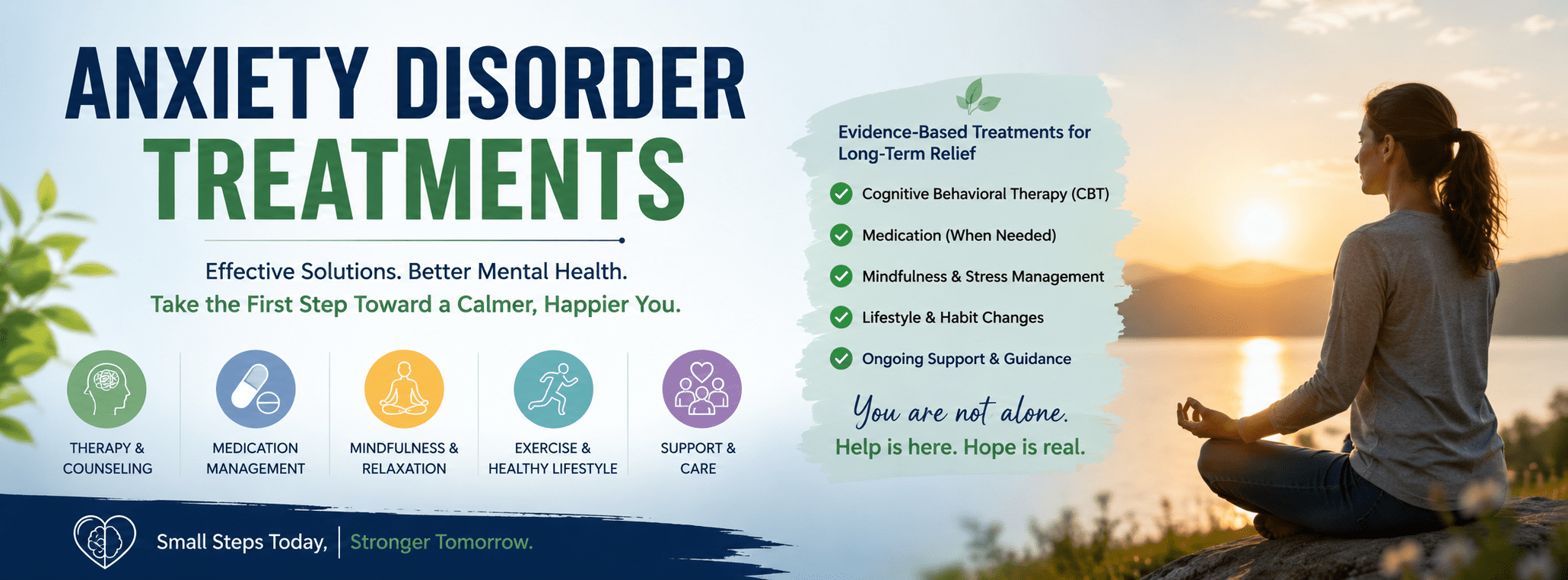
Several evidence-based approaches have proven effective in treating anxiety disorders. Treatment plans are usually customized based on the severity of symptoms and individual needs.
1. Cognitive Behavioral Therapy (CBT)
Cognitive Behavioral Therapy is one of the most recommended forms of anxiety treatment. CBT helps individuals recognize negative thought patterns and replace them with healthier ways of thinking.
Through regular sessions, patients learn practical coping strategies to manage stress, reduce anxious thoughts, and improve emotional resilience. Many people experience significant improvements within a few months of consistent therapy.
2. Medication Management
In moderate to severe cases, healthcare professionals may recommend medication as part of anxiety disorder treatments. Certain medications can help regulate brain chemicals associated with anxiety and mood disorders.
Medication should always be prescribed and monitored by qualified mental health professionals to ensure safety and effectiveness.
3. Lifestyle Modifications
Healthy lifestyle habits can significantly enhance treatment outcomes. Simple changes can make a noticeable difference in managing anxiety symptoms.
These include:
- Regular physical exercise
- Balanced nutrition
- Adequate sleep
- Reduced caffeine intake
- Stress management techniques
- Mindfulness and meditation practices
Combining professional care with healthy daily habits often provides long-term benefits.
Depression and Anxiety: Treating Both Conditions Together
Anxiety and depression frequently occur together. Many individuals experiencing anxiety also struggle with feelings of sadness, hopelessness, or loss of interest in daily activities.
A comprehensive depression and anxiety treatment plan addresses both conditions simultaneously. Mental health professionals may combine therapy, medication, and lifestyle interventions to achieve better outcomes.
Because these conditions often influence one another, treating both together helps improve emotional stability and overall mental wellness.
Benefits of Integrated Treatment
An integrated depression anxiety treatment approach can offer:
- Better symptom management
- Improved emotional health
- Enhanced coping skills
- Stronger relationships
- Increased productivity
- Better long-term recovery outcomes
Personalized care ensures that each individual receives support tailored to their specific challenges and goals.
Alternative and Complementary Therapies
In addition to traditional treatments, many individuals benefit from complementary therapies that support mental well-being.
Popular options include:
Mindfulness Meditation
Mindfulness helps individuals stay present and reduce excessive worrying about future events. Regular practice can lower stress levels and promote emotional balance.
Yoga and Relaxation Techniques
Yoga combines physical movement with controlled breathing, helping reduce tension and improve mental clarity.
Support Groups
Connecting with others who face similar challenges can reduce feelings of isolation and provide valuable emotional support throughout the recovery journey.
Building a Strong Support System
Family members, friends, and mental health professionals play an essential role in recovery. A supportive environment encourages individuals to stay committed to their treatment plans and practice healthy coping strategies.
Open communication and understanding can make a significant difference in managing anxiety and improving overall mental health.
Conclusion
Living with anxiety can be challenging, but effective anxiety disorder treatments are available to help individuals regain control of their lives. Whether through therapy, medication, lifestyle improvements, or a combination of approaches, the right anxiety treatment can significantly improve mental well-being. For individuals experiencing both anxiety and depression, a comprehensive depression and anxiety treatment plan can provide lasting relief and support long-term recovery. Seeking professional help is the first step toward a healthier, happier, and more balanced life.