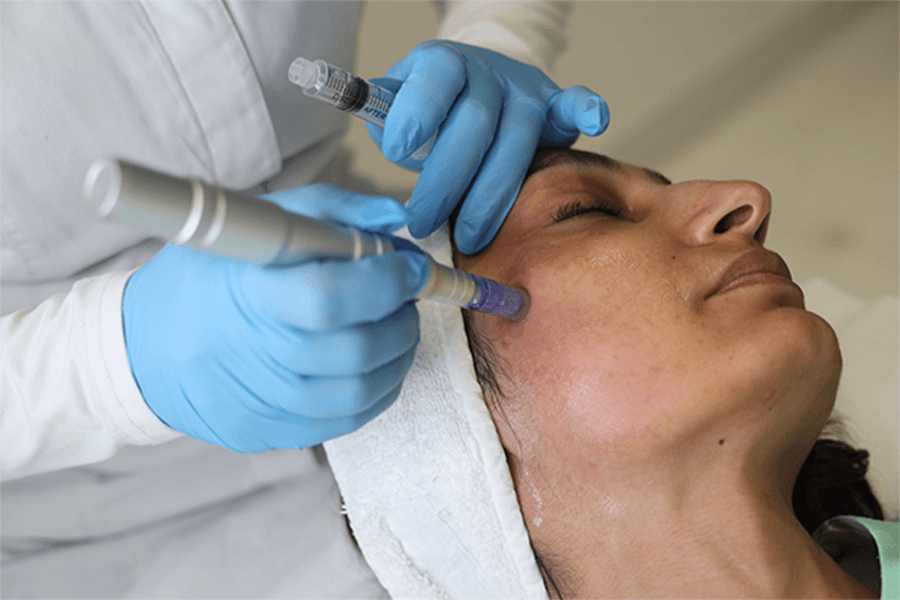

Facial rejuvenation has evolved significantly over the years, moving away from invasive surgical procedures toward refined, non-surgical techniques that offer natural-looking results. One of the most sought-after approaches today is the 8 Point Facelift in Abu Dhabi, a sophisticated method designed to restore structural integrity and balance to the aging face.
- Modern aesthetic medicine focuses on non-invasive structural support.
- This approach emphasizes restoring facial volume rather than just tightening skin.
- The technique utilizes strategic injection points to achieve a lifting effect.
Understanding the Aging Process of the Face
As the face ages, several complex processes occur simultaneously. It is not merely a matter of skin becoming loose; the underlying structure—including fat pads, muscle tone, and even bone density—begins to diminish. This structural loss leads to the descent of facial features, resulting in hollows, sagging, and the deepening of facial lines. Understanding that aging is three-dimensional allows individuals to seek solutions that address the root causes rather than surface-level symptoms.
- Aging involves the redistribution and loss of deep fat pads.
- Bone resorption contributes to a loss of structural framework.
- Collagen and elastin degradation lead to reduced skin elasticity.
The Principles of the 8 Point Approach
The 8 Point technique is based on a structured anatomical assessment. By targeting eight specific anchor points on the face, practitioners can lift and contour the cheeks, jawline, and mid-face. This method is highly precise, focusing on providing support to areas that have lost volume, which in turn helps to “pull” the overlying skin into a more youthful position. The philosophy is one of total facial balance, ensuring that the enhancements complement an individual’s unique features.
- The technique relies on specific anatomical landmarks.
- It focuses on creating support pillars for the face.
- Strategic placement ensures a harmonious and balanced aesthetic outcome.
Why Structural Support Matters for Wrinkles
When considering the question: “Is the 8 Point Facelift good for wrinkles?”, the answer lies in the relationship between volume and skin texture. Many fine lines and deeper wrinkles occur because the skin loses its foundation. When the face lacks volume, the skin sags, creating folds such as nasolabial lines or jowls. By replenishing volume at these crucial structural points, the skin is effectively smoothed out, as it is supported from beneath, naturally reducing the appearance of wrinkles.
- Wrinkles are often a secondary effect of volume loss.
- Supportive injections smooth the skin by creating tension.
- Restoring lost volume helps to lift sagging areas, reducing fold depth.
The Role of Dermal Fillers in Facial Contouring
Dermal fillers are the primary tools used in this procedural approach. Modern fillers are formulated to provide different levels of lift and longevity. Some are designed for deep structural support near the bone, while others are better suited for softer, superficial enhancements. A professional assessment helps determine the correct consistency of product needed to support the specific areas of the face while maintaining a soft, natural expression.
- Fillers provide the necessary volume to support facial tissues.
- Different product viscosities are used for varying depths of injection.
- High-quality fillers integrate well with natural facial tissues.
Achieving Natural-Looking Results
The hallmark of a successful facial enhancement is the “rested and refreshed” look, rather than a “done” appearance. The 8 Point technique excels at this by avoiding over-correction of any single area. Instead, it subtly addresses the entire facial landscape, which helps maintain the individual’s unique character while simply reversing the clock on structural degradation.
- Subtlety is prioritized over extreme changes.
- Global facial assessment prevents disproportionate results.
- The goal is a rejuvenated, not a transformed, appearance.
Tailoring the Procedure to Individual Needs
No two faces age in exactly the same way. An individual might experience significant volume loss in the mid-face, while another may focus more on the jawline and chin. The beauty of this technique lies in its adaptability. While it follows a defined structural roadmap, the amount and placement of volume can be customized to ensure that the final result addresses the specific concerns of the individual, whether that be smoothing wrinkles, defining the jawline, or lifting the cheeks.
- Customization is key to achieving natural results.
- Anatomical variances require a tailored approach for each person.
- Focus areas are prioritized based on individual aging patterns.
Maintaining the Effects of the Treatment
While the results of this approach are visible immediately, it is important to understand that they are not permanent. Because the body naturally metabolizes the substances used, the effects will gradually diminish over time. However, many individuals find that they can maintain their desired look for an extended period with periodic maintenance sessions. Good skincare habits, sun protection, and a healthy lifestyle also play a vital role in protecting the skin’s quality and extending the benefits of any rejuvenation procedure.
- Results are long-lasting but not permanent.
- Maintenance sessions help preserve the desired aesthetic.
- Lifestyle factors influence the longevity of the results.
Frequently Asked Questions
Is the 8 Point Facelift good for wrinkles?
Yes, it is highly effective for wrinkles that are caused by volume loss. By providing structural support to the face, it lifts the skin and smooths out folds and lines, rather than just filling individual wrinkles one by one.
How does the 8 Point technique differ from other treatments?
Unlike general filler treatments that might focus on a single area (like just the cheeks or just the lips), the 8 Point technique uses a holistic, structural approach to balance the entire face.
Who is the ideal candidate for this procedure?
Individuals who are noticing the initial signs of sagging, loss of definition along the jawline, or deep nasolabial folds due to natural volume loss are typically the best candidates.
What is the recovery process like?
As a non-surgical procedure, there is minimal downtime involved. Most individuals return to their daily activities almost immediately, though some mild swelling or sensitivity may occur for a few days.