Healthcare staff work close to people all day. That means the eyes can be exposed to germs from hand surfaces, droplets and patient care tasks. A red itchy or swollen eye may feel like a small problem at first. But in a busy healthcare setting it can affect comfort safety and infection control. If an eyelid bump becomes painful or keeps getting worse Urgent care for stye symptoms may be the right next step.
Why Eye Infections Matter in Healthcare Settings
Eye infections can spread more easily in healthcare spaces because staff touch many shared items during a shift. Charts, keyboards , gloves , masks , phone door handles and treatment tools can all become part of the chain if hand hygiene slips.The eyes are also a direct entry point for some germs. The CDC notes that eye protection helps reduce exposure when healthcare workers may face infectious splashes, sprays or droplets. This matters most during patient care that may involve body fluids, respiratory secretions or close face to face contact.For healthcare staff in Chicago IL this is not just about personal comfort. It is also about protecting patients, coworkers and anyone with a weaker immune system. A mild infection in one person can become a bigger workplace issue if it is ignored.
Common Eye Infections Staff May Notice at Work
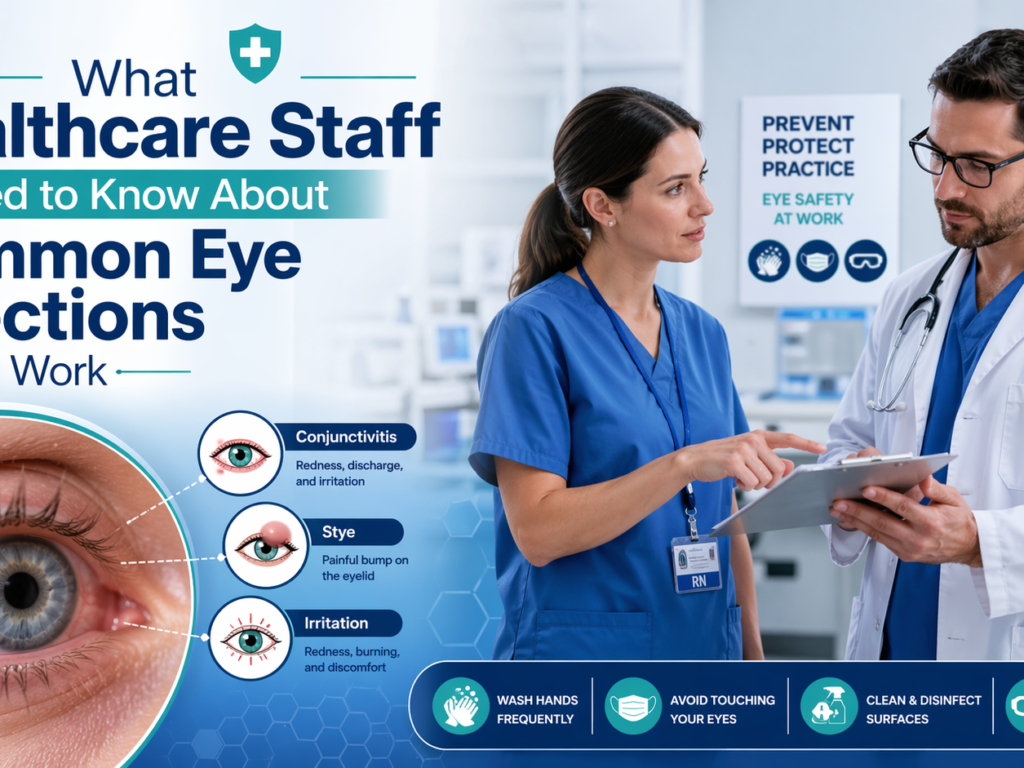
One of the most common eye issues is conjunctivitis. Many people call it pink eye. It can cause redness, watering , itching , burning or discharge. Some cases are viral. Some are bacterial. Others are caused by allergies, chemicals or contact lens irritation. Because symptoms can look similar it is not always easy to tell the cause without a proper check.A style is another common problem. It usually appears as a tender red bump near the edge of the eyelid. It may feel sore when blinking. It can look like a small pimple on the lid. Many styles improve with warm compresses and gentle care. Still a style that grows becomes very painful or affects normal work should not be ignored.Healthcare workers may also deal with blepharitis. This is eyelid inflammation that can cause crusting, burning redness and irritation around the lashes. It can come and go. Long shifts dry indoor air and frequent mask use can make the eyes feel worse.Contact lens related irritation can also become serious. If a staff member wears contacts and develops pain, light sensitivity, blurred vision or heavy redness they should remove the lenses and get medical advice. Eye pain with vision changes is not something to push through during a shift.
How Eye Infections Spread During a Shift
Eye infections often spread through the hands. A person rubs an irritated eye then touches a shared surface. Another person touches that surface then touches their own face. It sounds simple but this pattern happens often during busy workdays.The CDC advises frequent handwashing for at least 20 seconds and avoiding touching the eyes with unwashed hands. It also advises hand hygiene after contact with an infected person or items they used.In real life this means being careful during small moments. Adjusting goggles. Moving a mask. Wiping sweat. Touching the corner of the eye after removing gloves. These quick actions can transfer germs if hands are not clean.Towels tissues eye drops makeup and contact lens supplies should never be shared. In clinical settings personal eye drops should be kept separate and labeled. If someone has drainage or crusting they should be extra careful with linens, trash and anything that touches the face.
When a Stye Needs Medical Attention
A small style can often be managed with warm compresses. A clean warm cloth placed over the closed eyelid may help the blocked gland drain naturally. The key is to be gentle. Do not squeeze it. Do not pop it. That can push infection deeper or make swelling worse.Medical care is a good idea if the style does not improve after several days of home care. It is also important to seek care if redness spreads around the eye or into the face. The American Academy of Ophthalmology says a bump that does not resolve within three to four weeks or is growing or interfering with daily life should be checked.For a healthcare worker this decision may come sooner. If the eyelid is very swollen or the eye is hard to open it can affect patient care. If there is fever vision change severe pain or spreading redness urgent evaluation is safer. This is where Urgent care for style concerns can make sense. Same day care can help determine whether it is only a stye or something more serious such as a deeper eyelid infection. A provider may recommend prescription treatment if needed.
Simple Steps to Lower the Risk at Work
Prevention is mostly about habits that are easy to understand but hard to keep during a rushed shift. Hand hygiene is the first one. Clean hands before and after patient contact. Clean hands before touching your face. Clean hands after removing gloves.Eye protection also matters when exposure is possible. Goggles, face shields and similar protection can help block splashes, sprays and droplets from reaching the eyes. Regular glasses are not the same as protective eye equipment.Try to avoid rubbing your eyes at work. If your eyes feel dry use approved lubricating drops when appropriate. If you wear contacts, keep backup glasses available. Long shifts can make contact lenses uncomfortable and irritated eyes are easier to rub without thinking.Shared work areas should be cleaned often. This includes computer stations, phones counters, chair arms and equipment handles. These surfaces may not look dirty but they are touched all day.Staff should also be careful with makeup and lash products. Old mascara or shared products can increase the risk of irritation or infection. If an eye infection appears it is usually best to stop using eye makeup until symptoms are gone.
When to Stay Home or Seek Care in Chicago IL
Healthcare workers often feel pressure to keep working even when they are uncomfortable. But eye symptoms can create real concerns in patient care. A watery red eye with discharge may be contagious. A painful swollen eye may make it hard to focus. Blurred vision can affect safe work. The CDC says people with viral or bacterial conjunctivitis and systemic signs of illness should remain home if they cannot avoid close contact with others. They may return to work or school when a clinician approves and any needed treatment has started.For staff in Chicago IL it is smart to follow workplace policy and speak with employee health or a supervisor when symptoms appear. Rules may vary by facility. A hospital unit clinic urgent care center dental office or long term care site may each handle eye infection concerns differently. Searching for urgent care in Illinois may help when symptoms need a same day check and your regular doctor is not available. This can be useful for a stye that is worsening or for red eye symptoms that come with pain discharge swelling or concern about work clearance.
How Healthcare Teams Can Support Safer Eye Health
Eye infection prevention should not fall only on one staff member. A safer workplace comes from a team culture where people feel comfortable speaking up. If someone has eye drainage swelling or redness they should not feel embarrassed to ask what to do.Managers can help by making infection control reminders simple and visible. Hand hygiene stations should be easy to reach. Eye protection should be available where staff need it. Cleaning supplies should be stocked and simple to use.Training also helps. Many staff know the basics of infection control but eye health is easy to overlook until symptoms start. A short reminder during team meetings can make a difference. Staff should know when to report symptoms and when they may need medical clearance. Healthcare teams in Chicago IL deal with long shifts, high patient volume and constant exposure risks. Small habits can protect both staff and patients. Clean hands, proper eye protection and early care can prevent many minor eye issues from becoming bigger problems.
Final Thoughts
Common eye infections at work should be taken seriously but they do not need to cause panic. Most staff can lower their risk with clean hands, safe PPE habits and quick action when symptoms appear. A red eye, painful eyelid bump or swollen lid is not something to ignore during patient care. When symptoms are mild home care may help. When pain swelling discharge or vision changes appear it is better to get checked. For healthcare staff in Chicago IL knowing when to seek help can protect your eyes and your workplace. If symptoms are getting worse or you need timely care before returning to work looking for urgent care in Illinois may be a practical next step.