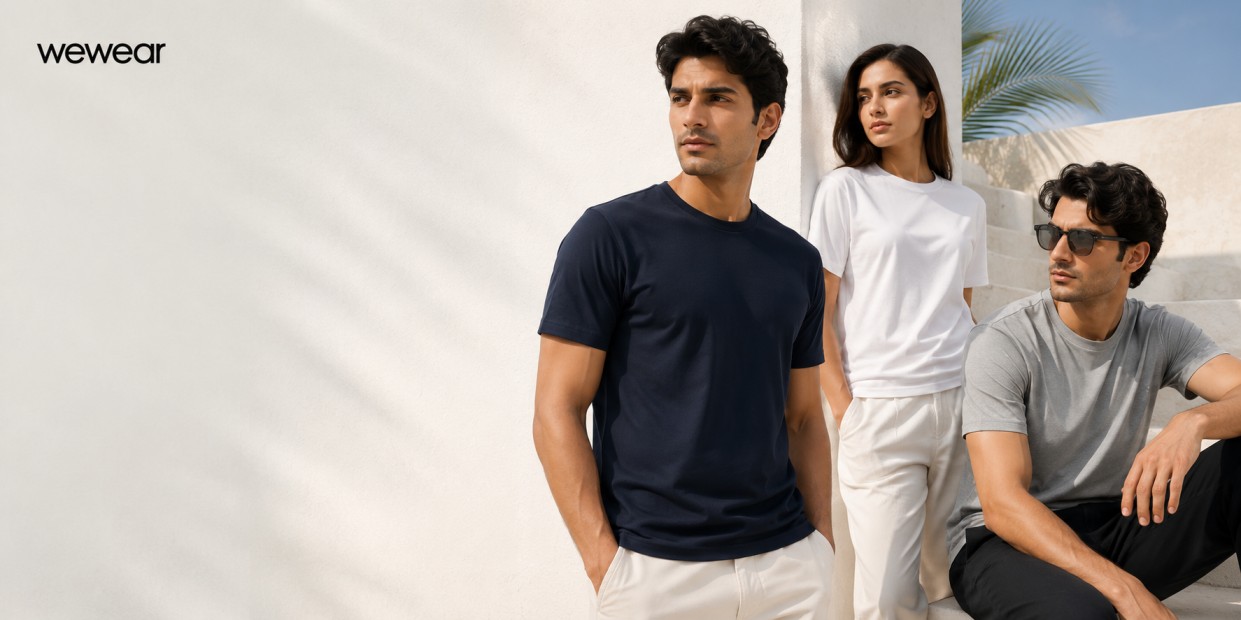
Picture two people. Same city, same brutal July afternoon, same forty-degree heat index. One of them is power-walking to a lunch meeting, jacket slung over his arm, a white tee sitting clean and easy against the skin, somehow still looking like they got dressed five minutes ago. The other is already regretting every life choice that led them to wear a polyester blend today.
The difference isn’t genetics, a gym membership, or some expensive antiperspirant. It’s a fabric label.
This is a problem most people wearing western clothing in Pakistan know intimately: the gap between how an outfit looks at 8 am and what it becomes by noon. The right fabric doesn’t just close that gap. It eliminates it.
Synthetics Were Sold to Us Hard
There was a period, roughly the 90s through the mid-2000s, where performance fabrics felt like the future. Moisture-wicking, quick-dry, four-way stretch. The marketing was aggressive, and it worked. A lot of people still carry that assumption: synthetic means advanced, natural means old-fashioned.
For everyday heat, it’s mostly backwards.
Polyester moves moisture but doesn’t let your skin breathe in any meaningful way. The fiber structure is essentially plastic it doesn’t absorb, it redirects, and in doing so creates a layer of trapped warmth between fabric and body. Fine for a twenty-minute run. Actively miserable for a full day in Karachi or Lahore in July.
Cotton’s hollow fiber structure participates in the cooling process rather than just managing the output of it. Moisture gets absorbed into the fiber, air moves through the weave, and the fabric’s natural weight keeps it hanging slightly off the skin. That gap is small, but it matters enormously when you’re outside for hours.
The honest caveat: in extreme humidity, cotton can feel damp. This is real. But it’s largely a fiber quality problem; cheaper cotton holds moisture longer, better cotton moves it through faster. The answer isn’t to abandon the fabric, it’s to understand which version you’re buying.
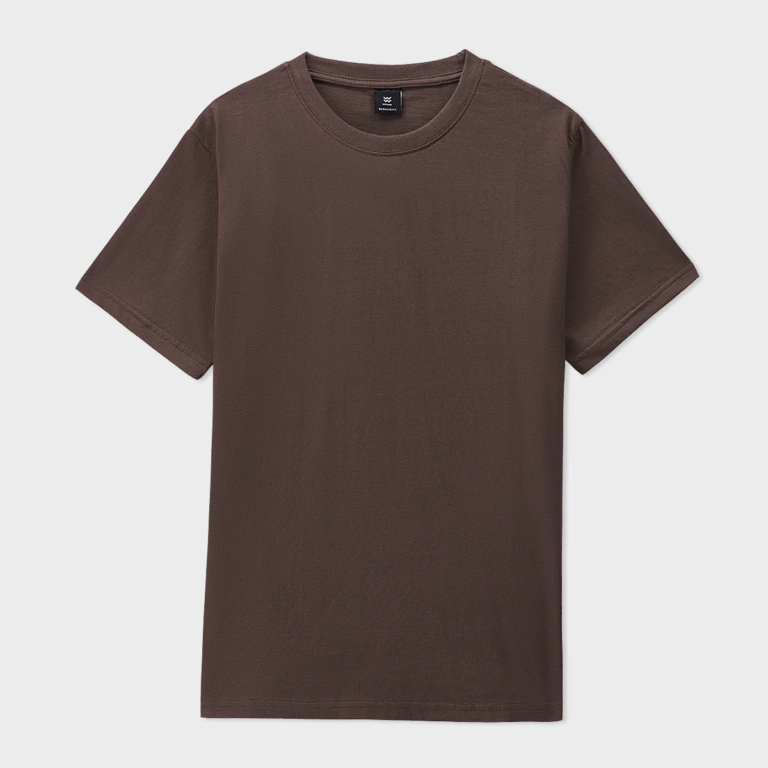
Finding Quality T-Shirts in Pakistan: What the Label Isn’t Telling You
Walk into most places selling t-shirts in Pakistan, and the label says one thing: 100% Cotton. No fiber grade, no spinning method, no indication of whether what you’re holding will feel the same in October as it does today.
Here’s what those labels aren’t saying:
Regular Cotton The Baseline
Shorter, inconsistent fibers that break and pill over repeated washing cycles. The shirt that felt acceptable in the store feels noticeably worse by August. It breathes reasonably well, but degrades quietly. Most people just assume that’s what cotton does. It isn’t.
Super Combed Cotton: The Practical Choice
Before spinning, the raw fiber gets combed to remove short and irregular fibers, producing a denser yarn that holds together better under stress. For cotton t-shirts for men and women worn heavily through a Pakistani summer, this is where the value lies. The surface stays smoother for longer, the shape holds through more washes, and the collar doesn’t develop that rough, distorted edge cheaper tees get by midseason.
Supima Cotton T-Shirts When Appearance Matters
A specific variety of extra-long staple cotton with a faint natural surface sheen and significantly better color retention, especially white. Supima cotton t-shirts have a softness that registers as slightly out of place on a t-shirt, in a good way. They sit more comfortably on the body, which makes them the right call when the outfit needs to work harder than a regular tee would allow.
If you’re looking to actually test this out locally without dealing with import markups, wewear is currently the most prominent brand making true Supima accessible here.
Super Combed is about durability across heavy rotation. Supima is about surface quality and how the shirt reads. Both are worth owning. They’re not interchangeable.
The Same Logic Applies, Regardless of Who’s Wearing It
Most writing about men’s casual t-shirts treats the fabric conversation as exclusively male territory. It isn’t.
Cotton t-shirts for women face the identical problem in Pakistani heat, the same synthetic trap, the same fiber quality gap, the same difference between a plain tee that holds up and one that doesn’t. A plain t-shirt for ladies in Super Combed or Supima performs exactly the same way: better color retention, better shape, more comfortable across a full day.
The western clothing conversation in Pakistan, men’s western clothing and women’s western clothing alike, has been slow to focus on fiber quality because most of the market competes on price and silhouette. Reading the label yourself remains the more reliable approach.
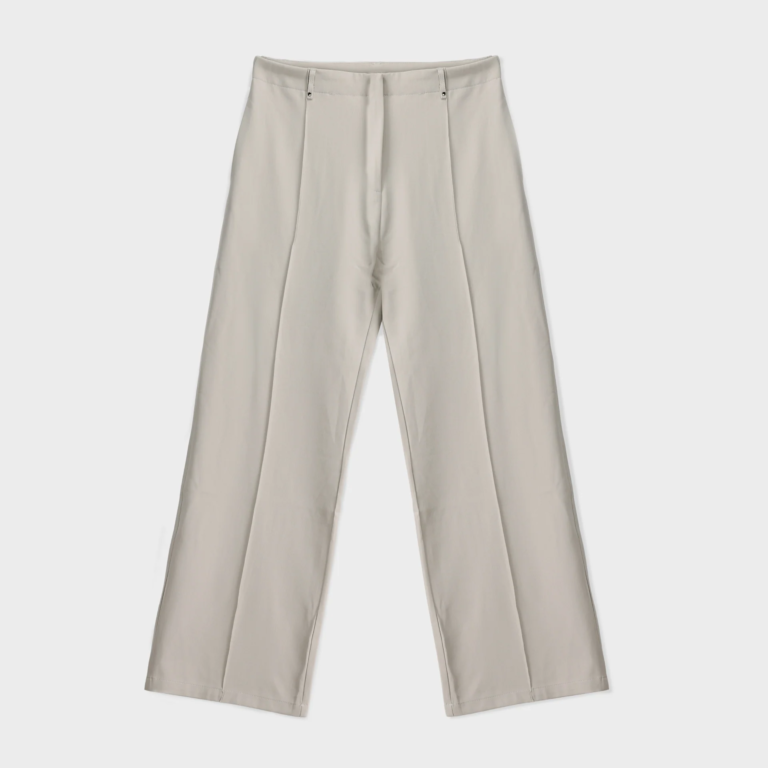
Below the Waist Is Where Most Outfits Quietly Fail
A breathable tee paired with heavy denim is still a hot afternoon. Whether it’s men’s or women’s bottom wear, the fabric logic is identical: what you wear below the waist either completes the outfit or undermines it.
Linen and Cotton-Linen Blends
Linen’s stiffer fiber structure holds the fabric away from the leg, rather than draping against it you get airflow with every step. The wrinkling reputation is real but overstated; pure linen worn for a few hours develops a relaxed texture that reads as intentional rather than neglected. For days where shape matters, a cotton-linen blend handles the wrinkling without sacrificing much breathability.
Chambray
Finding well-made casual pants and trousers in Pakistan that actually breathe in July is harder than it should be; most available options skew toward heavier constructions. Chambray looks like denim but weighs a fraction of it. Same visual register, significantly more comfortable. If your default is dark jeans because you like the aesthetic, this is the straightforward swap that doesn’t require rethinking the whole outfit.
Washing Habits That Actually Protect the Fabric
- Wash cold, always. Most softness that disappears from a good tee after a season is hot-wash damage, not wear. Turn shirts inside out beforehand to reduce friction on the outer surface.
- Keep white cotton out of direct sunlight. UV exposure causes yellowing that develops gradually and eventually becomes permanent. Dry in shade or indirect light.
- Be careful with the dryer. Pull shirts out while still slightly damp and lay flat to finish. A collar that gets distorted in a hot dryer stays that way.
What Changes When You Get This Right
The version of summer dressing that involves constantly adjusting, being aware of how uncomfortable you are, that’s almost entirely a fabric problem. The clothing either cooperates with your body’s cooling system or it doesn’t.
Once you’ve worn the version that does, going back is genuinely difficult.
Check the label on your favourite summer tee. If it just says “cotton” without anything further, now you know what to look for and why it matters. (And if you want to skip the guesswork, labels like Wewear are a reliable starting point for genuine Supima.)