
Are you someone who is obsessed with handbags and frequently finds yourself staring at a bag, finally ending up buying it? If this describes your situation, you may have accumulated a large number of handbags and now find yourself with no more space for new ones.
Crazy enough! But now, you have several options to make room for new bags, and no, we are not suggesting you simply give them away. You can explore various options to make room for new bags, including getting your handbag valuation done, selling it, or auctioning it at documented prices before purchasing the one you desire.
Now, this might bring you to a new question, which is, “Is my designer bag actually worth more now than when I bought it?” A thoughtful question indeed, but if you are someone wanting to have an answer to this question, then you are definitely not alone. We all know that resale platforms have been tremendously booming these days, and more people are treating fashion like an investment. This is why clearly understanding handbag valuation and appraisal has become more important than ever.
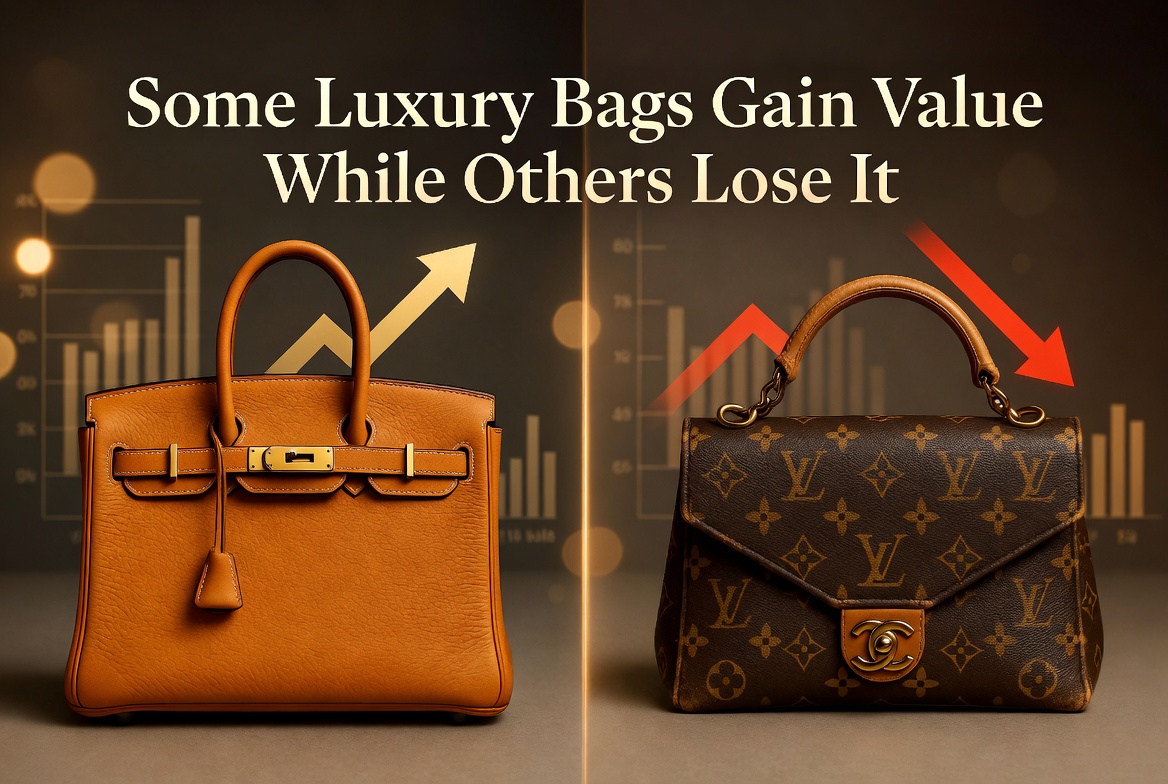
You might have heard that a few luxury handbags got resold for an even higher price, while a few, on the other hand, had an even lower value. There is a reason behind why some bags quietly appreciate over time and become highly sought-after pieces, while others lose value faster than expected. And if you have been confused regarding how such a phenomenon can happen, then this is just the right article for you.
Let’s understand things in detail so that you can make the right decisions when required, but first let’s understand: are the luxury bags really investment pieces?
Are Luxury Bags Really Investment Pieces?
To be honest, there is no single yes or no to this question. The fact is that handbags can appreciate in value, but they can also depreciate over time. Therefore, if you are considering the future value of a bag while making a purchase, it is likely that you will not find a definitive answer, except for a few high-end luxury bags.
This is a fact that certain luxury bags can generate profits and appreciate in value, but not every purchase qualifies as an investment. Many bags lose value once used, particularly those that were trendy or widely available.
Therefore, getting the handbag appraisal done is vital before it’s too late.
Why Some Luxury Bags Gain Value
1. Brand Reputation and Heritage
A high brand reputation, maintained over a longer period, can significantly strengthen the valuation of a handbag. Several brands are recognized for their quality and craftsmanship, which contribute to the handbag’s ability to retain its value. Several factors contribute to the appreciation of both the brand and the handbag:
- Maintains consistent quality over decades
- Has loyal customer bases
- Increases retail prices regularly
2. Limited Supply and Exclusivity
There are several drivers of value, and scarcity is one among them. When you see a bag that is a limited edition and, hence, difficult to obtain, the price automatically rises and it becomes desirable. For example, the limited-edition handbags, the discontinued styles, or bags with long waiting lists tend to perform well because the buyers are ready to pay any price to own them. When you go for the handbag appraisal, the bag’s scarcity becomes an important factor in determining the current worth of the bag.
Here’s why scarcity matters:
- Fewer pieces available = higher demand
- Collectors are willing to pay a premium.
- Resale competition is lower
Why Some Luxury Bags Lose Value
1. Oversupply in the Market
Anything that is commonly available becomes less exclusive and therefore very common, thereby losing value in the market. This phenomenon is the reason why when a handbag is mass-produced, it becomes common, easily available, and therefore valueless. The value of such bags depreciates when the valuation is done.
2. Poor Care and Storage
If you don’t take proper care of the bag, it is likely to become damaged and less desirable. Such negligence can reduce the value of the bag, as the buyers will be less inclined to offer to buy it at a very cheap rate. Such negligence reduces the value of the bag.
Common mistakes include:
- Storing bags in humid environments
- Overloading them and damaging their structure
- Ignoring minor repairs
Summing Up
To sum up, whether it is a handbag, a watch, or a similar item, if the demand to purchase it is lower then, there is a high likelihood that after getting it valued, you will find that it has depreciated in value. On the other hand, if it is properly maintained and has been produced in a limited number, the chances of the stuff getting appreciated become extremely high.