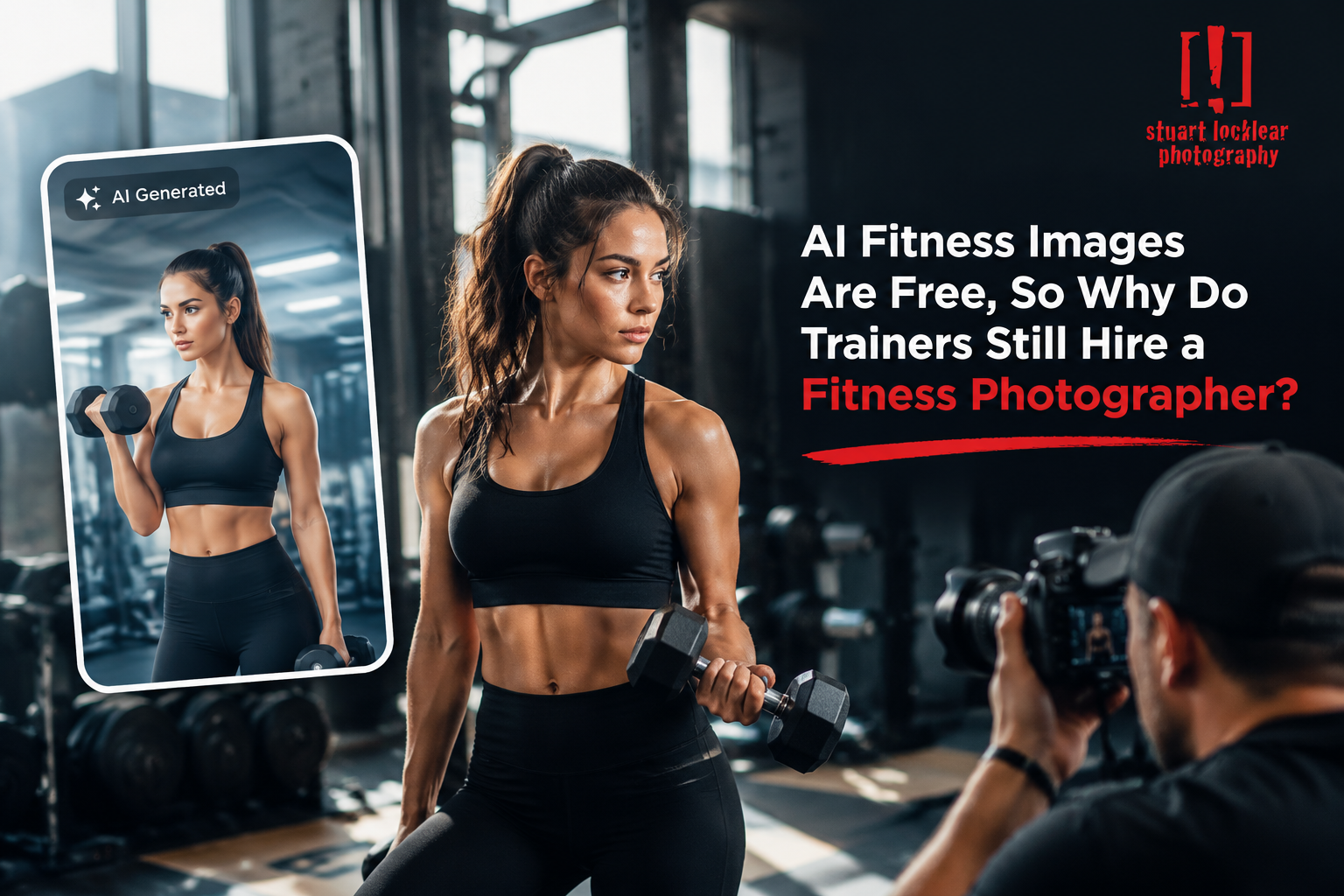
Open any image generator and you can have a polished gym portrait in about ten seconds. No studio, no schedule, no invoice. So it is fair to wonder why personal trainers, coaches, and gym owners still pay a fitness photographer to show up with real lights and real cameras. The answer comes down to trust. Clients hire a trainer because they believe results are possible, and belief needs proof. A generated image can look impressive, but it cannot show that you or your clients did the work. This article covers what AI images do well, where they fall short for fitness professionals, and what a human photographer adds. If you sell your skills and your story, the difference matters.
What AI Images Actually Do Well
Let’s be fair first. AI tools are fast, cheap, and useful for certain jobs. They can mock up a banner layout, create a background texture, or sketch a concept for a social post.
For brainstorming, they save time. A trainer can test five visual styles before choosing a direction. But brainstorming is not branding. Once images represent you in front of paying clients, the standard changes.
The Trust Problem With Synthetic Fitness Photos
Fitness is a field built on credibility. People hand you their health goals, their time, and their money. They want to know you are real and that your methods work.
Some AI images still give themselves away through distorted hands or equipment that makes no sense, although the tools keep improving and many images now pass a quick glance. The bigger issue is not whether someone spots the flaws. It is what happens if they learn later that your “client result” was generated. Some platforms also ask creators to label AI content, so disclosure may be expected anyway.
Once a potential client feels misled, doubt spreads to everything else you say.
Real Results Need Real Proof
The strongest marketing in fitness is a genuine transformation. A before and after pair, a client mid-lift, or a coach demonstrating a movement all carry weight because they actually happened.
AI can produce a convincing picture of a transformation, but it cannot document one. Image tools can also get exercise form wrong, so a generated squat or deadlift may show positions that knowledgeable followers would question. A real photo of correct technique protects your reputation.
The Technical Challenges of Shooting in a Working Gym
A working gym is not a studio, and that is where experience shows. Overhead fluorescent tubes mix with window light, and the two have different color temperatures, which can leave skin looking green on one side and blue on the other. Mirrors throw reflections into the frame, and members wander through the background.
A photographer solves these problems on the spot by switching off certain lights, changing angles, or adding controlled lighting.
Timing is the next hurdle. A lift happens in a fraction of a second, so the shutter speed must be fast enough to freeze motion. The photographer also has to read the athlete’s rhythm and press the button at the peak of effort.
Outdoor sessions bring their own puzzle in San Francisco. Fog can roll in and flatten the light within minutes, and wind off the bay can make a sprint or a banner shoot harder to control. A photographer who has worked these conditions knows when to wait, when to move, and when to switch to an indoor backup.
Scouting the space beforehand makes all of this easier, which is one practical reason people search for a fitness photographer near me instead of someone who must figure out the room on the day.
How a Fitness Photographer Works With You, From Planning to Delivery
The technical side is only half of the picture. The other half is what the experience looks like from your side of the camera.
A session with Stuart Locklear Photography and similar professionals generally follows a clear path:
- A planning conversation about your brand, audience, and goals
- A shot list covering action photos, portraits, and detail images
- Guidance during the session, so you know where to stand, how to move, and when to relax
- Careful editing that keeps skin tones and muscle definition honest
- Delivery of final files, along with clear terms for how you can use them
Many people feel stiff in front of a camera, even confident coaches. Friendly direction and a bit of conversation usually loosen things up. The result is a set of images tied to a real person, a real place, and a real moment.
Where Real Photography Pays Off for Your Business
Good images are not decoration. They work across nearly every part of your marketing.
Websites and Social Media
Your homepage, profile pictures, and weekly posts all depend on strong visuals. Original photos give you a consistent look that followers recognize.
Press, Partnerships, and Sponsors
Brands and event organizers want clear, high-resolution images they can use. Professional photographers typically provide written usage terms. If you use an AI tool instead, check its commercial-use rules, since they vary by platform.
Client Stories
Featuring real clients in your gallery can help build a sense of community and give them something meaningful to share.
Choosing the Right Person for the Job
Not every photographer understands fitness. Movement, muscle definition, and fast, sweaty scenes demand specific skills. If your clients train in San Francisco, a photographer who already knows the city’s gyms, studios, and outdoor spots will plan faster and adapt better. When you look for a fitness photographer near me, look past the first result and study the work closely.
Check these points before you book:
- A portfolio with real athletes and trainers, not only models
- Experience in gyms, outdoors, and studios
- Clear communication about delivery time and usage rights
- A style that matches your brand, whether bold and gritty or clean and bright
Browsing a working photographer’s gallery, such as the one from Stuart Locklear Photography, shows you what consistent quality looks like across a whole set of images.
Proof Still Beats Polish
Photography itself once changed portrait painting, and skilled painters still found their audience. AI is a useful tool for drafts and ideas, and it can sit beside real photography without replacing it. If you are building a reputation in fitness, invest in images that show you are who you say you are. Use AI for quick sketches if you like, but let a real fitness photographer capture the work that represents you.
Picture a prospective client scrolling your page late at night, deciding whether to book a first session. What they need is evidence that you are real, that your work is real, and that people like them got somewhere. A well-made set of photos can say that before you say a word.