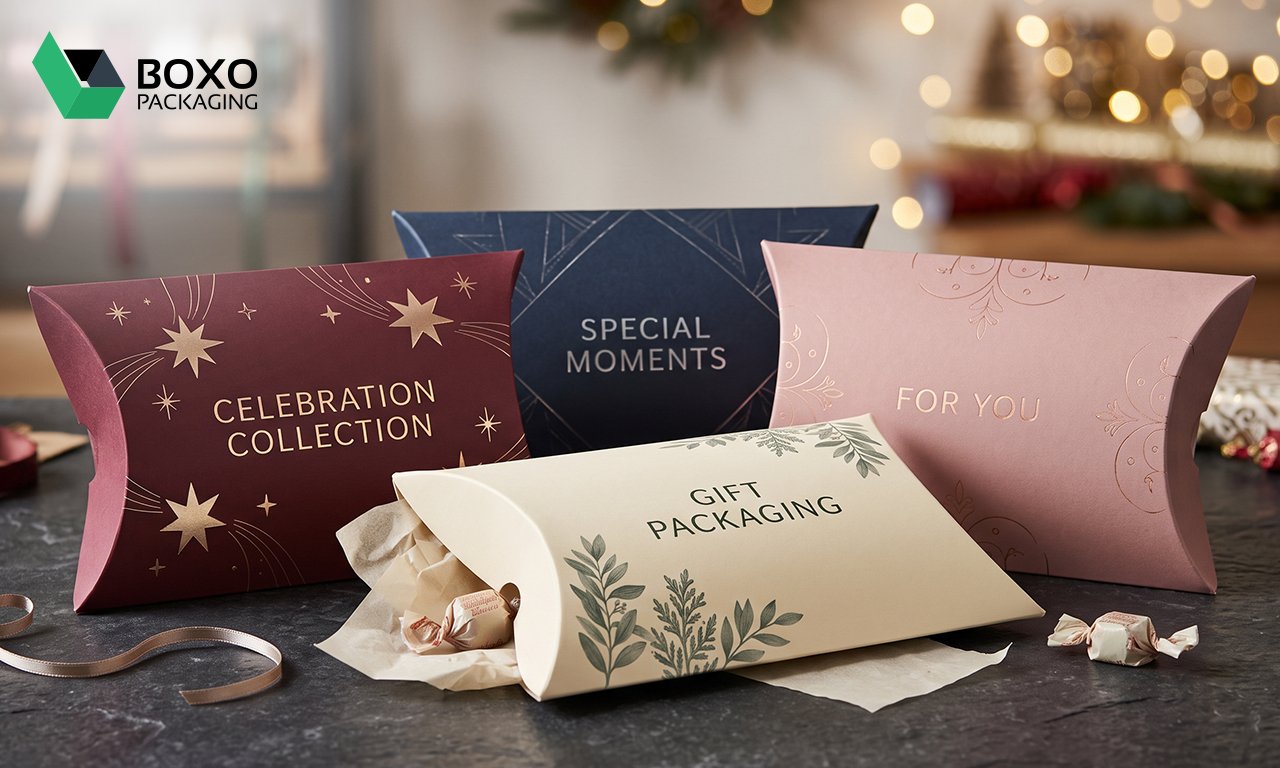
Flexible materials behave differently from rigid board, and the shape of the package follows the product rather than forcing the product into a fixed form. Pillow packaging forms a sealed pouch with rounded side edges and crimped ends, so soft or irregular items sit inside without pressing against hard corners. The finished shape resembles a cushion, which is where the name comes from. That structure suits items that need to be contained but not held rigid, such as confectionery, small hardware parts, or textile accessories.
Where Does the Seal Line Decide Performance?
The crimped seal is the load-bearing feature of the format. A narrow seal that is not fully fused can open under the weight of the contents or during handling in a distribution center. Seal width, temperature, and dwell time all affect how strong the join becomes, and those settings change with the film being used. A wider seal band adds security but consumes more film, which shifts the material cost per unit. Testing the seal on filled samples, rather than empty film, shows whether the closure holds when the pouch is actually loaded.
- Barrier film protects contents from moisture and oxygen ingress
- Crimped end seals create a closed pouch without adhesive
- Transparent options keep the product visible on shelf
- Flat packing reduces warehouse space before filling
How Do Film Choices Change Protection and Appearance?
Film selection determines what the package can protect against. A metallized layer blocks light and slows oxygen transfer, which helps products that degrade on exposure. Clear film keeps the contents visible, which matters when the product itself carries the appeal. A matte finish reduces glare under store lighting, while a gloss surface reflects light and makes printed graphics look sharper. Thickness affects stiffness as well, since a heavier film holds its shape better but costs more per meter.
Which Filling Methods Suit This Format?
The format works best when the filling method matches the film. Vertical form-fill-seal equipment runs the film from a roll, forms a tube, fills it, and seals the ends in one continuous motion. That setup favors high volumes of small items with consistent dimensions. Manual filling suits short runs and irregular products, though seal quality then depends on the sealing equipment and operator consistency. Checking a filled sample for seal integrity before a production run catches problems while they are still cheap to fix.
How Does Printing Behave on Flexible Film?
Print quality on film depends on surface treatment and ink choice. Untreated film can reject ink, so a corona treatment or a coated surface helps the ink bond. Flexographic printing handles moderate detail at high speed, while digital printing supports shorter runs and frequent design changes. Registration matters more on film than on board because the material stretches slightly during the run, so artwork with tight tolerances needs testing on the actual substrate. Boxo Packaging produces these formats with film and seal specifications matched to the product.
Tuck Boxes for Reclosable Retail Cartons
A tuck box closes with a flap that folds into a slot on the opposite panel, so the carton can be opened and closed repeatedly without losing its shape. That simple mechanism makes tuck boxes a common choice for products that customers inspect before buying, and for items that are used over several sittings. The design uses a single die-cut blank, which keeps production straightforward. A glue flap holds the body together while the tuck flaps do the closing work at both ends.
How Do Straight and Reverse Tuck Ends Differ?
The two common configurations place the tuck flaps in different positions. A straight tuck end hinges both flaps off the same panel, so the front and back panels present clean closing edges. A reverse tuck end hinges the flaps off opposite panels, which leaves the front panel free of tuck-slit edges and allows a graphic to run edge to edge. Reverse tuck blanks also nest more efficiently on a press sheet, which usually lowers the per-unit cost at the same dimensions. The front panel appearance and the cartoning equipment both influence which structure is the better fit.
- Straight tuck ends present clean edges on two faces
- Reverse tuck ends free the front panel for full-bleed graphics
- Friction tuck closures allow repeated opening and closing
- Single-blank construction reduces material waste
Which Board Weights and Finishes Hold Up?
Board weight needs to match the product and the handling it will receive. A lightweight carton for soap or tea sachets can use a moderate caliper, while a heavier item such as a small bottle calls for a stiffer board or a reinforced base. Coated paperboard takes full-color printing cleanly, and a lamination adds scuff resistance on cartons that will be handled often. An uncoated surface accepts handwriting and stamps, which suits short-run or sample packaging.
Where Does This Format Fall Short?
The friction tuck has limits. Dense products above roughly a pound and a half can work the bottom flap open during transit unless a slit-lock or glue assist is added. Tall cartons also place more strain on the tuck flaps, since the side panels flex under load. For heavy or fragile items, a corrugated mailer or a lock-bottom carton is often the safer structure. Knowing where the format stops performing well prevents returns and damaged goods. Custom tuck boxes sized to the product, rather than to a stock dimension, reduce that risk by keeping the contents from shifting inside.
Which Products Suit a Tuck Closure?
Cosmetics, soap, candy, jewelry, tea, and small accessories all work with this closure because they are light and often inspected before purchase. Products that need a premium unboxing moment may find the tuck format too plain, since it reads as a retail shelf carton rather than a gift package. Matching the closure to the product’s weight and to the way customers will handle it keeps the format doing what it does best.