
Introduction to Geology and Its Importance
Geology is the scientific study of the Earth, its materials, the processes that act upon them, and the history of our planet over billions of years. Far from being a purely academic discipline, geology plays a vital role in understanding natural hazards, managing natural resources, and addressing environmental challenges. From earthquakes and volcanoes to fossil fuels and groundwater, geology provides insights that directly impact human society.
At its core, geology seeks to answer fundamental questions about how the Earth formed, how it has changed over time, and how its dynamic systems continue to evolve. By studying rocks, minerals, and landforms, geologists reconstruct Earth’s past and predict future changes. This knowledge is essential not only for scientists but also for policymakers, engineers, and everyday citizens.
The Structure of the Earth
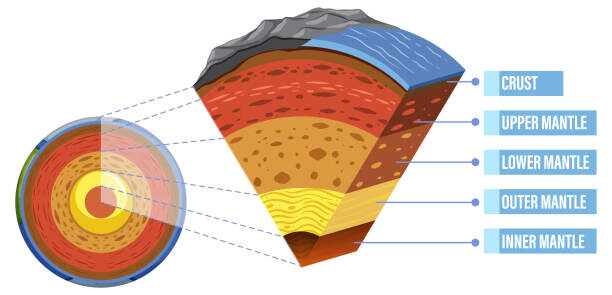
Understanding the Earth’s internal structure is central to geology. The planet is composed of several distinct layers, each with unique physical and chemical properties.
The Crust
The crust is the outermost layer of the Earth and the one we directly interact with. It is relatively thin, ranging from about 5 kilometers beneath the oceans to around 70 kilometers beneath continents. Despite its thinness, the crust contains a wide variety of rocks and minerals that record Earth’s geological history.
There are two main types of crust: oceanic and continental. Oceanic crust is denser and primarily composed of basalt, while continental crust is less dense and composed mainly of granite. This difference plays a crucial role in tectonic processes.
The Mantle
Beneath the crust lies the mantle, which extends to a depth of about 2,900 kilometers. The mantle is composed of silicate rocks rich in iron and magnesium. Although it is mostly solid, it behaves like a very slow-flowing fluid over long periods.
Convection currents within the mantle drive the movement of tectonic plates, making it a key component in Earth’s dynamic system. These movements are responsible for many geological phenomena, including earthquakes, volcanic activity, and mountain building.
The Core
The core is divided into two parts: the outer core and the inner core. The outer core is liquid and composed mainly of iron and nickel, while the inner core is solid due to immense pressure despite its high temperature.
The movement of molten metal in the outer core generates Earth’s magnetic field, which protects the planet from harmful solar radiation. This magnetic field is essential for sustaining life on Earth.
To explore deeper academic support on this topic, consider visiting a trusted resource like geology essay service.
Plate Tectonics and Earth’s Dynamic Nature
One of the most significant theories in geology is plate tectonics, which explains the movement of Earth’s lithospheric plates. These plates float on the semi-fluid asthenosphere and interact at their boundaries.
Types of Plate Boundaries
Plate boundaries are categorized into three main types: divergent, convergent, and transform. At divergent boundaries, plates move apart, allowing magma to rise and create new crust. This process is commonly observed at mid-ocean ridges.
At convergent boundaries, plates move toward each other. Depending on the types of plates involved, one plate may be forced beneath another in a process called subduction. This leads to the formation of deep ocean trenches, volcanic arcs, and mountain ranges.
Transform boundaries occur when plates slide past each other horizontally. These interactions often result in earthquakes due to the buildup and release of stress along faults.
Geological Hazards
Plate tectonics is responsible for many natural hazards. Earthquakes occur when accumulated stress along faults is suddenly released. Volcanic eruptions happen when magma rises to the surface, often at plate boundaries.
Understanding these processes allows scientists to assess risks and develop strategies to mitigate the impact of natural disasters. This highlights the practical importance of geological research in protecting human lives and infrastructure.
Rocks and the Rock Cycle
Rocks are the fundamental building blocks of the Earth’s crust. They are classified into three main types based on their formation processes: igneous, sedimentary, and metamorphic.
Igneous Rocks
Igneous rocks form from the cooling and solidification of molten material called magma or lava. When magma cools beneath the surface, it forms intrusive igneous rocks such as granite. When lava cools on the surface, it forms extrusive igneous rocks like basalt.
The texture and composition of igneous rocks provide valuable information about the conditions under which they formed.
Sedimentary Rocks
Sedimentary rocks are formed from the accumulation and compaction of sediments. These sediments may include fragments of other rocks, minerals, and organic material. Over time, pressure and chemical processes bind these particles together.
Sedimentary rocks often contain fossils, making them crucial for understanding Earth’s biological history. Examples include sandstone, limestone, and shale.
Metamorphic Rocks
Metamorphic rocks form when existing rocks are subjected to high temperatures and pressures, causing physical and chemical changes. This process does not melt the rock but alters its structure and composition.
Common examples include marble, which forms from limestone, and slate, which originates from shale. Metamorphic rocks provide insights into the conditions deep within the Earth.
The Rock Cycle
The rock cycle describes the continuous transformation of rocks from one type to another. Igneous rocks can weather into sediments, which form sedimentary rocks. These can then become metamorphic rocks under heat and pressure, and eventually melt to form magma again.
This cycle illustrates the dynamic nature of Earth’s crust and the interconnectedness of geological processes.
Geological Time and Earth’s History
Geological time is vast, spanning approximately 4.6 billion years. To make sense of this immense timescale, geologists divide Earth’s history into eons, eras, periods, and epochs.
The Geologic Time Scale
The geologic time scale is based on significant events in Earth’s history, such as mass extinctions and the appearance of new life forms. It provides a framework for understanding the sequence of geological and biological changes.
For example, the Paleozoic Era is known for the emergence of marine life and early land plants, while the Mesozoic Era is often called the “Age of Dinosaurs.” The current Cenozoic Era is characterized by the dominance of mammals and the evolution of humans.
Fossils and Their Significance
Fossils are preserved remains or traces of ancient organisms. They serve as important evidence for reconstructing past environments and understanding the evolution of life.
By studying fossils, geologists can determine the age of rock layers and correlate them across different regions. This helps build a comprehensive picture of Earth’s history.
Human Interaction with Geological Systems
Human activities are closely linked to geological systems. From resource extraction to environmental management, geology plays a key role in modern society.
Natural Resources
Geology is essential for locating and managing natural resources such as minerals, fossil fuels, and groundwater. These resources are critical for energy production, construction, and agriculture.
However, their extraction must be balanced with environmental considerations to ensure sustainability. Overexploitation can lead to resource depletion and ecological damage.
Environmental Challenges
Geological knowledge is crucial for addressing environmental issues such as climate change, soil erosion, and water scarcity. For instance, understanding sediment transport can help prevent land degradation, while studying groundwater systems ensures sustainable water use.
Geologists also contribute to carbon capture and storage efforts, which aim to reduce greenhouse gas emissions and mitigate climate change.
Conclusion
Geology offers a comprehensive understanding of the Earth, from its internal structure to the processes shaping its surface. By studying rocks, plate movements, and geological time, scientists gain valuable insights into the planet’s past, present, and future.
This knowledge is not only academically enriching but also practically essential. It helps society manage natural resources, prepare for natural disasters, and address environmental challenges. As our world continues to change, the importance of geology will only grow, making it a vital field of study for both researchers and informed citizens.