
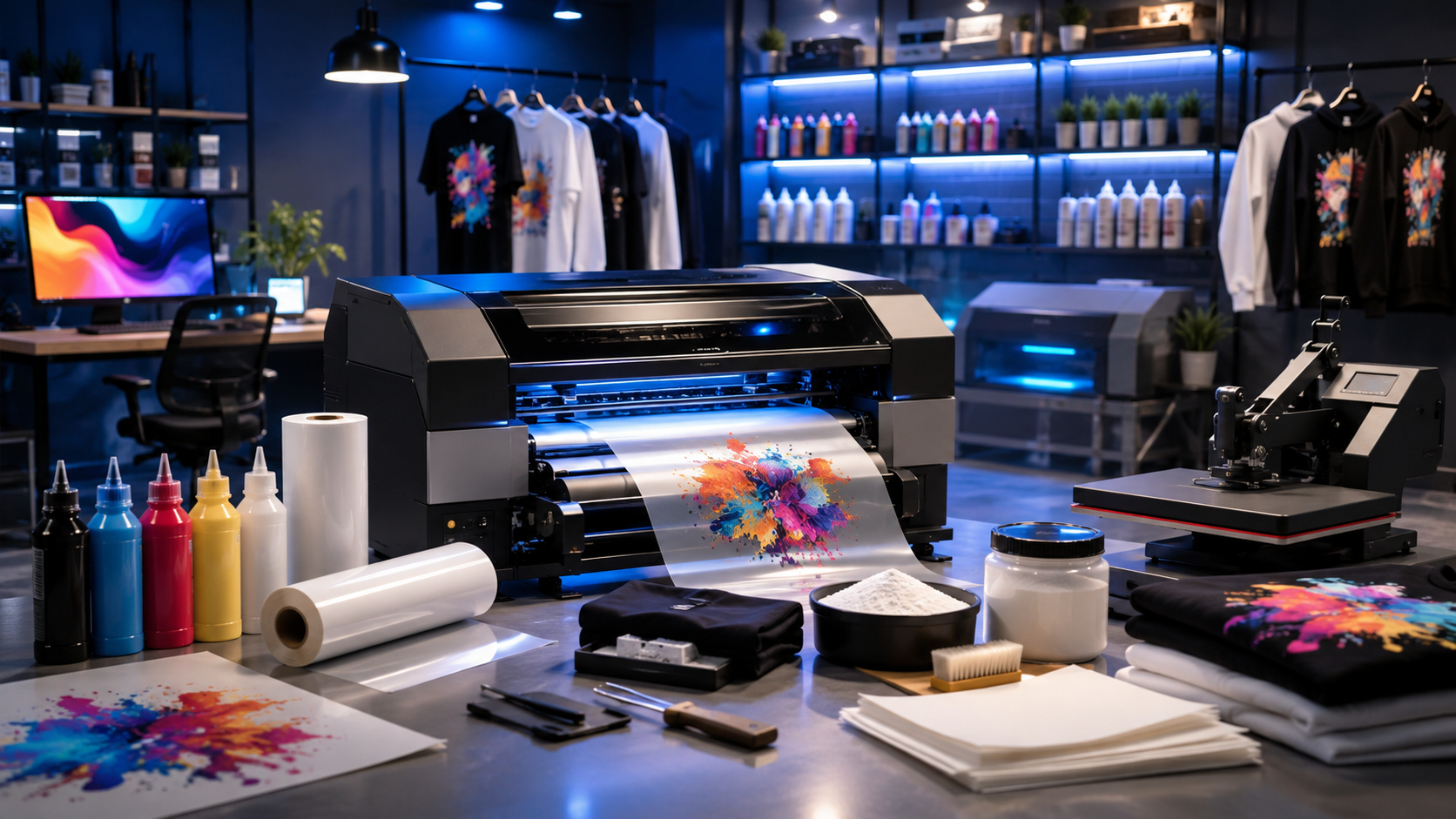
Direct-to-film printing has become one of the fastest-growing technologies in the custom apparel industry. Its ability to produce vibrant, durable designs on a wide variety of fabrics makes it an attractive option for startups, print shops, and established apparel brands alike. However, many newcomers ask the same question before entering the market: what equipment is actually required to build a reliable DTF workflow?
The answer depends on your production goals, but every successful setup relies on a combination of core hardware, quality consumables, and proper software. Understanding how these components work together can help you avoid costly mistakes and create a production environment that delivers consistent results.
Understanding the Basic DTF Workflow
Before investing in equipment, it helps to understand the process itself. A design is first printed onto a special transfer film, adhesive powder is then applied, the print is cured, and finally the design is heat pressed onto the garment.
Each stage requires specific tools that contribute to the overall quality and efficiency of the operation.
The Printer: The Heart of the System
The most important piece of equipment is, of course, the printer itself. Choosing the right machine depends on factors such as production volume, available workspace, and future business plans.
A professional DTF Printers solution should offer reliable printhead performance, accurate color reproduction, and compatibility with industry-standard RIP software. Modern systems are available in compact desktop formats for small businesses as well as larger production models designed for higher daily output.
When comparing options, consider maintenance requirements, manufacturer support, and the availability of replacement parts and consumables.
Transfer Film and Specialty Inks
High-quality transfer film plays a major role in achieving clean, detailed prints. The film acts as the carrier for the design before it is transferred onto fabric, so consistency and coating quality are essential.
Specialized pigment inks are equally important. Unlike standard printing inks, DTF inks are formulated to bond effectively with adhesive powder and maintain vibrant colors after repeated washing. Investing in quality consumables often has a greater impact on final print quality than many beginners realize.
Adhesive Powder and Curing Equipment
After printing, a hot-melt adhesive powder is applied to the wet ink. This powder allows the design to bond securely to the garment during heat pressing.
For small-scale operations, powder application can be performed manually. Larger businesses often use automated powder shakers and curing units that improve consistency and reduce labor.
Curing equipment ensures the powder melts properly before transfer, creating a durable finish that resists cracking and peeling.
Heat Press Machine
A dependable heat press is one of the most critical investments in the entire workflow. Even a perfectly printed transfer can fail if incorrect pressure, temperature, or pressing time is used.
Look for a machine that provides:
- Even heat distribution
- Adjustable pressure settings
- Digital temperature control
- Reliable long-term performance
A quality heat press helps produce professional results across different garment types and fabric blends.
RIP Software and Design Preparation
Printing hardware is only part of the equation. RIP (Raster Image Processor) software controls color management, white ink layers, and print sequencing.
Proper design preparation is equally important. Most production environments work with transparent PNG, PSD, or vector-based artwork to achieve the best output quality. Understanding file resolution, color profiles, and layout optimization can reduce waste and improve consistency.
Maintenance Tools and Cleaning Supplies
Routine maintenance helps extend equipment life and prevent production downtime. Basic maintenance supplies may include:
Daily Essentials
- Cleaning solution
- Maintenance cartridges
- Lint-free wipes
- Syringes and flushing tools
- Protective gloves
Regular cleaning routines help maintain printhead performance and reduce the risk of clogs that can interrupt production.
Workspace and Environmental Control
Many beginners overlook the importance of the production environment. Temperature and humidity can influence ink behavior, adhesive performance, and overall print consistency.
A clean, organized workspace with proper ventilation and stable environmental conditions supports better production results while protecting equipment over time.
Choosing Equipment That Matches Your Goals
Not every business requires an industrial-scale setup from day one. Startup brands often begin with compact systems and gradually expand as order volume increases. Working with established suppliers that offer training, onboarding, and technical support can make the learning process much easier.
Websites such as DTGPRO provide access to a wide range of printing solutions, consumables, and educational resources that help businesses understand which equipment best fits their production needs.
Conclusion
Building a successful DTF printing operation involves more than simply purchasing a machine. A complete setup includes quality transfer film, specialized inks, adhesive powder, curing equipment, a reliable heat press, RIP software, and regular maintenance supplies. When these components work together effectively, businesses can create a stable production workflow capable of delivering professional-quality results.
For those planning to enter the custom apparel market or expand an existing operation, investing in dependable DTF Printer and understanding the complete production process is often the foundation for long-term success.