
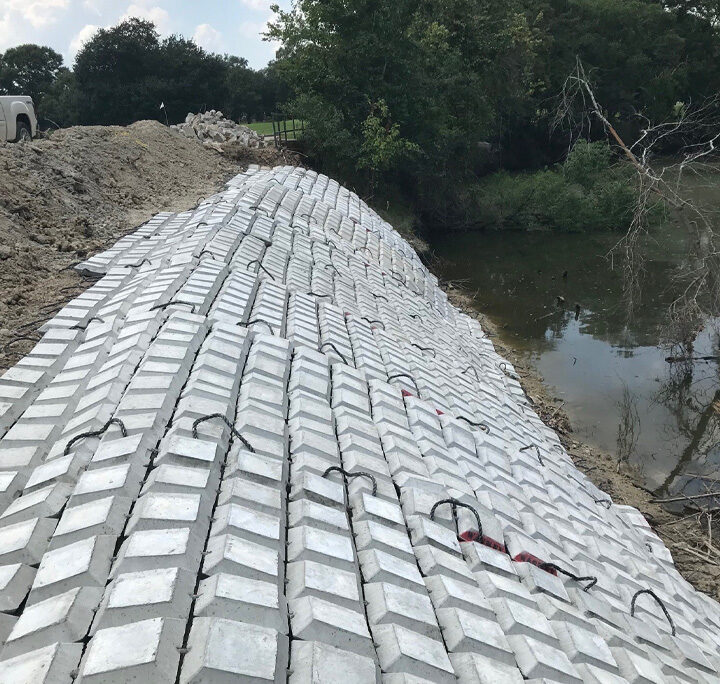
In today’s Civil engineering and construction, securing structures and land from destruction is vital. Wind, water and large loads can gradually destroy the soil and surface when we don’t manage them effectively. To address this issue engineers have a sophisticated and reliable solution known as the concrete mat.
Concrete mats are durable and flexible. It’s also simple to set up. It can help protect soil, reduce erosion and enhance stability in a variety of kinds of construction projects. We will discuss the basics of what these are and how they function and what they are, their benefits, types and uses, the installation process and most commonly encountered issues and solutions.
What Is a Concrete Mat?
Concrete mats are concrete mat is a surface comprised of small pieces of concrete that have been linked to each other. The blocks are often connected via ropes, cables or a strong fabric. The mat is placed in the soil, along slopes or in water to shield the surfaces.
In contrast to a concrete slab, concrete mats are flexible. It is able to bend and adapt to uneven terrain. This makes it extremely useful when the terrain isn’t flat.
Imagine the cement mat to be a blanket made of concrete that cover and protect the ground.
Why Do We Use Concrete Mats?
Engineers utilize concrete mats to shield structures and soil from the damage that is caused by forces of nature. They offer strength and flexibility, making them perfect for various environments.
Here are the most important motives for people to use concrete mats:
- They help prevent erosion of soil
- They shield surfaces from flooding
- They help stabilize ground that is weak.
- They minimize the impact of currents and waves.
- They reduce maintenance costs.
With no concrete mats the soil in riverbanks or slopes may disappear over time. This could cause severe harm to nearby structures.
How Does a Concrete Mat Work?
The concrete mat is used for creating a protective layer over the surface underneath. The concrete blocks are held in place and resist the movement caused by wind, water or the weight of massive loads.
The mat’s design creates small gaps between blocks. These gaps allow water to flow through with ease. This decreases the pressure on the surface and helps prevent erosion.
Since the mat is flexible, it’s able to adapt to the movement of the ground. This minimizes the possibility of breaking or cracking.
Simply put concrete mats protect the soil, while also allowing drainage and natural movement.
Types of Concrete Mats
There are various types of mats made from concrete. Each one is made to be used in a particular way.
1. Articulated Concrete Mat
The articulated mat of concrete is comprised of tiny concrete blocks joined by ropes or cables. It is extremely elastic and durable.
Uses:
- Riverbanks
- Channels
- Shorelines
This is among the most popular methods for preventing erosion.
2. Fabric-Formed Concrete Mat
In this kind of work, the people use fabric forms to fill with concrete. When the concrete is set it is able to form a seamless layer.
The best uses are:
- Slopes
- Linings for canals
This type of material creates a soft and durable surface.
3. Precast Concrete Mat
The manufacturers make the mats at factories, and they then transport them to the location.
The best uses are:
- Projects that require quick installation
- Projects that require high-quality controls
4. Geotextile Concrete Mat
This kind of mat has an under- or inside the mat. The fabric helps with drainage and also helps to support the soil.
Uses:
- Areas of soil that are weak
- Systems for drainage
Benefits of Concrete Mats
Concrete mats have many benefits. This is the reason engineers employ mats in a variety of projects.
1. Strong Erosion Control
Concrete mats guard soil from being swept away by wind or water. They’re extremely efficient in areas of high-flow.
2. Flexibility
In contrast to concrete solid mats, these mats be bent to adjust for uneven surface. This helps to prevent cracking.
3. Long Lifespan
Concrete mats are able to last for a long time even under harsh conditions such as strong water currents.
4. Easy and Fast Installation
They can be installed quickly by construction workers in comparison to conventional concrete techniques.
5. Low Maintenance
Once they are installed, they need minimal maintenance.
6. Environment Friendly
These gaps let plants to flourish. This can help support ecosystems that are natural.
Common Applications of Concrete Mats
Concrete mats are utilized in various types of environmental and construction projects.
1. Riverbank Protection
They stop erosion of soils caused by water flow and safeguard the river’s edges.
2. Canal and Drainage Systems
They guard channels and to manage flow of water efficiently.
3. Shoreline Protection
Concrete mats shield coastal areas from waves as well as tides.
4. Slopes and Embankments
They can stabilize slopes and lower the chance of landslides.
5. Construction Sites
Workers make use of them as temporary roads to transport large machines.
6. Pipeline Protection
They shield pipelines that are placed under or under ground.
Step-by-Step Installation Process
The process of installing a concrete mat is easy, but the users must follow the proper procedures.
Step 1: Site Preparation
Workers clean the area of debris and clear. They make sure the ground is level to make an even surface.
Step 2: Base Preparation
They can also add sand, gravel or geotextile layers. This can improve drainage and stability.
Step 3: Placement of Mat
The workers place the concrete mat with care on the surface they have prepared.
Step 4: Alignment
They adjust the mats to ensure that it is in the correct position.
Step 5: Anchoring
The mat is secured by stakes, pins or cables. This will stop any movement.
Step 6: Final Inspection
They will check the mat to ensure it’s sturdy and correctly placed.
Important Design Considerations
Engineers should consider many aspects prior to deploying mats made of concrete.
1. Water Flow Speed
Rapidly moving water requires mats that are more robust and durable.
2. Soil Condition
The soil that is soft or weak might require additional layers of support.
3. Load Requirements
Zones that have heavy machinery require mats that are stronger.
4. Slope Angle
Steep slopes require better anchoring systems.
5. Environmental Impact
The design should allow for natural drainage as well as plant growth.
Common Problems and Solutions
Concrete mats are tough however, they can cause problems when workers don’t install them correctly.
1. Mat Movement
The reason: Poor anchoring
Solution: Use strong anchors and ensure that the installation is secure
2. Erosion Under the Mat
Reason: Poor base preparation
Solution: Add a geotextile layer and make sure the ground is level
3. Cracking of Blocks
The reason: Low-quality concrete
Solution: Use high-quality materials
4. Uneven Surface
Reason: Poor installation
Solution: Prepare and level the ground prior to laying
5. Water Accumulation
Cause: Poor drainage
Solution: Improve drainage design
Best Practices for Long-Term Performance
To get the most effective results, adhere to these best methods:
- Utilize high-quality products
- Create the site in a professional manner
- Check alignment to ensure proper
- Make sure you use the correct anchoring techniques
- Provide a proper drainage
- Check the system on a regular basis.
- Plan for maintenance in the future
These steps can help improve the longevity and effectiveness for the cement mat.
Concrete Mat vs Traditional Concrete
| Feature | Concrete Mat | Traditional Concrete |
|---|---|---|
| Flexibility | High | Low |
| Installation Speed | Fast | Slow |
| Crack Resistance | Better | Lower |
| Maintenance | Low | Moderate |
| Cost | Moderate | Higher |
Concrete mats are an ideal option for those who require ease of installation and speedy installation.
Why Concrete Mats Are Important Today
Construction projects today must concentrate on safety, durability as well as environmental protection. Concrete mats are a great way to achieve these objectives.
They are a strong shield against erosion, while also allowing natural flow of water and growth of plants. They are therefore suitable for environmental and modern infrastructure projects.
As cities increase in size and climate conditions alter the requirement for erosion control strategies like concrete mats is rising.
Conclusion
An cement mat is a basic but effective solution to protect surfaces and soil. It provides strength, flexibility as well as long-term durability.
Engineers employ concrete mats for banks, slopes, drainage systems, and a variety of other projects. They prevent erosion, help stabilize the soil, and decrease the cost of maintenance.