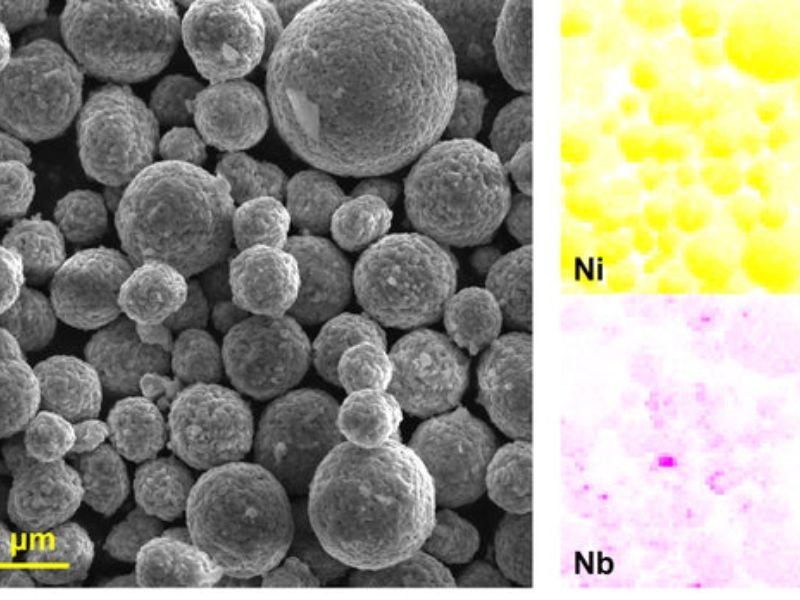
The demand for advanced battery technology is growing as electric vehicles, renewable energy storage, and modern electronic devices become more popular. Battery manufacturers are constantly looking for better materials that can improve energy density, stability, and long-term performance. One important development in this field is the use of specialized cathode coatings. These coatings help protect battery materials and improve their compatibility with other cell components. Custom cathode coating services are becoming increasingly important for battery researchers and manufacturers who need materials designed for specific applications. By modifying cathode surfaces with suitable coating materials, researchers can address challenges such as unwanted chemical reactions, interface resistance, and capacity degradation. Ampcera is involved in advanced battery materials and solid-state battery technologies. Its focus on innovative materials and surface engineering supports the development of next-generation energy storage solutions. Understanding cathode coating methods, their benefits, and their applications can help battery developers make informed decisions.
What Are Custom Cathode Coating Services?
Cathode coating is a material engineering process in which a protective layer is applied to the surface of active cathode particles. This layer can help improve the interaction between the cathode and electrolyte while reducing unwanted surface reactions.
Custom cathode coating services allow researchers and manufacturers to select coating materials and processing methods according to their specific battery requirements.
Different battery applications may require different coating properties. For example, a coating designed for a conventional lithium-ion battery may not provide the same performance in a solid-state battery.
Common coating materials include:
- Lithium niobium oxide (LiNbO3)
- Lithium zirconium oxide
- Aluminum oxide (Al2O3)
- Zirconium oxide (ZrO2)
- Other specialized metal oxide compounds
The selection depends on the cathode composition, electrolyte chemistry, operating voltage, and desired electrochemical performance.
Why Is Cathode Surface Coating Important?
Cathode materials play a major role in determining battery capacity, energy density, and overall performance. However, their surfaces can react with electrolytes during charging and discharging.
These reactions may create unwanted compounds, increase resistance, and reduce battery efficiency over time.
A suitable coating creates a protective interface that can help reduce direct contact between reactive materials.
1. Improved Interface Stability
Interface stability is especially important in advanced battery designs. Unwanted reactions between cathode particles and electrolytes can negatively affect battery performance.
A properly selected coating can help reduce these reactions and support a more stable electrode-electrolyte interface.
2. Better Electrochemical Performance
Cathode surface modification can influence lithium-ion movement and interfacial resistance.
Depending on the coating material and manufacturing process, it may help improve electrochemical performance under specific operating conditions.
3. Reduced Surface Degradation
Repeated charging and discharging can gradually change the chemical structure of cathode surfaces.
Protective coatings can help limit certain degradation mechanisms and support better capacity retention.
4. Greater Material Compatibility
Different solid electrolytes and cathode materials have different chemical properties.
Customized coatings help researchers explore material combinations that may otherwise experience compatibility challenges.
How Do Custom Cathode Coating Services Work?
The coating process involves several stages, starting with an understanding of the cathode material and its intended application.
Every battery project has different technical requirements, so coating development should be based on material characteristics and performance goals.
Step 1: Cathode Material Evaluation
The first step is identifying the cathode material that requires surface modification.
Common materials include:
- NMC811
- NMC622
- Lithium cobalt oxide (LCO)
- Lithium iron phosphate (LFP)
- Other advanced cathode compositions
Researchers evaluate particle size, surface chemistry, purity, and structural properties before selecting a suitable coating approach.
Step 2: Coating Material Selection
The coating material must be compatible with the cathode and the intended electrolyte.
For example, lithium niobium oxide is studied as a protective coating for nickel-rich cathodes used in solid-state battery research.
Important selection factors include chemical stability, lithium-ion conductivity, coating uniformity, and processing compatibility.
Step 3: Surface Coating Application
Different techniques can be used to apply protective layers to cathode particles.
Common approaches include:
- Wet chemical coating
- Sol-gel processing
- Mechanical coating
- Atomic layer deposition
- Other specialized surface modification methods
Each technique offers different advantages depending on particle characteristics and production requirements.
Step 4: Heat Treatment and Processing
Some coating methods require controlled heat treatment to develop the desired surface properties.
Temperature, processing time, and atmosphere must be carefully managed to avoid damaging the underlying cathode material.
Step 5: Quality Testing
The coated material is evaluated to understand its physical and electrochemical properties.
Testing may include particle morphology, coating distribution, structural analysis, and battery cycling performance.
Applications in Solid-State Battery Technology
Solid-state batteries are receiving increasing attention because they replace conventional liquid electrolytes with solid materials.
This technology offers opportunities for developing advanced battery designs with improved safety characteristics and potentially higher energy density.
However, solid-state batteries also introduce new interface challenges.
For example, sulfide-based solid electrolytes may react with certain cathode materials. These reactions can increase interfacial resistance and affect battery performance.
This is where custom cathode coating services become valuable for research and development.
Protective coatings can help researchers investigate better compatibility between cathode materials and solid electrolytes.
Important research areas include:
- Nickel-rich cathode and sulfide electrolyte compatibility.
- Improved electrode-electrolyte interfaces.
- Lithium-ion transportation across protective layers.
- Long-term cycling stability.
- High-voltage cathode performance.
These developments are important for making solid-state battery technology more practical.
Why Nickel-Rich Cathode Materials Need Protective Coatings
Nickel-rich cathodes such as NMC811 are popular in battery research because of their high energy density potential.
However, their high nickel content can also create challenges related to surface stability and thermal behavior.
During repeated cycling, structural changes and unwanted surface reactions may reduce battery performance.
Protective coatings offer one approach to addressing these challenges.
A suitable coating may help:
- Reduce unwanted electrolyte reactions.
- Protect active cathode surfaces.
- Improve interfacial compatibility.
- Support capacity retention.
- Maintain more stable battery operation.
The final results depend on coating composition, thickness, uniformity, and the complete battery design.
What Should You Look for in a Cathode Coating Partner?
Choosing the right coating partner is an important decision for battery manufacturers and research organizations.
The service provider should understand both material properties and the practical requirements of battery development.
When evaluating custom cathode coating services, consider the following factors:
- Material expertise: Look for experience with advanced cathode compositions.
- Coating technology: Understand which coating methods are available.
- Customization: Check whether coating materials and processing conditions can be adjusted.
- Quality control: Evaluate particle uniformity, coating consistency, and material purity.
- Technical support: Choose a partner that understands battery research requirements.
- Application knowledge: Consider experience with lithium-ion and solid-state battery systems.
- Scalability: Determine whether the process can support future production requirements.
A suitable technical partner can help reduce development challenges and improve material evaluation.
The Role of Ampcera in Advanced Cathode Materials
Ampcera focuses on advanced battery materials, solid electrolytes, and technologies supporting next-generation energy storage.
The company offers specialized materials for battery researchers and manufacturers exploring improvements in solid-state battery performance.
Its coated cathode product portfolio includes materials such as lithium niobium oxide-coated NMC811 and lithium zirconium oxide-coated NMC811.
These materials are relevant to research involving cathode surface protection and compatibility with solid electrolytes.
Through its materials expertise, Ampcera supports research into:
- Advanced cathode materials.
- Solid electrolyte technologies.
- Electrode-electrolyte interface engineering.
- Surface coating solutions.
- Next-generation battery development.
For organizations exploring custom cathode coating services, understanding the available materials, coating approaches, and technical requirements is an important starting point.
Ampcera’s work in advanced battery materials contributes to the broader development of high-performance energy storage technologies.
Frequently Asked Questions (FAQs)
1. What is the purpose of cathode coating?
Cathode coating helps protect active material surfaces, reduce unwanted chemical reactions, and improve compatibility with selected electrolytes.
2. Which materials are commonly used for cathode coatings?
Lithium niobium oxide, aluminum oxide, zirconium oxide, and other specialized metal oxides are commonly investigated for cathode surface modification.
3. Are cathode coatings useful for solid-state batteries?
Yes. They can help improve compatibility between cathode materials and solid electrolytes, particularly in systems where interface reactions are a concern.
4. Can NMC811 cathode materials be coated?
Yes. NMC811 can be modified with protective surface coatings to support research into improved interface stability and electrochemical performance.
5. Why choose customized coating solutions?
Customized solutions allow researchers to select coating materials and processing conditions according to their specific cathode chemistry, electrolyte, and battery design.
Conclusion
Cathode surface engineering is an important part of developing advanced lithium-ion and solid-state batteries. Protective coatings can help address challenges related to surface degradation, chemical reactions, and interface compatibility.
Custom cathode coating services provide researchers and manufacturers with opportunities to explore specialized material combinations and improve battery development strategies.
Ampcera contributes to this growing field through advanced battery materials, coated cathode solutions, and solid-state battery technologies. As energy storage requirements continue to evolve, improvements in cathode engineering and surface protection will remain important for building more efficient, stable, and reliable batteries.