
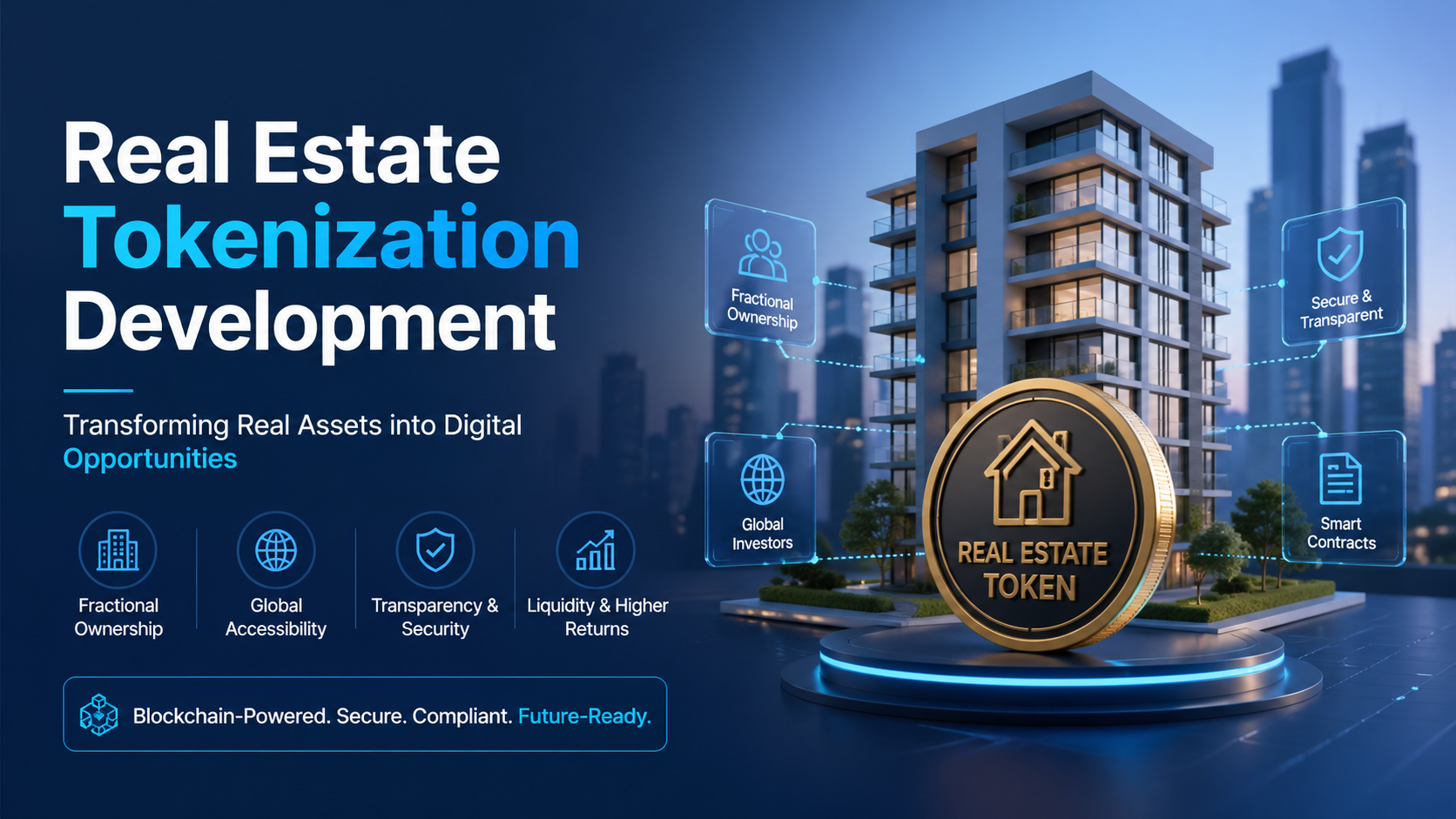
The real estate sector has long been a cornerstone of wealth creation and investment. However, traditional real estate investment comes with significant barriers, including high entry costs, illiquidity, geographic limitations, and complex legal processes. Real estate tokenization development, powered by blockchain technology, is poised to redefine how individuals and institutions invest in property. By digitizing property ownership into tradeable tokens, investors gain unprecedented flexibility, accessibility, and transparency.
This article explores the mechanisms of real estate tokenization, the ways it is transforming investment practices, and the long-term implications for the property market.
Understanding Real Estate Tokenization
Real estate tokenization is the process of converting ownership rights of a property into blockchain-based digital tokens. Each token represents a fraction of the asset, allowing multiple investors to own shares of a single property. The process leverages smart contracts to automate transactions, compliance, and revenue distribution, creating a streamlined, secure, and transparent investment ecosystem.
Key characteristics include:
- Fractional Ownership: Investors can buy portions of high-value properties, reducing capital requirements.
- Blockchain Security: Immutable ledgers record ownership, transactions, and legal rights.
- Automated Revenue Distribution: Smart contracts ensure rental income or dividends are distributed efficiently.
- Liquidity Potential: Tokens can be traded on secondary markets, providing flexibility absent in traditional real estate.
- Global Accessibility: Investors from different countries can participate without relying on intermediaries.
How Real Estate Tokenization Changes Investment Practices
1. Lowering Capital Barriers
Traditional property investment typically requires large sums of capital to purchase homes, commercial spaces, or high-value real estate. Tokenization allows these assets to be divided into smaller, affordable units. Investors can participate with significantly less capital, enabling broader access to previously exclusive markets. For example, a $1 million commercial building could be divided into 10,000 tokens priced at $100 each. Individual investors can now buy a token or multiple tokens, democratizing access to high-value real estate.
2. Enhancing Liquidity
One of the most significant limitations of real estate tokenization development investment is illiquidity. Selling a property can take months or years, often involving intermediaries and complex processes. Tokenization enables a secondary market for property tokens, allowing investors to trade their holdings quickly and efficiently. This liquidity transforms real estate into a more dynamic asset class. Investors can now rebalance portfolios, access cash without selling entire properties, and react to market changes faster.
3. Facilitating Global Investment
Traditional real estate investment is often limited by geography and legal jurisdiction. Tokenization eliminates many of these barriers by enabling cross-border participation. Investors worldwide can access tokenized properties without physically being present or dealing with complex local regulations, as smart contracts and integrated compliance systems ensure secure transactions. This global accessibility attracts a more diverse pool of investors, creating competitive demand and potentially higher valuations for properties.
4. Automating Compliance and Transactions
Blockchain-based real estate platforms streamline compliance through KYC (Know Your Customer), AML (Anti-Money Laundering), and jurisdiction-specific regulations. Smart contracts automate revenue distribution, token transfers, and ownership verification, reducing reliance on intermediaries and manual processes. Automation improves efficiency, reduces costs, and minimizes errors, creating a more investor-friendly experience.
5. Diversifying Investment Portfolios
Fractional ownership through tokenization allows investors to diversify across multiple properties, locations, and property types. A single investor could hold tokens in residential, commercial, industrial, and hospitality assets simultaneously, reducing risk exposure and improving portfolio resilience. Additionally, investors can experiment with smaller positions in niche markets, such as luxury real estate, co-living spaces, or tokenized mixed-use developments.
6. Creating Transparent Ownership and Revenue Tracking
Blockchain’s immutable ledger ensures transparency in property ownership and revenue streams. Investors can verify property titles, track tokenized shares, and monitor rental income or dividends in real time. This transparency builds trust, reduces the risk of fraud, and facilitates informed investment decisions.
Applications Across Real Estate Sectors
Residential Properties
Fractional tokenization of residential properties allows small investors to participate in housing markets. Smart contracts manage rental income distribution and ownership transfers, creating a seamless investment experience for both institutional and individual investors.
Commercial Real Estate
Office buildings, retail spaces, and industrial facilities are increasingly being tokenized. Investors can purchase tokens representing shares in income-generating commercial assets, enabling portfolio diversification and providing a hedge against market volatility.
Hospitality and Leisure Properties
Hotels, resorts, and serviced apartments can benefit from tokenization, allowing investors to participate in revenue generated from bookings and services. Revenue-sharing mechanisms can be automated through smart contracts, ensuring timely and accurate payouts.
Mixed-Use and Multi-Asset Developments
Urban mixed-use developments, combining residential, commercial, and recreational spaces, present complex investment opportunities. Tokenization simplifies participation, enabling investors to hold fractions of multiple assets under a single, transparent structure.
Benefits for Investors and Developers
Investors
- Lower Entry Barriers: Access to high-value properties with minimal capital.
- Enhanced Liquidity: Ability to trade tokens without selling the entire property.
- Diversification: Exposure to multiple property types and locations.
- Transparency: Real-time access to ownership records and revenue distribution.
- Global Reach: Investment opportunities across borders without intermediaries.
Developers and Property Firms
- Faster Capital Raising: Access to a wider pool of investors and faster funding cycles.
- Operational Efficiency: Smart contracts reduce administrative overhead and legal costs.
- Market Expansion: Attract global investors to local real estate projects.
- Portfolio Scalability: Enable tokenization across multiple properties and asset classes.
Challenges to Adoption
Despite the benefits, several hurdles remain:
- Regulatory Uncertainty: Laws regarding digital securities and tokenized assets vary across jurisdictions, requiring careful legal guidance.
- Market Education: Investors must understand blockchain, smart contracts, and tokenized ownership.
- Liquidity Maturity: Secondary markets for property tokens are still developing, and liquidity may vary.
- Technology Dependence: Platforms must ensure robust security, uptime, and smart contract auditing to protect investors.
- Valuation Standards: Establishing consistent property valuations for fractional ownership can be complex.
The Future of Property Investment
As technology and regulation mature, real estate tokenization development will likely become mainstream, transforming traditional investment paradigms. Key trends to watch include:
- Integration with Decentralized Finance (DeFi): Tokenized properties could be used as collateral for lending, staking, or yield-generating activities.
- AI-Driven Asset Management: Artificial intelligence can optimize tokenized property portfolios, predict revenue streams, and automate risk assessment.
- Global Tokenized Marketplaces: Online marketplaces will enable investors worldwide to trade property tokens seamlessly, increasing liquidity and access.
- Sustainable and ESG-Focused Investments: Tokenization will facilitate investment in environmentally and socially responsible real estate projects with transparent reporting.
Conclusion
Real estate tokenization development is poised to fundamentally change how we invest in property. By enabling fractional ownership, increasing liquidity, simplifying compliance, and broadening access to global markets, tokenization democratizes real estate investment and creates new opportunities for both investors and developers. As adoption grows, tokenized property ecosystems will likely become a mainstream investment channel, offering unprecedented transparency, efficiency, and flexibility. Investors who embrace this shift will gain access to diversified, liquid, and programmable real estate portfolios, while developers and property firms can leverage tokenization to scale, innovate, and attract a global investor base. Real estate tokenization is not just a technological innovation it is a paradigm shift that may redefine the future of property investment entirely.