
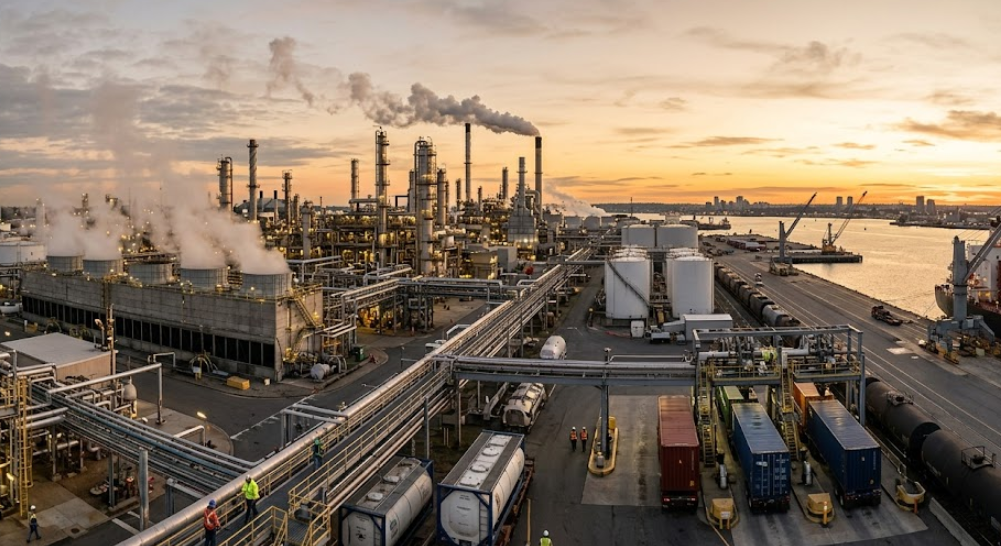
The Phthalic Anhydride prices in early 2026 reflects a moderately stable to slightly bullish market, driven by steady demand from plasticizers, resins, and coatings industries. Prices in February 2026 stood at USD 840.74/MT (China FOB), USD 933.11/MT (India CIF), and USD 913.31/MT (USA FOB), indicating regional variations influenced by feedstock costs and supply chain dynamics. The market direction is shaped by fluctuating crude oil derivatives like orthoxylene, balanced supply conditions, and consistent downstream demand from construction and automotive sectors.
Market Snapshot
Market Snapshot
- Market Direction: Stable to Slightly Bullish
- Primary Demand Sector: Plasticizers, Unsaturated Polyester Resins (UPR), Coatings
- Key Feedstock: Orthoxylene (OX) / Naphthalene
- Major Supply Region: China, USA, India
- Short-Term Outlook: Stable to Bullish
Key Drivers Affecting Phthalic Anhydride Prices
- Feedstock Price Fluctuations:
Orthoxylene prices, closely linked to crude oil trends, significantly impact production costs. - Supply-Demand Balance:
Stable production levels combined with consistent industrial demand maintain price equilibrium. - Industrial Demand Trends:
Demand from construction, automotive, and packaging industries supports market stability. - Global Production Capacity:
Expansions in Asia, particularly China, influence global supply availability. - Energy and Utility Costs:
Rising energy prices in key regions increase manufacturing expenses.
Why Prices Increased or Decreased Recently
Phthalic Anhydride prices showed slight upward stability in Q1 2026 due to:
- Stable downstream demand from plasticizers and resins
- Moderate increase in orthoxylene feedstock prices
- Controlled production rates in major Asian facilities
- Balanced inventory levels across global markets
However, price growth remained limited due to:
- Adequate supply availability
- No major supply disruptions
- Moderate export demand rather than aggressive buying
Real Global Events Affecting the Market
- Crude Oil Price Volatility:
Fluctuations in global crude oil markets impacted orthoxylene costs. - Energy Cost Pressures in Europe:
Elevated natural gas prices influenced chemical production economics. - Supply Chain Normalization:
Improved logistics and shipping conditions reduced extreme price volatility seen in previous years. - Environmental Regulations:
Stricter emission policies in China affected operational efficiencies in some plants. - Industrial Recovery Trends:
Gradual recovery in global manufacturing supported steady demand.
Regional Market Analysis
North America
- Stable demand from construction and automotive sectors
- Prices remained firm around USD 913.31/MT (FOB USA)
- Balanced supply with no major disruptions
Asia Pacific
- China dominated supply with competitive pricing at USD 840.74/MT (FOB)
- Strong domestic demand supported market stability
- India showed higher import prices at USD 933.11/MT (CIF) due to logistics and duties
Europe
- Market influenced by high energy costs
- Moderate demand recovery
- Slightly higher production costs impacted pricing trends
Middle East & Africa
- Emerging demand from construction sector
- Limited local production leading to reliance on imports
- Prices influenced by global supply trends
Industry Expert Insight
Industry analysts indicate that balanced supply conditions combined with steady downstream demand and moderate feedstock cost fluctuations are maintaining stability in the global Phthalic Anhydride price structure, with limited volatility expected in the near term.
Market Outlook
Short-Term Outlook
- Prices expected to remain stable to slightly bullish
- Supported by steady demand and controlled supply
- Feedstock price trends will remain a key influencing factor
Medium-Term Outlook
- Potential upward pressure due to:
- Expansion in construction and infrastructure projects
- Growth in automotive and packaging industries
- Possible feedstock price increases
- Downside risks include:
- Oversupply from new capacity additions
- Global economic slowdown
FAQs
What affects Phthalic Anhydride prices?
Feedstock prices, supply-demand balance, energy costs, and industrial demand are key factors.
Why did Phthalic Anhydride prices remain stable recently?
Stable supply levels and consistent downstream demand prevented major price fluctuations.
What industries use Phthalic Anhydride?
It is widely used in plasticizers, unsaturated polyester resins, alkyd resins, and coatings.
Which region produces the most Phthalic Anhydride?
Asia Pacific, especially China, is the leading producer globally.
What is the future outlook for Phthalic Anhydride prices?
The market outlook is stable to bullish, supported by industrial growth and feedstock trends.
Final
The global Phthalic Anhydride market trend in 2026 reflects a balanced landscape with controlled supply, steady demand, and moderate cost pressures. While short-term stability dominates, future price movements will depend on feedstock volatility and industrial expansion trends.