
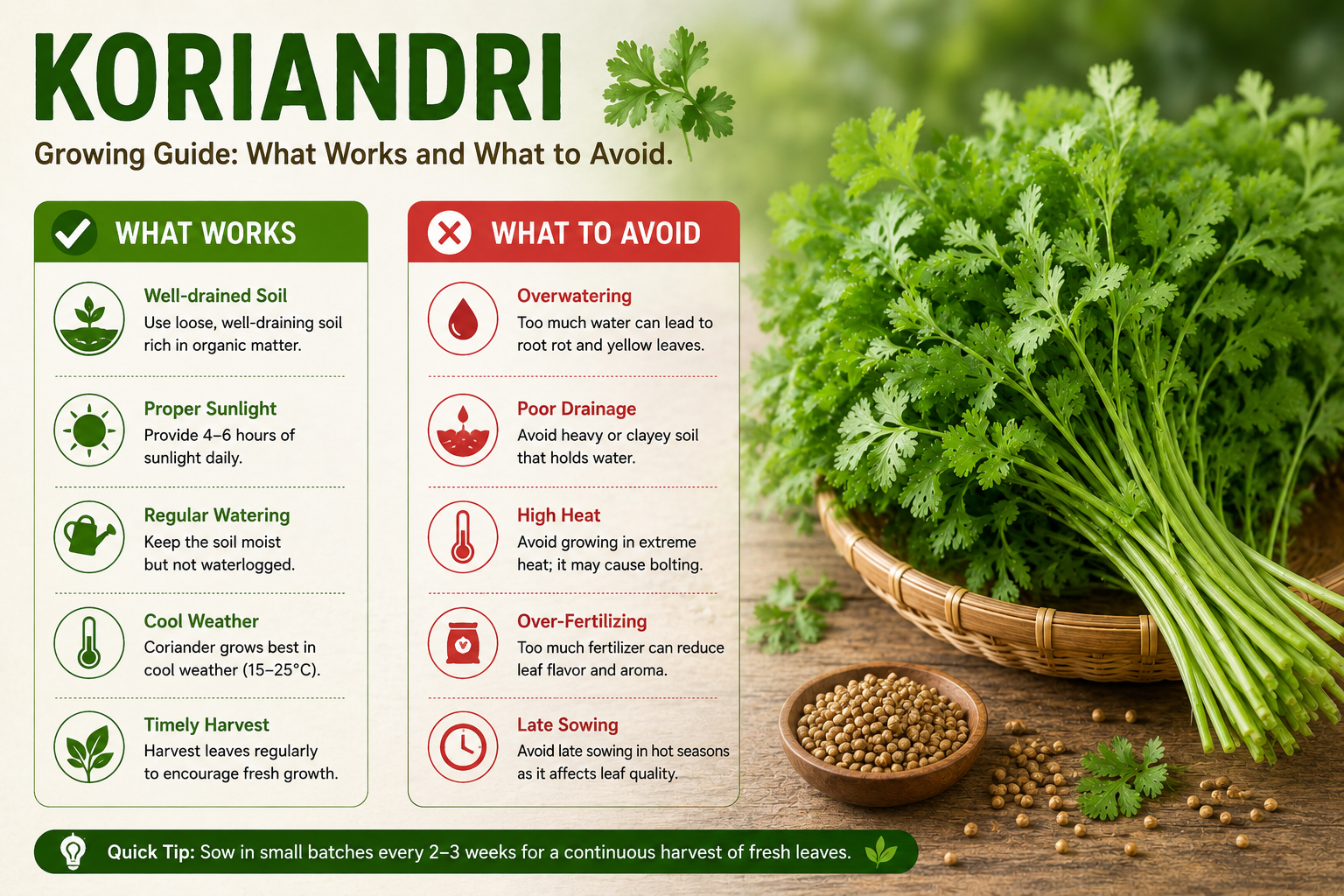
Growing fresh koriandri (coriander) at home is one of the easiest ways to enjoy flavorful herbs straight from your garden. Known for its aromatic leaves and seeds, koriandri is widely used in kitchens around the world and is valued for both its culinary and nutritional benefits. However, many gardeners struggle with common issues such as premature flowering, poor germination, and weak growth.
This guide explains what works when growing koriandri and what to avoid, helping you enjoy a healthy, productive harvest whether you are gardening in containers, balconies, or backyard spaces.
Why Grow Koriandri at Home?
Koriandri is a fast-growing herb that requires relatively little space and maintenance. Fresh leaves can enhance the taste of soups, curries, salads, and chutneys, while the seeds are commonly used as a spice.
Home-grown koriandri offers several advantages:
- Access to fresh, chemical-free herbs
- Lower gardening costs
- Quick harvest within a few weeks
- Suitable for small spaces and container gardens
- Continuous supply with successive planting
When grown correctly, koriandri can provide fresh leaves throughout the growing season.
What Works: Proven Tips for Healthy Koriandri Growth
1. Choose the Right Location
Koriandri grows best in a spot that receives 4–6 hours of sunlight daily. In regions with intense summer heat, partial afternoon shade can help prevent the plant from bolting too early.
A location with good airflow also reduces the risk of fungal diseases.
2. Use Well-Draining Soil
Healthy roots are the foundation of successful koriandri growth. The plant prefers loose, fertile soil rich in organic matter.
An ideal soil mix includes:
- Garden soil
- Compost or well-rotted manure
- Sand or coco peat for drainage
The soil should remain moist but never waterlogged.
3. Sow Seeds Directly
Koriandri does not always respond well to transplanting because its roots can be sensitive to disturbance. Direct sowing often produces stronger and healthier plants.
Before planting:
- Gently crush the seed husk into two halves
- Soak seeds for a few hours
- Sow about 1 cm deep
- Keep soil consistently moist until germination
Most seeds germinate within 7–14 days under favourable conditions.
4. Water Consistently
Regular watering helps maintain healthy leaf production.
The goal is to keep the soil evenly moist without creating soggy conditions. Water deeply when the top layer of soil begins to dry.
Consistent moisture encourages lush foliage and delays flowering.
5. Harvest Correctly
Frequent harvesting promotes new growth.
Instead of removing the entire plant, trim the outer leaves first and allow the center to continue developing. This method extends the harvest period and keeps plants productive longer.
6. Plant Successively
For a continuous supply of fresh leaves, sow a new batch of seeds every two to three weeks.
This simple practice ensures that younger plants are always ready as older plants begin to flower and produce seeds.
Many home gardeners in the YourHomify community enjoy sharing practical growing experiences, seasonal gardening tips, and creative ways to make the most of small gardening spaces.
What to Avoid When Growing Koriandri
Even though koriandri is relatively easy to grow, a few common mistakes can limit success.
1. Avoid Overwatering
One of the biggest causes of failure is excessive watering.
Waterlogged soil can lead to:
- Root rot
- Yellow leaves
- Slow growth
- Fungal infections
Always ensure containers and garden beds have proper drainage.
2. Avoid Planting in Extreme Heat
Koriandri prefers cooler growing conditions.
When temperatures become too high, the plant often bolts, meaning it quickly produces flowers and seeds instead of leaves.
To reduce bolting:
- Provide afternoon shade
- Water regularly
- Choose cooler planting seasons when possible
3. Avoid Crowding Plants
Dense planting restricts airflow and creates competition for nutrients and moisture.
Leave enough spacing between seedlings so each plant receives adequate light and air circulation.
Thinning young plants may feel difficult, but it significantly improves overall growth.
4. Avoid Heavy Chemical Fertilizers
Excessive nitrogen-rich fertilizers can produce soft growth that may be more vulnerable to pests and diseases.
Instead, use:
- Compost
- Vermicompost
- Organic fertilizers
- Homemade plant feeds
Organic amendments support steady and balanced growth.
5. Avoid Delayed Harvesting
Waiting too long to harvest often encourages flowering.
Regular trimming signals the plant to continue producing leaves. If flower stalks appear, remove them promptly if leaf production is your primary goal.
6. Avoid Poor Air Circulation
Plants grown in cramped corners or enclosed spaces can experience disease problems.
Good airflow helps keep foliage dry and healthy while reducing fungal issues.
Common Problems and Quick Solutions
Yellow Leaves
Possible causes:
- Overwatering
- Poor drainage
- Nutrient deficiency
Solution: Improve drainage and adjust watering frequency.
Slow Germination
Possible causes:
- Old seeds
- Dry soil
- Deep sowing
Solution: Use fresh seeds and keep the soil consistently moist.
Early Flowering
Possible causes:
- High temperatures
- Water stress
- Lack of harvesting
Solution: Provide shade, water regularly, and harvest frequently.
Weak Growth
Possible causes:
- Poor soil fertility
- Insufficient sunlight
Solution: Add compost and move plants to a brighter location.
Best Time to Grow Koriandri
Koriandri generally performs best during mild weather conditions.
In many regions, sowing during cooler months produces stronger plants and a longer harvesting period. Gardeners in warmer climates can still grow koriandri successfully by choosing partially shaded locations and maintaining adequate soil moisture.
Understanding your local climate is one of the most important factors in achieving consistent results.
Final Thoughts
Growing koriandri successfully is less about complicated techniques and more about following a few essential principles. Well-draining soil, regular watering, direct sowing, proper sunlight, and timely harvesting are the keys to healthy growth. At the same time, avoiding overwatering, overcrowding, excessive heat, and poor garden management can prevent many common problems.
Whether you are a beginner or an experienced gardener, koriandri is a rewarding herb that delivers fresh flavor, fast growth, and continuous harvests when cared for correctly. By focusing on what works and avoiding common mistakes, you can enjoy a thriving crop of fresh koriandri right from your home garden.