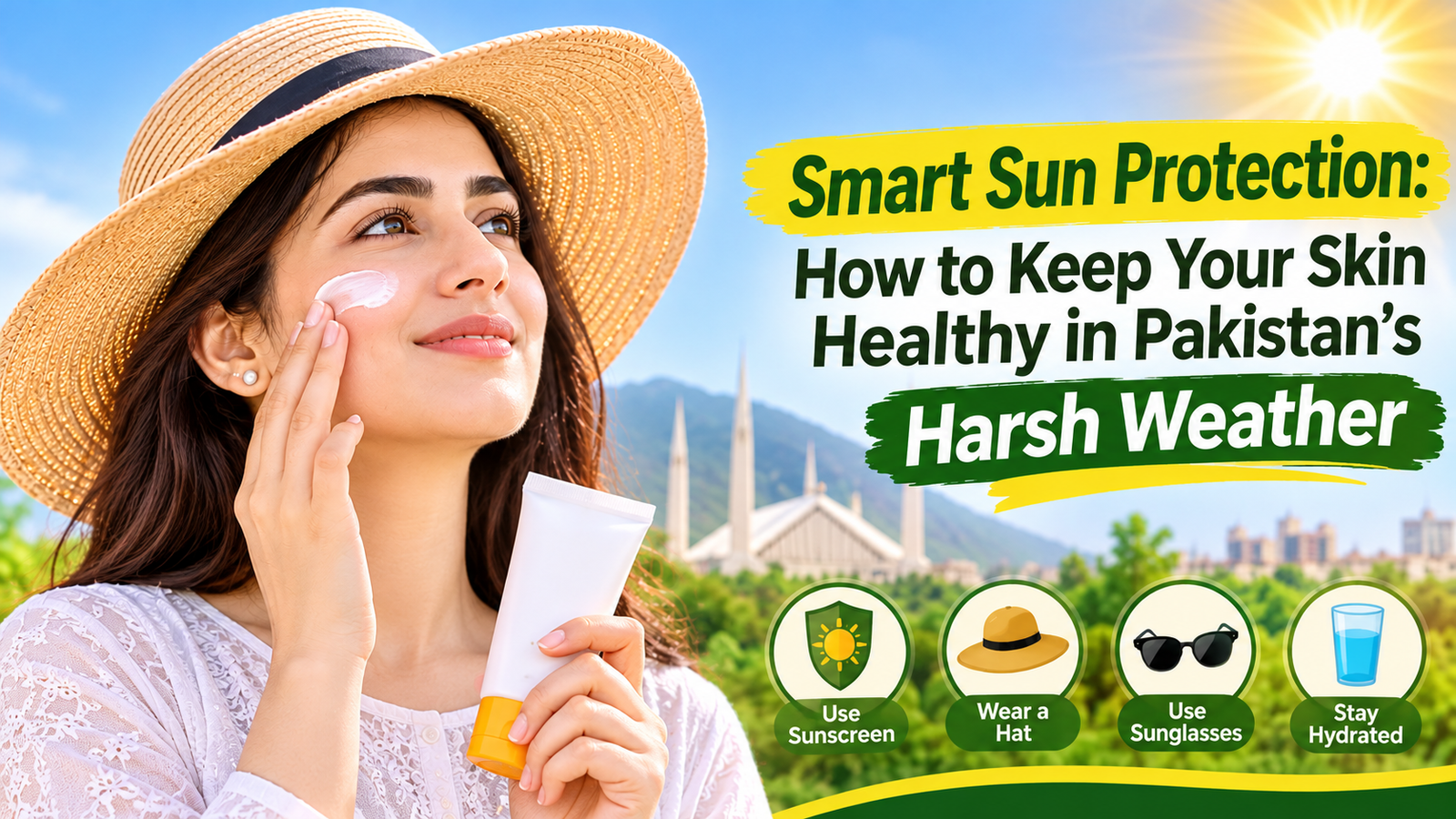
Pakistan experiences long summers, intense sunlight, and changing weather conditions that can affect skin health. Whether you are commuting to work, attending university, shopping outdoors, or travelling, your skin is regularly exposed to ultraviolet (UV) radiation.
Although sunlight is important for vitamin D production, excessive exposure can contribute to sunburn, tanning, dark spots, premature ageing, and long-term skin damage. This makes daily sun protection an essential part of a healthy skincare routine.
Here are some practical ways to protect your skin and choose the right sunscreen for everyday use.
1. Understand How Sunlight Affects Your Skin
Sunlight contains ultraviolet radiation, mainly UVA and UVB rays, which affect the skin in different ways.
UVA rays penetrate deeper into the skin and contribute to premature ageing, fine lines, and wrinkles. UVB rays are primarily responsible for sunburn and also contribute to skin damage.
Repeated exposure without adequate protection can make existing pigmentation more noticeable and affect the skin’s overall appearance.
Understanding these effects is the first step towards developing better sun protection habits.
2. Choose Sunscreen According to Your Skin Type
Not every sunscreen feels comfortable on every skin type. Choosing a suitable formula makes it easier to maintain a consistent skincare routine.
For oily skin: Look for lightweight, oil-free, non-comedogenic sunscreen gels that do not leave a greasy finish.
For dry skin: Hydrating sunscreen creams containing moisturising ingredients can help maintain skin comfort.
For sensitive skin: Consider fragrance-free formulas and mineral-based sunscreens containing zinc oxide or titanium dioxide.
For combination skin: Lightweight lotions or gel-based formulas can provide comfortable everyday protection.
If you have persistent irritation or a skin condition, consult a dermatologist before changing your skincare products.
3. Understand SPF and Broad-Spectrum Protection
SPF stands for Sun Protection Factor. It measures how well a sunscreen protects against UVB radiation under standard testing conditions.
For everyday use, dermatologists generally recommend broad-spectrum sunscreen with SPF 30 or higher.
Here is a simple comparison:
- SPF 30 filters approximately 97% of UVB rays.
- SPF 50 filters approximately 98% of UVB rays.
- SPF 60 filters slightly more UVB radiation than SPF 50.
Remember that a higher SPF does not mean you can stay in direct sunlight indefinitely. Applying enough sunscreen and reapplying it regularly are equally important.
4. Apply Sunscreen the Right Way
Even a good sunscreen may provide inadequate protection if you apply too little or forget to reapply it.
Follow these simple steps:
- Cleanse your face and apply your usual moisturiser if needed.
- Apply sunscreen generously to your face and neck.
- Do not forget your ears, hands, and other exposed areas.
- Apply sunscreen approximately 15 minutes before going outdoors, following the product instructions.
- Reapply at least every two hours when outdoors.
- Reapply after swimming, heavy sweating, or towel drying, even if the product is water resistant.
Making sunscreen part of your morning routine can help you maintain consistent protection.
5. Use Additional Sun Protection Methods
Sunscreen should not be your only defence against intense sunlight. Combining different protective measures can help reduce UV exposure.
Consider these practical habits:
- Wear sunglasses that provide UV protection.
- Use a wide-brimmed hat when spending time outdoors.
- Choose tightly woven or UV-protective clothing.
- Seek shade whenever possible.
- Avoid unnecessary outdoor exposure during peak sunlight hours.
- Keep your skin covered during long outdoor activities.
These precautions are particularly useful during the summer months in Pakistan.
6. Common Sunscreen Mistakes to Avoid
Many people use sunscreen but still experience tanning or sunburn because of incorrect application.
Some common mistakes include:
Applying too little: A thin layer may not provide the level of protection stated on the label.
Skipping cloudy days: UV rays can still reach your skin when the sky is overcast.
Forgetting the neck and hands: These areas are frequently exposed to sunlight.
Not reapplying: Sunscreen gradually wears off through sweating, swimming, and everyday activities.
Choosing an unsuitable formula: A product that feels uncomfortable may discourage regular use.
Avoiding these mistakes can make your sun protection routine more effective.
7. How to Find the Right Sunblock in Pakistan
When shopping for sun protection products, consider the SPF rating, broad-spectrum labelling, ingredients, texture, skin compatibility, and water resistance.
It is also important to purchase products from reliable sellers and check the expiry date before use.
If you are comparing different options, this detailed guide to the best sunblock in Pakistan explains important factors such as SPF levels, different sunscreen formulas, skin-type recommendations, and proper application methods.
Having this information makes it easier to select a product that matches your individual skincare needs.
8. Make Sun Protection a Daily Habit
Healthy skin requires consistency rather than occasional skincare treatments. Daily sunscreen application, adequate hydration, protective clothing, and sensible sun exposure habits can all contribute to better skin health.
You do not need an unnecessarily complicated skincare routine. Start with a gentle cleanser, a suitable moisturiser, and broad-spectrum sunscreen. Adjust your routine according to your skin type and daily activities.
Conclusion
Protecting your skin from sunlight is an important part of maintaining healthy skin, particularly in a country like Pakistan where strong sunlight is common throughout the year.
By understanding SPF, selecting a suitable sunscreen, applying it correctly, and combining it with additional protective measures, you can develop a practical sun care routine.
The key is consistency. Make sun protection a daily priority, not just something you remember during summer or outdoor holidays.