The Ultimate Guide to Beating the Heat on a Budget
When the scorching summer sun hits the plains, the urge to pack a bag and head to the mountains becomes almost irresistible. However, planning a vacation often brings the fear of overspending. The good news is that you do not need to empty your savings account to enjoy a revitalizing holiday. Finding the right Summer Destinations in India is all about smart planning, choosing alternative transport, staying in hostels or budget homestays, and eating where the locals eat.
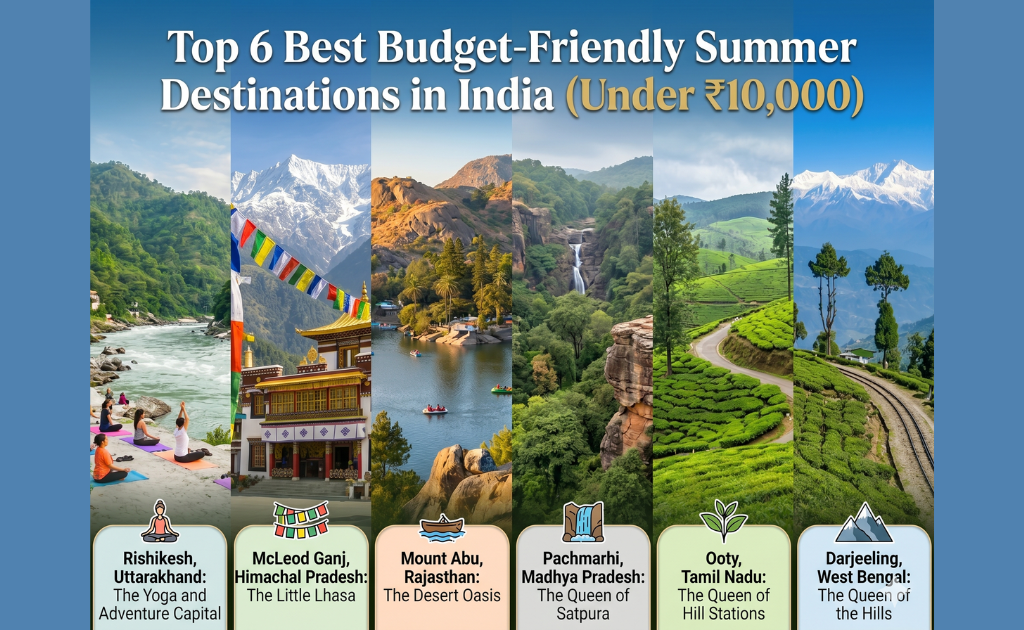
In this exhaustive guest post, we will explore six of the most incredible Summer Destinations in India that you can comfortably explore with a budget of under ₹10,000. Whether you are seeking spiritual solace, adrenaline-pumping adventures, or just a quiet corner to read a book while sipping hot tea, these Summer Destinations in India offer an unforgettable escape. Let’s dive deep into these locations one by one.
1. Rishikesh, Uttarakhand: The Yoga and Adventure Capital
Why Rishikesh is One of the Best Summer Destinations in India
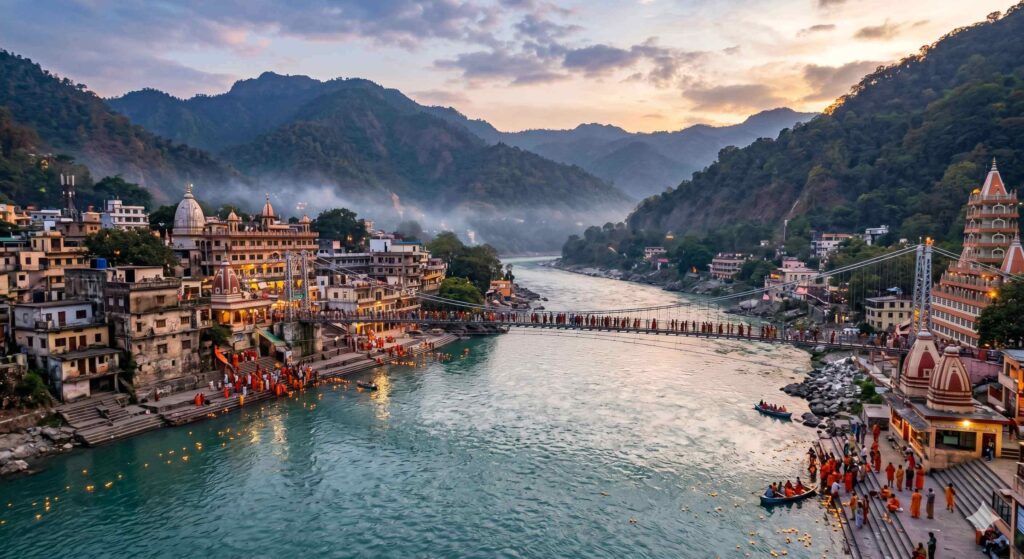
Located in the foothills of the Himalayas along the converging rivers of the Ganges and Chandrabhaga, Rishikesh is a haven for backpackers. It perfectly balances spirituality, yoga, and high-octane adventure sports. While summers in the daytime can be slightly warm, the evenings are cool, and the cold waters of the Ganges provide the perfect respite.
In-Depth Overview and Key Insights
Rishikesh is globally renowned, but it remains one of the most budget-friendly Summer Destinations in India. The town is divided into two main areas: the bustling main town and the more tranquil areas across the river (Tapovan and Swarg Ashram). For backpackers, Tapovan is the ultimate hub, lined with budget cafes, yoga ashrams, and inexpensive hostels.
Budget Breakdown (Estimated 3 Days / 2 Nights)
- Travel (from Delhi): ₹1,000 – ₹1,500 (Round trip by State Transport Bus)
- Accommodation: ₹1,000 – ₹1,500 (Backpacker hostels like Zostel, Moustache, or goSTOPS at ₹400-₹600/night)
- Food: ₹1,500 – ₹2,000 (Local cafes and ashram canteens)
- Activities (Rafting, etc.): ₹1,500 – ₹2,000
- Miscellaneous: ₹1,000
- Total Expected Cost: ₹6,000 – ₹8,000
Essential Travel Tips for Rishikesh
- Pack light: You will be walking a lot, especially crossing the suspension bridges.
- Respect the culture: It is a holy city; alcohol and non-vegetarian food are strictly prohibited.
- Stay Hydrated: Carry a reusable water bottle.
A Complete Roadmap to Rishikesh
How to Reach
- By Air: Jolly Grant Airport in Dehradun is 35 km away. (Not recommended for a strict ₹10,000 budget).
- By Train: Yog Nagari Rishikesh railway station is well connected, but Haridwar (25 km away) has better connectivity. You can take a shared auto or bus from Haridwar to Rishikesh for under ₹100.
- By Road: The most budget-friendly option. Regular AC and non-AC buses run from Kashmiri Gate ISBT in New Delhi. The journey takes about 5-7 hours.
Day-by-Day Itinerary
Day 1: Arrival, Acclimatization, and Spirituality
- Morning: Arrive in Rishikesh, check into your hostel in Tapovan. Grab a healthy, budget-friendly breakfast at a local bakery.
- Afternoon: Walk down to the Beatles Ashram (Chaurasi Kutia). The entry fee is nominal (around ₹150 for Indians). Spend hours exploring the graffiti-covered meditation domes.
- Evening: Head to Triveni Ghat or Parmarth Niketan for the mesmerizing Ganga Aarti. The chanting and floating diyas offer an unforgettable spiritual experience.
Day 2: Adrenaline Rush and Waterfall Treks
- Morning: Book a white-water rafting session (Shivpuri to Rishikesh – 16 km). This will cost around ₹600-₹1000, depending on the season and operator.
- Afternoon: After rafting, rent a scooty (₹400/day) or take a shared taxi to Neer Garh Waterfall. A short trek leads you to crystal-clear pools where you can take a refreshing dip.
- Evening: Cafe hopping in Tapovan. Visit places like Little Buddha Cafe or Freedom Cafe for budget-friendly international and Indian cuisine with a view of the river.
Day 3: Sunrise Views and Departure
- Morning: Wake up early and hike to Kunjapuri Devi Temple for a breathtaking sunrise over the Himalayan peaks. You can book a shared cab from Tapovan.
- Afternoon: Visit the iconic Laxman Jhula and Ram Jhula (check current pedestrian access rules). Shop for local souvenirs, rudraksha malas, and hippie clothing.
- Evening: Board your overnight bus back home, keeping your expenses well under the ₹10,000 mark.
2. McLeod Ganj, Himachal Pradesh: The Little Lhasa
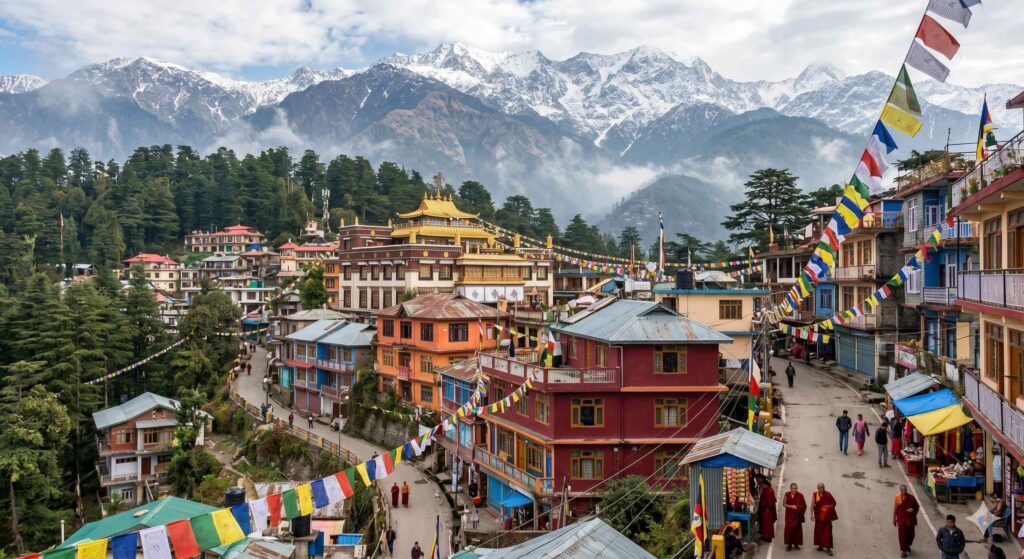
Why McLeod Ganj is Among the Top Summer Destinations in India
Perched above Dharamshala in the Kangra district, McLeod Ganj is the residence of His Holiness the 14th Dalai Lama. It is a beautiful blend of Tibetan culture, lush green mountains, and an energetic backpacker vibe. The weather remains incredibly pleasant during the summer, making it a refuge from the heat.
In-Depth Overview and Key Insights
McLeod Ganj is an intellectual and spiritual hub. It is characterized by its steep, narrow streets filled with monks in maroon robes, the aroma of momos, and the sound of prayer wheels. As one of the most culturally rich Summer Destinations in India, it offers profound experiences without a hefty price tag.
Budget Breakdown (Estimated 3 Days / 2 Nights)
- Travel (from Delhi): ₹2,000 – ₹2,500 (Round trip by Volvo/HRTC Bus)
- Accommodation: ₹1,200 – ₹1,800 (Hostels in Bhagsu or Dharamkot)
- Food: ₹2,000 (Tibetan street food, thukpa, and budget cafes)
- Activities (Triund Trek): ₹1,000 – ₹1,500 (including guide and tent if booked locally)
- Miscellaneous: ₹1,000
- Total Expected Cost: ₹7,200 – ₹8,800
Essential Travel Tips for McLeod Ganj
- Stay in Dharamkot: If you want peace, avoid the main McLeod Ganj square and stay in the nearby village of Dharamkot.
- Carry Cash: ATMs in the upper reaches can run out of cash.
- Trekking Shoes: A good pair of walking shoes is mandatory due to the steep inclines.
A Complete Roadmap to McLeod Ganj
How to Reach
- By Air: Kangra Airport in Gaggal is 18 km away (expensive).
- By Train: The nearest broad-gauge railway station is Pathankot (90 km away). From Pathankot, you can take a cheap HRTC bus to Dharamshala, then a local bus/shared jeep to McLeod Ganj.
- By Road: Overnight Volvo buses from Majnu Ka Tila or ISBT Kashmiri Gate in Delhi go directly to McLeod Ganj bus stand. This is the most efficient and budget-friendly method.
Day-by-Day Itinerary
Day 1: Tibetan Culture and Local Exploration
- Morning: Arrive at the McLeod bus stand, walk to your hostel, and freshen up. Start your day with authentic Tibetan butter tea and Tingmo at a local eatery.
- Afternoon: Visit the Tsuglagkhang Complex (Dalai Lama Temple). Spend time meditating or spinning the prayer wheels. Visit the Tibet Museum to understand the history of the Tibetan people.
- Evening: Walk to the St. John in the Wilderness Church, an Anglican church built in 1852, surrounded by deodar forests. Enjoy dinner at Shiva Cafe or Illiterati Cafe.
Day 2: The Epic Triund Trek
- Morning: Start your trek to Triund early. You can start from Dharamkot or Gallu Devi Temple. It’s a moderately challenging 9 km trek offering majestic views of the Dhauladhar range.
- Afternoon: Reach the Triund top by early afternoon. If you are doing a day trek, enjoy a packed lunch with the view. If you are camping (fits within the ₹10k budget), set up your tent.
- Evening: Experience a spectacular sunset over the Kangra valley. Bonfires and stargazing make this the highlight of the trip.
Day 3: Waterfalls and Winding Down
- Morning: Descend from Triund. Head towards Bhagsunag Temple and take a refreshing dip in the cold waters of the Bhagsu Waterfall.
- Afternoon: Explore the local markets for Tibetan handicrafts, singing bowls, and prayer flags. Do not forget to eat a hearty bowl of Thukpa and steamed momos.
- Evening: Catch your evening bus back down to the plains.
3. Mount Abu, Rajasthan: The Desert Oasis
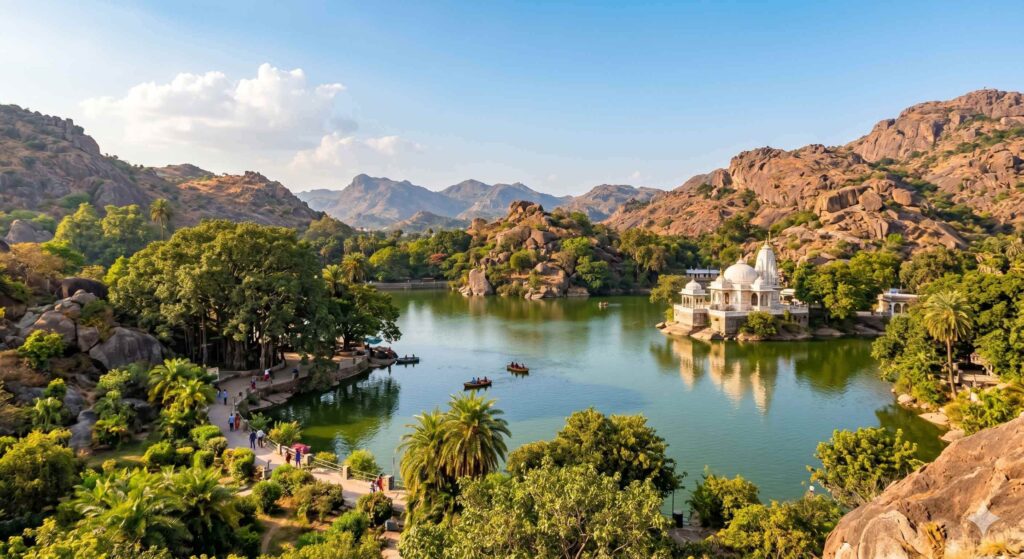
Why Mount Abu Stands Out Among Summer Destinations in India
When people think of Rajasthan, they think of scorching deserts. However, Mount Abu, the only hill station in Rajasthan, is a geographical marvel. Situated in the Aravalli Range, it is surrounded by lush green forests and offers a cool climate, making it one of the most surprising Summer Destinations in India.
In-Depth Overview and Key Insights
Mount Abu offers a mix of natural beauty, Rajputana history, and Jain architecture. Because it caters heavily to domestic tourists, it is very easy to find budget accommodations and cheap, delicious vegetarian food, ensuring your budget remains firmly under ₹10,000.
Budget Breakdown (Estimated 3 Days / 2 Nights)
- Travel (from Ahmedabad/Delhi): ₹1,000 – ₹2,000 (Sleeper class train to Abu Road, then shared taxi)
- Accommodation: ₹1,500 – ₹2,000 (Budget guesthouses near the bus stand or Nakki Lake)
- Food: ₹1,500 (Rajasthani thalis and street food)
- Activities/Sightseeing: ₹500 – ₹800 (Boating, temple entries)
- Miscellaneous: ₹1,000
- Total Expected Cost: ₹5,500 – ₹7,300
Essential Travel Tips for Mount Abu
- Transport: Rent a two-wheeler to explore the town economically.
- Food: Stick to local Rajasthani and Gujarati thalis; they are unlimited, cheap, and highly nutritious.
- Timing: Avoid weekends if possible, as it gets crowded with tourists from neighboring Gujarat.
A Complete Roadmap to Mount Abu
How to Reach
- By Air: Udaipur Airport is the nearest (185 km away).
- By Train: Abu Road Railway Station is the closest (28 km away). It is well-connected to Delhi, Mumbai, Ahmedabad, and Jaipur. From the station, shared jeeps and local buses to Mount Abu cost between ₹50 and ₹100.
- By Road: Excellent road networks connect Mount Abu to major cities in Rajasthan and Gujarat. State transport buses are highly economical.
Day-by-Day Itinerary
Day 1: Lakes and Sunsets
- Morning: Arrive, check into your budget hotel, and head straight to Nakki Lake. According to legend, the lake was dug out by the gods using their nails. Enjoy a budget-friendly pedal boat ride.
- Afternoon: Visit Toad Rock, located right next to Nakki Lake. A short climb gives you a panoramic view of the entire lake and town.
- Evening: Head to Sunset Point. While it can be touristy, watching the sun dip behind the Aravalli hills is a must-do. Walk back to the main market for a cheap and filling Rajasthani dinner.
Day 2: Architectural Marvels and High Peaks
- Morning: Rent a scooter (approx. ₹300-₹400/day). Drive to the Dilwara Jain Temples. These temples date back to the 11th century and feature some of the most intricate marble carvings in the world. (Entry is free, photography is prohibited.
- Afternoon: Drive up to Guru Shikhar, the highest peak of the Aravalli Range. The views are spectacular, and there is an ancient temple dedicated to Dattatreya at the top.
- Evening: Visit the Brahma Kumaris Peace Park for some quiet meditation and beautifully manicured gardens.
Day 3: Wildlife and Departure
- Morning: Visit the Mount Abu Wildlife Sanctuary. You can take a guided trek (which is very cheap) to spot local flora and fauna, including langurs and various bird species.
- Afternoon: Visit Achalgarh Fort, a 14th-century fort built by Rana Kumbha of Mewar. Explore the ruins and the nearby Mandakini Lake.
- Evening: Return your scooter, grab a quick bite, and take a shared taxi down to Abu Road station for your journey home.
4. Pachmarhi, Madhya Pradesh: The Queen of Satpura
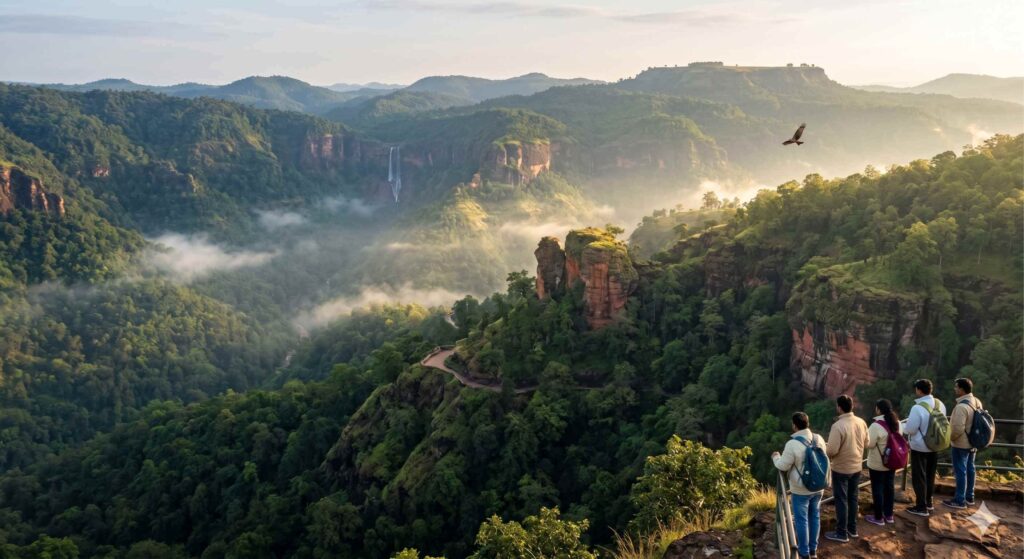
Why Pachmarhi is a Hidden Gem Among Summer Destinations in India
Often overlooked by mainstream tourists, Pachmarhi in Madhya Pradesh is a biosphere reserve that offers deep valleys, cascading waterfalls, and ancient caves. Located at an elevation of 1,067 meters, it is Central India’s most prized hill station and an incredibly cheap option for those looking for unique Summer Destinations in India.
In-Depth Overview and Key Insights
Discovered by British Captain James Forsyth in 1857, Pachmarhi has a distinct colonial charm mixed with raw, untamed nature. It is less commercialized than northern hill stations, which keeps the costs significantly low. You will mostly rely on local Gypsies for sightseeing, which can be shared to cut costs.
Budget Breakdown (Estimated 3 Days / 2 Nights)
- Travel (from Bhopal/Nagpur): ₹800 – ₹1,500 (Train to Pipariya + shared cab)
- Accommodation: ₹1,500 – ₹2,000 (MPSTDC budget lodges or local homestays)
- Food: ₹1,200 – ₹1,500
- Activities (Shared Gypsy for sightseeing): ₹1,500 – ₹2,000
- Miscellaneous: ₹800
- Total Expected Cost: ₹5,800 – ₹7,800
Essential Travel Tips for Pachmarhi
- Forest Permits: Many waterfalls require entry permits. Keep your ID cards handy.
- Sightseeing: You cannot take private vehicles to many points; you must hire a 4×4 Gypsy. Buddy up with other travelers to split this cost.
- Wildlife: Do not wander into the forests after dark, as it is a protected tiger reserve area.
A Complete Roadmap to Pachmarhi
How to Reach
- By Air: Raja Bhoj Airport in Bhopal (200 km) or Dr. Babasaheb Ambedkar International Airport in Nagpur (227 km).
- By Train: Pipariya Railway Station (54 km away) is the nearest railhead, located on the Mumbai-Howrah main line. From Pipariya, you can easily get shared jeeps or local buses to Pachmarhi for ₹100-₹200.
- By Road: Well-connected by the MP State highway. Buses run regularly from Bhopal and Indore.
Day-by-Day Itinerary
Day 1: Ancient Caves and Viewpoints
- Morning: Arrive in Pachmarhi via Pipariya. Check-in. Visit the Pandav Caves, a group of five rock-cut temples. Legend says the Pandavas spent their exile here.
- Afternoon: Visit Jata Shankar Caves. Located in a deep ravine, the caves hold stalagmite formations revered as the matted hair of Lord Shiva. The temperature drops significantly inside the cave.
- Evening: Head to Rajendragiri Sunset Point or the serene Pachmarhi Lake for a quiet evening.
Day 2: Waterfalls and the Highest Peak
- Morning: Hire a shared Gypsy and head to Bee Falls. A steep descent takes you to a magnificent waterfall that provides drinking water to the whole town. You can bathe in the lower pools.
- Afternoon: Visit Reechgarh, a natural amphitheater in the rocks that was once inhabited by bears.
- Evening: The highlight of Pachmarhi: Drive to Dhoopgarh, the highest point in the Satpura range. The sunset view from here, looking over the rolling hills and deep gorges, is arguably the best in Central India.
Day 3: Colonial History and Nature Walks
- Morning: Visit Christ Church, built in 1875, reflecting pure colonial architecture with stained glass windows.
- Afternoon: Take a gentle hike to Duchess Falls or Apsara Vihar (Fairy Pool), perfect for a safe, shallow swim.
- Evening: Do some budget shopping for Ayurvedic honey and tribal artifacts in the local market before taking a shared cab back to Pipariya station.
5. Ooty, Tamil Nadu: The Queen of Hill Stations
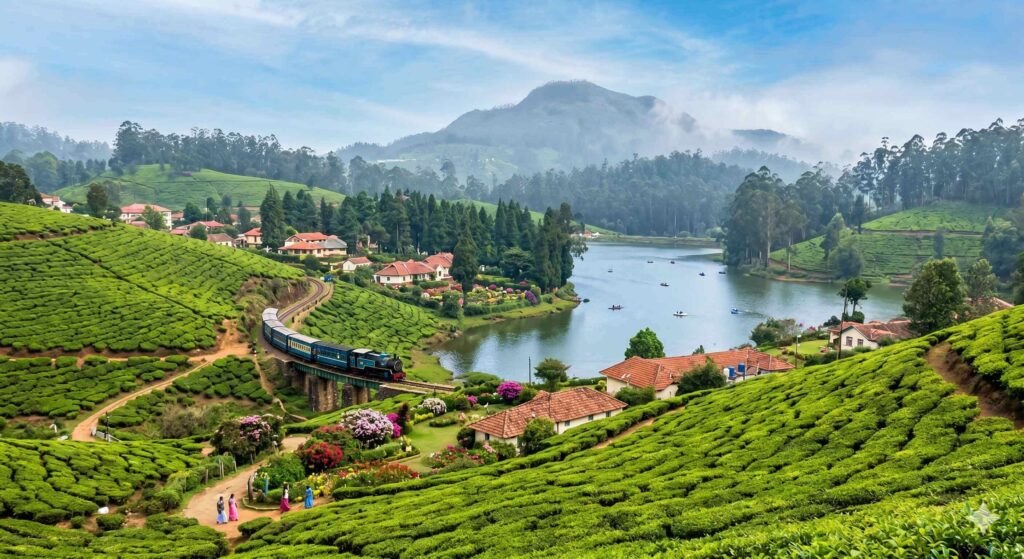
Why Ooty is a Classic Choice for Summer Destinations in India
Udhagamandalam, or Ooty, is nestled in the Nilgiri Hills of Tamil Nadu. Known for its sprawling tea gardens, winding country lanes, and colonial architecture, it remains a beloved escape for South Indians. When selecting budget-friendly Summer Destinations in India, Ooty proves that classic tourist spots can still be explored on a shoestring budget if planned correctly.
In-Depth Overview and Key Insights
While Ooty has luxury resorts, it also has a massive infrastructure for backpackers and budget travelers. By utilizing local transport, eating at local South Indian messes (canteens), and avoiding peak tourist traps, Ooty is highly affordable.
Budget Breakdown (Estimated 3 Days / 2 Nights)
- Travel (from Bangalore/Chennai): ₹1,500 – ₹2,000 (Overnight State Bus)
- Accommodation: ₹1,500 – ₹2,500 (Backpacker hostels like Zostel Ooty or budget lodges near the bus stand)
- Food: ₹1,200 – ₹1,500 (South Indian meals, dosas, and local bakeries)
- Activities: ₹1,000 (Toy train ticket, garden entries)
- Miscellaneous: ₹1,000
- Total Expected Cost: ₹6,200 – ₹8,000
Essential Travel Tips for Ooty
- Toy Train: Book the Nilgiri Mountain Railway (Toy Train) tickets months in advance via the IRCTC website, as they sell out incredibly fast.
- Local Transport: Use local buses to travel between spots like Coonoor and Ooty to save hundreds of rupees on taxis.
- Weather: Even in peak summer, evenings can be chilly. Carry a light jacket.
A Complete Roadmap to Ooty
How to Reach
- By Air: Coimbatore International Airport is the nearest (88 km).
- By Train: Mettupalayam is the nearest major railway station. From here, you can take the famous Toy Train up to Ooty, or take a cheap local bus.
- By Road: KSRTC and TNSTC run highly affordable and comfortable night buses from Bangalore, Mysore, and Chennai directly to Ooty.
Day-by-Day Itinerary
Day 1: Gardens and Lakes
- Morning: Arrive in Ooty. After checking in, visit the Government Botanical Garden. Spread over 55 acres, it’s a beautiful place to walk around. Entry is very cheap (₹30-₹50).
- Afternoon: Grab a cheap South Indian thali for lunch. Head to Ooty Lake. While boating is available, just walking around the lake and enjoying the eucalyptus-scented air is free and refreshing.
- Evening: Explore the local markets for homemade chocolates, eucalyptus oil, and local Nilgiri tea.
Day 2: The Coonoor Excursion
- Morning: Take a local bus from Ooty bus stand to Coonoor (takes about 1 hour and costs less than ₹50). Coonoor is less crowded and incredibly scenic.
- Afternoon: Visit Sim’s Park and then hire an auto or trek up to Dolphin’s Nose viewpoint. The view of the Catherine Falls from here is spectacular. Walk through the lush green tea estates.
- Evening: If you managed to secure a ticket, take the Toy Train from Coonoor back to Ooty. It is a UNESCO World Heritage experience that chugs slowly through the misty mountains.
Day 3: High Peaks and Pine Forests
- Morning: Take a local bus or shared jeep to Doddabetta Peak, the highest mountain in the Nilgiri Hills. On a clear day, you can see the plains of Coimbatore and the flat highlands of Mysore.
- Afternoon: Visit the Pine Tree Forests (famous for many Bollywood and Kollywood movie shoots) and the nearby Pykara Lake.
- Evening: Enjoy a final dinner of hot parottas and kurma before boarding your overnight bus out of the mountains.
6. Darjeeling, West Bengal: The Queen of the Hills
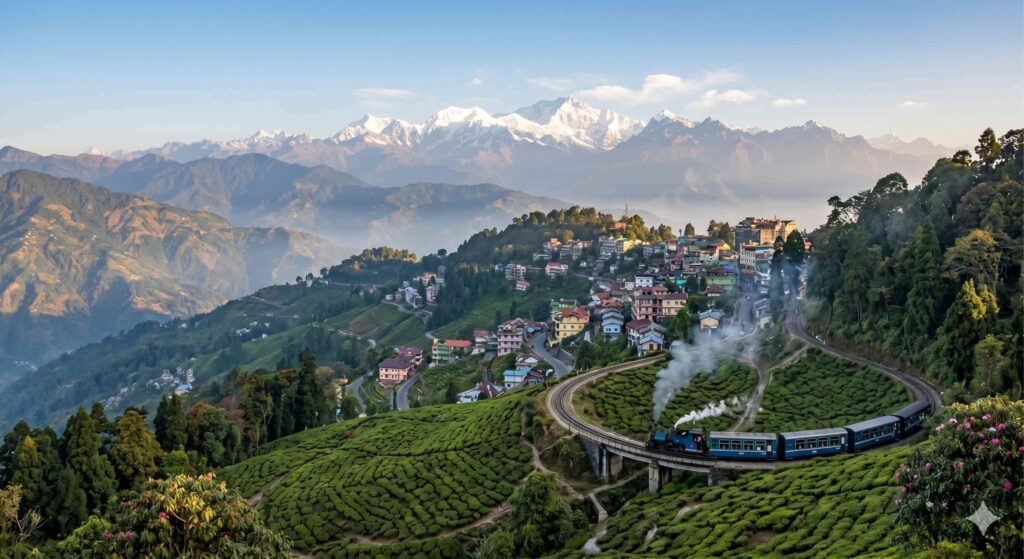
Why Darjeeling is a Top-Tier Option Among Summer Destinations in India
Offering a mesmerizing view of the Kanchenjunga (the third-highest peak in the world), Darjeeling is globally famous for its tea. It is a cultural melting pot of Nepali, Tibetan, and Bengali influences. Among the eastern Summer Destinations in India, Darjeeling provides the most bang for your buck, offering world-class views on a backpacker’s budget.
In-Depth Overview and Key Insights
Darjeeling’s steep streets and winding alleys are best explored on foot, which is entirely free. The budget lies in finding affordable stays slightly away from the main Mall Road. The street food culture here is phenomenal, heavily influenced by Tibetan cuisine, allowing you to eat heartily for very little.
Budget Breakdown (Estimated 3 Days / 2 Nights)
- Travel (from Kolkata/Siliguri): ₹1,500 – ₹2,500 (Train to NJP + shared Sumos)
- Accommodation: ₹1,500 – ₹2,000 (Budget hostels like Hideout or modest guesthouses)
- Food: ₹1,500 – ₹2,000 (Momos, Thukpa, Shaphaley, and traditional bakeries like Glenary’s for a treat)
- Activities: ₹1,000 (HMI, Zoo, Ropeway)
- Miscellaneous: ₹1,000
- Total Expected Cost: ₹7,000 – ₹9,000
Essential Travel Tips for Darjeeling
- Shared Jeeps: The lifeline of Darjeeling. From NJP to Darjeeling and for local sightseeing, always use shared Tata Sumos.
- Walk: Darjeeling is prone to traffic jams. Walking is not only free but often faster than taking a cab.
- Water: Packaged drinking water is essential, as the local tap water might not suit everyone.
A Complete Roadmap to Darjeeling
How to Reach
- By Air: Bagdogra Airport (90 km away).
- By Train: New Jalpaiguri (NJP) is the main railway hub, well-connected to all of India. Outside NJP, hundreds of shared jeeps wait to take passengers to Darjeeling (costing around ₹200-₹300 per seat). The journey takes 3-4 hours.
- By Road: You can also take buses from Siliguri (Tenzing Norgay Bus Terminus), but shared jeeps are faster and more comfortable.
Day-by-Day Itinerary
Day 1: The Mall Road and Colonial Charm
- Morning: Arrive from NJP via a shared jeep. The winding drive through the mountains and tea gardens is an experience in itself. Check into your hostel.
- Afternoon: Walk up to Chowrasta (The Mall). It is a wide promenade where locals and tourists gather. No vehicles are allowed here. Grab lunch at a local eatery—try the pork momos or a steaming bowl of thukpa.
- Evening: Visit the Mahakal Temple located just above Chowrasta. Spend the evening sitting on a bench at the Mall, watching the mist roll in, and sip on authentic Darjeeling First Flush tea.
Day 2: Mountaineering and Tea Gardens
- Morning: Walk to the Padmaja Naidu Himalayan Zoological Park. It is famous for its conservation breeding programs for the Red Panda and Snow Leopard. In the same complex, visit the Himalayan Mountaineering Institute (HMI), which houses incredible artifacts from various Everest expeditions. Entry to both is combined and very cheap.
- Afternoon: Take the Darjeeling Ropeway (cable car) for a stunning aerial view of the lush green tea estates cutting through the valleys. Alternatively, visit the Happy Valley Tea Estate to see how tea is processed.
- Evening: Treat yourself to some colonial-era baked goods at the famous Glenary’s bakery. While dining at their restaurant can be pricey, grabbing a pastry and coffee at the cafe fits well within a budget.
Day 3: The Golden Sunrise
- Morning: Wake up at 3:30 AM and take a shared jeep (book the previous day) to Tiger Hill. Watch the sunrise hit the Kanchenjunga range, turning the snow-capped peaks golden. On a very clear day, you can even spot Mount Everest. On the way back, visit the Batasia Loop and Ghoom Monastery.
- Afternoon: Do some last-minute shopping at the Mahakal Market for cheap winter wear, Tibetan curios, and, of course, packets of Darjeeling tea to take home.
- Evening: Head down to the Darjeeling jeep stand and take a shared cab back to Siliguri/NJP to catch your overnight train.
Pro-Tips to Keep Your Trip Under ₹10,000
- Book in Advance: Bus fares (especially Volvos) skyrocket during weekends. Use apps like RedBus or AbhiBus at least 15 days prior.
- Travel on Weekdays: Accommodation prices in places like Kasol and Rishikesh drop by 30-40% from Monday to Thursday.
- Eat Local: Skip the “fancy” restaurants with English names. Look for places where the locals eat for the most authentic and cheapest meals.
- Use Public Transport: Avoid private taxis. In the hills, HRTC or Uttarakhand Roadways buses are reliable and cost a fraction of a cab fare.
- Hostel Life: Beyond saving money, hostels are great for finding “travel buddies” to share the cost of cabs or guides.
Conclusion
Traveling on a budget does not mean compromising on the experience. By choosing the right Summer Destinations in India, utilizing public transport, sleeping in vibrant backpacker hostels, and eating local cuisine, you can explore the incredible diversity of the Indian subcontinent for under ₹10,000.
Whether you are seeking the spiritual shores of the Ganges in Rishikesh, the Tibetan bells of McLeod Ganj, the unexpected cool breeze of Mount Abu, the hidden waterfalls of Pachmarhi, the tea estates of Ooty, or the majestic Himalayan views of Darjeeling, these top-tier Summer Destinations in India prove that an epic summer vacation is accessible to everyone. Pack your bags, plan smartly, and let the mountains call you!