
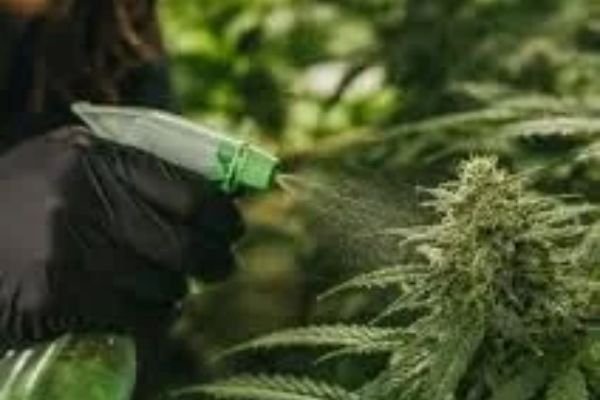
Insects and mites can affect many types of plants, and cannabis is no exception. Different species may feed on leaves, stems, or other plant tissues, leaving visible signs of damage. Understanding common cannabis pests helps readers recognize the types of organisms associated with these plants and learn how they affect plant health.
Some pests are easy to notice because they leave holes or visible marks on leaves. Others are much smaller and may go unnoticed without close observation. From spider mites to aphids, each pest has distinct physical features and feeding habits. Let’s look at some of the most commonly discussed pests associated with cannabis plants.
1. Spider Mites
Spider mites are tiny arachnids that are known for affecting a wide range of plant species. Although they are often mistaken for insects, they belong to the spider family. Their small size makes them difficult to notice, especially during the early stages of an infestation.
Spider mites feed on plant cells, which can cause small pale spots or speckled patterns on leaf surfaces. As their numbers increase, affected foliage may develop a dull or discolored appearance. Some species also produce fine webbing around leaves and stems.
Their ability to reproduce quickly makes spider mites a widely recognized plant pest. They are commonly discussed in relation to cannabis because of the visible changes they can cause to foliage.
2. Aphids
Aphids are small, soft-bodied insects that feed on plant sap. They can appear in several colors, including green, black, yellow, and brown. These insects often gather in groups around tender plant tissues.
One recognizable feature of aphids is their pear-shaped body. They also produce a sticky substance called honeydew as they feed. This residue can accumulate on plant surfaces and may encourage the growth of sooty mold.
Aphids are not limited to cannabis. They affect numerous ornamental plants, vegetables, and agricultural crops. Their widespread presence makes them one of the most familiar plant-feeding insects.
3. Fungus Gnats
Fungus gnats are small, dark-colored flies commonly associated with moist organic material. Mature gnats look similar to tiny mosquitoes, although they do not have the same feeding habits.
Their larvae are particularly relevant to plant health because they live in organic material and feed on fungi and decaying matter. Some species may also damage delicate plant roots.
Mature fungus gnats are often noticed flying close to plant surfaces. Their small size and dark appearance can make them easy to confuse with other tiny flies.
4. Thrips
Thrips are slender insects with narrow bodies and fringed wings. They are extremely small, so identifying them can be tricky without magnification.
These insects feed by scraping plant surfaces and consuming cellular contents. Their feeding activity can leave behind silvery patches, tiny scars, and irregular marks on leaves.
Thrips come in many species, and their appearance can vary. Some are yellow or pale brown, while others are darker. They are also known to affect fruits, vegetables, ornamental plants, and several agricultural crops.
5. Whiteflies
Whiteflies are small, winged insects that are usually found on the undersides of leaves. Despite their name, they are not true flies. They belong to a group of insects closely related to aphids and scale insects.
Mature whiteflies have pale bodies and powdery-looking wings. When disturbed, they may fly away in a small cloud, making them easier to recognize.
Like aphids, whiteflies feed on plant sap and produce honeydew. Heavy populations can cause leaves to develop yellow patches and lose their normal appearance. Certain species can also transmit plant viruses.
6. Leaf Miners
Leaf miners are insects whose larvae feed within the inner layers of leaves. Several types of flies, moths, and beetles have leaf-mining larvae.
Their feeding activity creates winding trails or blotchy patterns between the upper and lower leaf surfaces. These marks are commonly called leaf mines.
Unlike insects that feed openly on leaf surfaces, leaf miners remain protected inside the plant tissue during much of their larval development. This makes their damage visually distinctive.
7. Caterpillars
Caterpillars are the larval stage of butterflies and moths. They have soft, segmented bodies and can vary greatly in size and color.
Many caterpillar species feed on plant foliage. Their feeding activity may leave irregular holes, missing leaf sections, or damaged plant surfaces. Some species also feed on stems and other plant parts.
Not every caterpillar is harmful, though. Many butterfly and moth larvae play important roles in natural ecosystems. Their presence alone does not always indicate a serious plant problem.
Why Is It Important to Recognize Different Plant Pests?
Different pests leave different signs, so understanding their physical characteristics can help distinguish one species from another. For instance, spider mites are associated with fine webbing and speckled leaves, while leaf miners leave winding trails inside foliage.
Recognizing these differences is also useful from a broader plant science perspective. It helps explain how insects interact with plant tissues, how different species obtain food, and why certain pests are found across multiple plant families.
Not all bugs on weed plants cause the same type of damage. Some feed on sap, others consume leaf tissue, and certain larvae affect roots or internal plant structures. Their feeding habits and life cycles determine the kind of damage they are associated with.
The Bottom line
Spider mites, aphids, fungus gnats, thrips, whiteflies, leaf miners, and caterpillars are among the commonly discussed pests associated with cannabis plants. Each has distinct physical features and feeding habits, resulting in different types of visible plant damage.
Learning to distinguish these organisms provides a better understanding of cannabis plant biology and the wider relationship between insects and plants. It also highlights how many of the same pest species affect different agricultural and ornamental plants.