Almost everyone who has worked in the same field for decades has a drawer full of stories. There are the funny mix-ups that still make colleagues laugh at reunions, the quiet victories nobody else noticed, and the lessons learned the hard way. Most of these stories never leave the person who lived them, simply because writing them down feels like a big project.
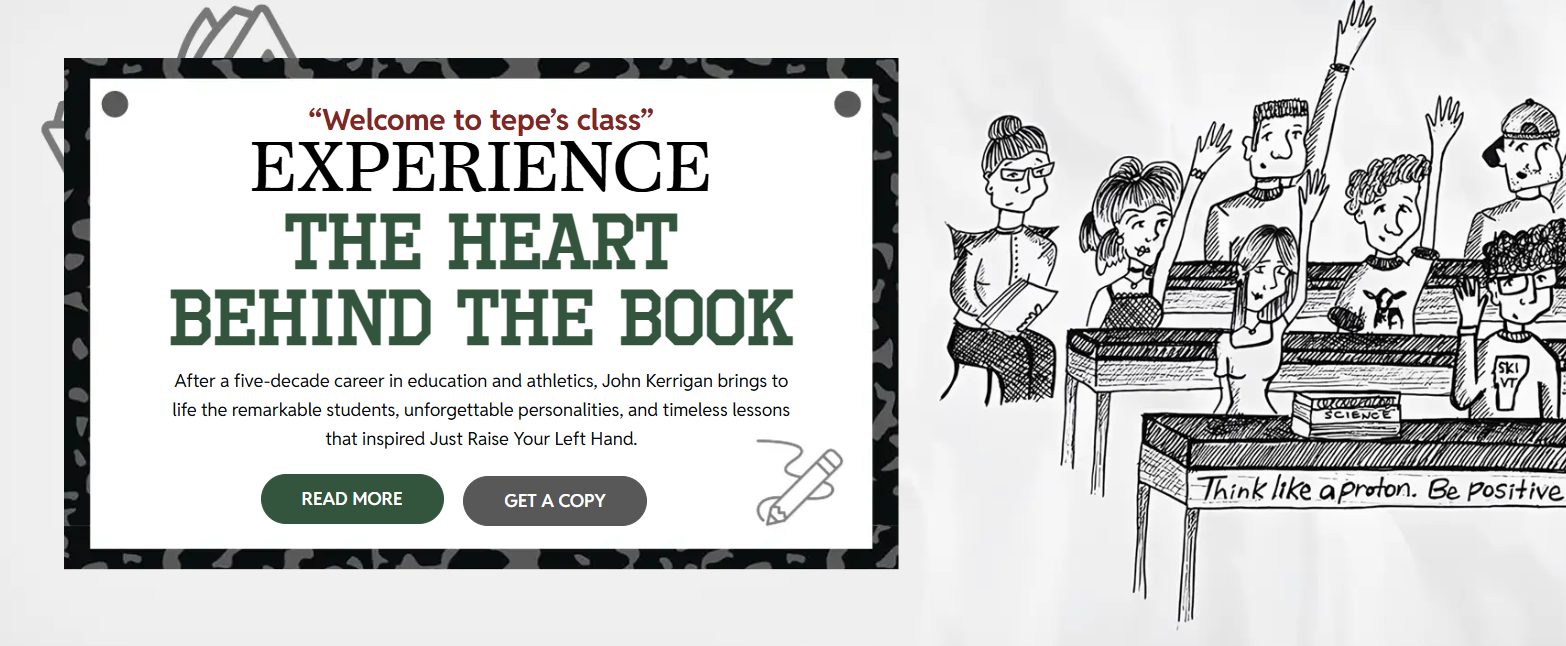
Author John Kerrigan took on that project after a long career at Harwood Union High School in Vermont, where he taught science and coached cross-country, Nordic skiing, and track and field from 1977 to 2023. The result is Just Raise Your Left Hand: Tell Us a Story, a book of short, connected chapters built around a teacher and coach named Joe Tepedino.
If you have ever thought about turning your own experience into writing, the idea behind a teacher memoir offers a useful model. Here is why it works and how to approach something similar.
Why Experience Makes Good Material
A long career gives you something no writing course can teach: a deep supply of real moments. You have seen how people behave under pressure, how small decisions grow into big consequences, and how ordinary days quietly add up to a life’s work.
Readers respond to that authenticity. They can usually tell the difference between a story invented to make a point and one that comes from lived experience. Real stories contain odd details, unexpected turns and imperfect people, and those details are what make them believable and memorable.
Start With a Moment, Not a Theme
New writers often begin by asking what their book is about. That question can be paralyzing. A gentler approach is to start with a single moment you remember clearly. It might be a first day on the job, a surprising conversation or an event that went wrong in a funny way.
Write down what happened, who was there, and what it felt like. Don’t worry about the bigger message yet. Themes tend to appear on their own once you have several moments on the page. You may discover that many of your stories are really about patience, or fairness, or learning to laugh at yourself.
Keep Chapters Short
One reason a collection of short chapters works so well is that it respects both the writer and the reader. For the writer, a short chapter is a manageable goal. You can finish one in a few sittings, feel a sense of progress and move on to the next.
For the reader, short chapters fit into real life. They can be enjoyed over a lunch break, before bed or between appointments. A book built this way also allows variety. One chapter can be light and funny, the next more reflective, and the overall experience feels balanced rather than heavy.
Let Characters Be Human
The most memorable people in any story are rarely perfect. They are stubborn in one way, generous in another, and occasionally ridiculous. When you write about colleagues, students, teammates or neighbors, resist the temptation to make everyone a hero or a villain.
This is especially important when you are writing about your own role. Readers warm to narrators who admit mistakes, show doubt and laugh at themselves. A main character who learns and grows over time is far more engaging than one who always knows the right answer.
Use Humor Carefully but Freely
Humor is one of the most reliable ways to connect with readers. It lowers defenses, makes difficult subjects approachable and gives the reader a break from seriousness. The best humor in memoir comes from honesty rather than exaggeration: a real situation described plainly, with enough detail that the reader can picture it.
At the same time, humor works best alongside reflection. A funny story that also reveals something true about people tends to linger longer than a joke alone. Good memoirs move comfortably between the two.
Respect the People in Your Stories
Writing from real life comes with a responsibility. The people in your stories are real, and many of them will be able to recognize themselves. A simple guideline is to write about others the way you would want to be written about: honestly, fairly and with some generosity.
Where a story involves private details, consider changing names or blending characters so that no one is exposed unfairly. Using a fictional main character, as happens in this book with Joe Tepedino, can also give a writer more freedom to shape the material while keeping the spirit of real experience.
Set a Gentle Routine
Finishing a book rarely depends on inspiration. It depends on routine. Many writers find that a small, regular commitment works better than occasional bursts of effort. Fifteen minutes a day, or one chapter a week, is enough to build momentum.
It also helps to keep a running list of story ideas. Whenever a memory surfaces, jot down a line or two. Over time, that list becomes a map of everything you might want to write. On days when you feel stuck, you can simply pick the next item and begin.
Share It With People Who Will Be Kind and Honest
Feedback is valuable, but the source matters. Early readers should be people who want your writing to succeed and who will also tell you the truth. A friend, a former colleague or a writing group can all play this role.
Ask specific questions: Which part made you laugh? Where did you lose interest? Which character felt real? Answers like these are far more useful than general praise, and they help you improve without losing confidence.
Why It Matters
The stories we carry are part of our shared history. A teacher’s memories of a school in the late twentieth century, a coach’s observations about young athletes, a neighbor’s account of a small town: these preserve a texture of life that official records never capture.
They also help other people. A new teacher who reads about someone else’s rough first week feels less alone. A parent who reads about a struggling athlete may see their own child with more patience. A reader who has never set foot in Vermont may come away with a clearer sense of what a close-knit community feels like.
Final Thoughts
You don’t need a famous name or a dramatic life to write something worth reading. You need a few honest stories, a bit of humor and the willingness to put them on the page. Start with one moment, keep it simple, and let the rest follow.