
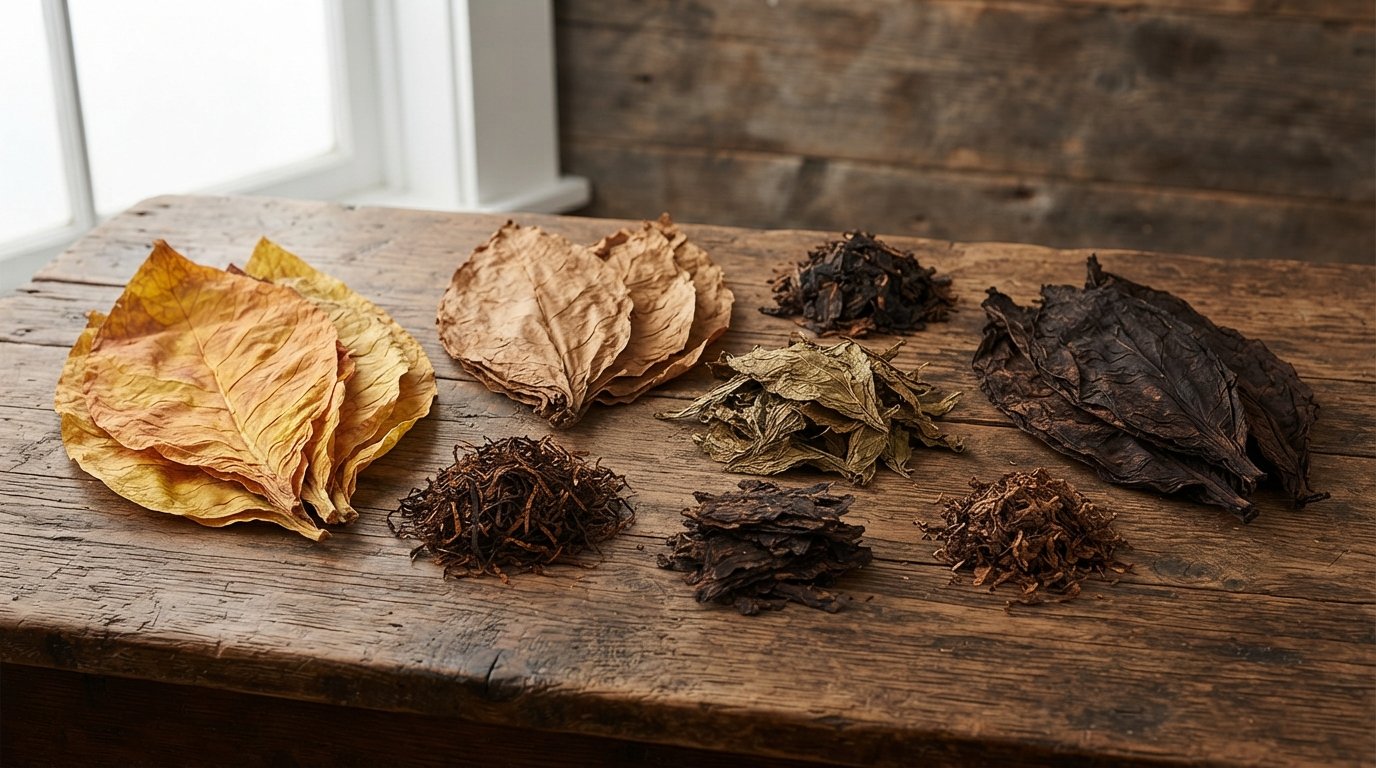
Loose tobacco comes in various types, textures, colors, and processing styles. Each variety has distinct agricultural and manufacturing characteristics. Understanding these differences helps readers learn about tobacco classification, preparation methods, and product composition.
Tobacco varieties are often categorized by their leaf type, curing method, moisture content, and processing techniques. For example, people researching terms such as buy OHM pipe tobacco may encounter different tobacco blends, cuts, and leaf varieties. Understanding these labels provides useful context about how loose tobacco products are manufactured and classified.
Although tobacco varieties differ in composition and processing, all tobacco products carry health risks. Tobacco contains nicotine, an addictive substance, and smoking exposes users to harmful chemicals.
1. What Is Loose Tobacco?
Loose tobacco refers to processed tobacco leaves that are not formed into finished cigarettes, cigars, or other preassembled products. It may consist of shredded leaves, pressed flakes, small pieces, or blended tobacco varieties.
The manufacturing process usually involves several stages. First, tobacco leaves are harvested and dried. Then, they may undergo curing, aging, conditioning, cutting, and blending. These processes influence the leaf’s color, moisture, structure, and chemical composition.
Loose tobacco products can vary significantly between manufacturers. Some contain a single tobacco variety, while others combine multiple types. Packaging information may describe the tobacco blend, cut, moisture level, and processing method.
2. Virginia Tobacco
Virginia tobacco is generally flue-cured. During flue curing, controlled heat passes through enclosed curing structures. This process reduces moisture while preserving certain characteristics of the leaf.
The leaves can vary in size, thickness, and color depending on growing conditions. Soil composition, climate, harvesting practices, and curing temperatures can influence the final appearance.
Virginia tobacco is frequently used in manufactured tobacco blends. Its agricultural and chemical characteristics make it an important variety within the tobacco industry.
3. Burley Tobacco
The curing process can influence the leaf’s color, moisture, and chemical composition. Burley leaves are generally thicker than some other tobacco varieties. Their structure can also differ according to the growing environment and harvesting conditions.
Burley is widely used in tobacco blends. Manufacturers may combine it with other varieties to achieve particular physical and chemical characteristics.
However, the final composition varies between products. Processing methods and additives may also affect the characteristics of the finished tobacco.
4. Oriental Tobacco
Oriental tobacco is often associated with smaller leaves grown in specific regions of the Mediterranean and surrounding areas. These plants may develop smaller leaf structures because of regional climates, soil conditions, and agricultural practices.
The leaves are commonly sun-cured. During this process, harvested leaves are exposed to sunlight under controlled agricultural conditions. This method differs from flue curing and air curing.
Oriental tobacco may appear yellow, golden, or light brown after processing. Its leaf size and structure distinguish it from larger tobacco varieties.
The term Oriental tobacco can refer to several regional varieties. Therefore, the exact characteristics depend on the origin, cultivation practices, and processing techniques used.
5. Dark-Fired Tobacco
Dark-fired tobacco is processed using fire during the curing stage. This method introduces smoke exposure, which affects the leaves’ color and chemical composition.
The leaves generally become darker than many other tobacco varieties. Their appearance may range from deep brown to nearly black, depending on the curing process.
Fire curing requires careful management of temperature, airflow, and smoke exposure. These factors influence the leaf’s moisture, surface texture, and overall composition.
Dark-fired tobacco is used in certain tobacco products and blends. Its processing characteristics make it distinct from varieties cured through sunlight, air, or heated flues.
6. Cavendish Tobacco
Cavendish is primarily a processing style rather than a specific tobacco plant variety. It is commonly produced using tobacco leaves that undergo additional treatment, including pressing, conditioning, and sometimes flavoring.
During processing, tobacco may be pressed into blocks or cakes. The pressure and conditioning period can change the leaf’s structure, moisture distribution, and texture.
Cavendish tobacco may appear dark brown or black. However, the final color depends on the leaves used and the processing techniques applied.
Different manufacturers may use different methods to produce Cavendish tobacco. Consequently, the term does not represent one standardized recipe or composition.
7. Perique Tobacco
Perique is a distinctive tobacco type historically associated with Louisiana, United States. Its production involves specialized fermentation and pressure-based processing.
After harvesting, the leaves undergo a controlled process involving pressure and fermentation. This treatment alters their chemical composition, color, moisture, and physical structure.
Perique is often dark in appearance. The production process differs from many conventional tobacco curing methods, making it a recognizable category within tobacco manufacturing.
Its limited regional production history and specialized processing distinguish it from more widely cultivated varieties.
8. Latakia Tobacco
Latakia is traditionally associated with smoke-curing techniques. Its production involves exposing tobacco leaves to smoke during the curing process.
This method changes the leaves’ appearance and chemical composition. Latakia may appear dark brown or nearly black after processing.
Historically, Latakia production has been associated with particular regions and traditional curing methods. However, production practices and sources may vary over time.
Latakia is generally used as a component in tobacco blends rather than representing a single standardized finished product.
9. Understanding Loose Tobacco Cuts
Loose tobacco is available in several cut styles. Cutting methods influence the leaf’s physical structure, packing characteristics, moisture distribution, and manufacturing consistency.
Ribbon Cut
Ribbon-cut tobacco consists of narrow strips of leaf. The strips may vary in width and length depending on the cutting machinery and manufacturer.
This format is common in manufactured tobacco products because it provides a relatively uniform physical structure.
Shag Cut
Shag-cut tobacco contains thin, finely cut strips. The pieces are generally narrower than conventional ribbon cuts.
Cutting dimensions depend on the product specifications and processing equipment.
Flake Tobacco
Flake tobacco is produced by pressing tobacco into compact layers before cutting it into smaller pieces.
The pressing process influences the leaf’s density, moisture distribution, and structure. Flake products may require additional processing before reaching their final packaged form.
Ready-Rubbed Tobacco
Ready-rubbed tobacco refers to flakes that have been broken apart into smaller pieces.
The resulting material has a looser structure than pressed tobacco. The size and consistency of the pieces depend on the processing method.
Plug and Cake Tobacco
Plug or cake tobacco consists of compressed tobacco formed into solid blocks.
The compression process helps maintain a compact shape. These formats may contain different tobacco varieties, depending on the manufacturer’s formulation.
10. Blended Loose Tobacco
Many loose tobacco products contain more than one tobacco variety. Blending allows manufacturers to combine leaves with different physical and chemical characteristics.
For example, a blend may contain Virginia, Burley, or Oriental tobacco. The proportions and processing methods can vary considerably between manufacturers.
Blending is also used to manage product consistency. Tobacco leaves naturally differ because of weather, soil, crop conditions, and harvesting practices.
Manufacturers may adjust blend compositions between production batches. Therefore, product labels and ingredient information are important sources for understanding what a particular blend contains.
11. Aromatic and Non-Aromatic Tobacco
Tobacco products are sometimes classified as aromatic or non-aromatic according to their processing and added ingredients.
Aromatic tobacco may contain flavoring substances, humectants, or other additives. These ingredients can affect moisture, color, chemical composition, and the product’s scent.
Non-aromatic tobacco may have fewer added flavoring ingredients. However, the term does not necessarily mean that the product contains no additives.
The distinction depends on the manufacturer and the specific product formulation. Consumers should not assume that aromatic, natural, or unflavored tobacco is safer than other tobacco products.
12. Tobacco Curing Methods
Curing is a significant part of tobacco processing. It involves drying harvested leaves under specific environmental conditions.
Different curing methods produce different physical and chemical characteristics.
Air Curing
Air curing involves drying tobacco leaves in ventilated structures. Natural airflow helps reduce moisture over a period of time.
Flue Curing
Flue curing uses controlled heat supplied through heating systems. It allows manufacturers to manage drying conditions more precisely.
Sun Curing
Sun curing involves exposing harvested tobacco leaves to sunlight. Environmental conditions influence the duration and outcome of the process.
Fire Curing
Fire curing uses smoke and heat during the drying process. It can alter leaf color and chemical composition.
Each curing method has different production requirements. Temperature, humidity, airflow, duration, and leaf condition influence the final material.
13. Tobacco Moisture and Storage Characteristics
Moisture content is an important factor in loose tobacco processing. It influences leaf flexibility, texture, weight, and storage conditions.
Tobacco leaves that are excessively dry may become brittle. Meanwhile, higher moisture levels can increase the risk of mold growth when storage conditions are unsuitable.
Manufacturers use packaging methods designed to maintain product consistency during transportation and storage. Packaging materials may limit exposure to air, moisture changes, and environmental contaminants.
Storage conditions also affect tobacco over time. Temperature fluctuations, excessive humidity, and prolonged exposure to air can change the leaf’s physical characteristics.
Understanding moisture and storage helps explain why tobacco products may differ in appearance and texture, even when they belong to the same category.
14. Natural Leaf Characteristics and Processing Differences
Tobacco leaves are agricultural materials. Their characteristics depend on several environmental and production factors.
These include:
-
Soil composition and mineral availability
-
Weather and seasonal conditions
-
Plant variety and genetics
-
Leaf position on the tobacco plant
-
Harvesting methods
-
Curing temperature and duration
-
Fermentation and aging processes
-
Cutting and manufacturing techniques
Leaves harvested from different positions on the same plant may have different thicknesses, sizes, and compositions.
Furthermore, processing can significantly change their original characteristics. A leaf that initially appears green may become yellow, golden, brown, or darker after curing.
These variations are normal within agricultural production. However, manufacturers use quality-control procedures to monitor the characteristics of their finished products.
15. Understanding Tobacco Labels and Product Information
Tobacco packaging may include information about the product’s variety, blend, weight, manufacturing origin, ingredients, and processing characteristics.
Reading these labels can help identify differences between product categories. However, terminology is not always standardized across manufacturers.
For example, descriptions such as natural, traditional, premium, or aromatic may refer to marketing language, ingredients, or manufacturing characteristics. They do not automatically establish product quality or safety.
Consumers should also recognize that tobacco products can contain nicotine and other harmful substances. Product descriptions cannot reliably communicate the complete health risks associated with tobacco use.
Clear labeling and accurate ingredient information remain important parts of responsible tobacco manufacturing and regulation.
16. Quality Control in Loose Tobacco Manufacturing
Quality control helps manufacturers maintain consistency throughout tobacco processing.
Common quality-control areas include:
-
Leaf inspection before processing
-
Monitoring curing conditions
-
Checking moisture levels
-
Examining leaf color and texture
-
Maintaining cutting consistency
-
Monitoring packaging integrity
-
Reviewing ingredient information
-
Checking production standards
These procedures help identify variations between batches. However, consistent manufacturing does not make tobacco products safe.
Quality control focuses on production characteristics, product specifications, and manufacturing requirements. It should not be confused with reducing the health risks associated with tobacco consumption.
17. Health Risks Associated With Loose Tobacco
Loose tobacco is not a safe alternative to other tobacco products. Tobacco contains nicotine, which can lead to dependence.
Smoking tobacco exposes the body to harmful chemicals produced during combustion. These substances can damage the lungs, cardiovascular system, and other organs.
Tobacco use is associated with several serious health conditions, including:
-
Lung cancer and other cancers
-
Heart disease
-
Stroke
-
Chronic respiratory diseases
-
Reduced lung function
-
Nicotine dependence
The risks depend on several factors, including the product, exposure level, frequency of use, and individual health conditions.
Natural tobacco, flavored tobacco, and tobacco with different curing methods still carry health risks. Differences in leaf varieties and processing do not eliminate the harmful effects of tobacco.
Understanding tobacco classification should therefore include awareness of its health consequences.
Conclusion
Loose tobacco includes numerous varieties with distinct agricultural, processing, and physical characteristics. Virginia, Burley, Oriental, dark-fired, Cavendish, Perique, and Latakia represent different tobacco categories and production traditions.
Curing methods, fermentation, cutting styles, moisture levels, and blending techniques contribute to differences between loose tobacco products. These processes also influence the final appearance, structure, and chemical composition of tobacco.
Learning about these characteristics provides a clearer understanding of tobacco manufacturing and classification. However, differences in processing or labeling do not make tobacco harmless. All tobacco products carry health risks, including nicotine dependence, cancer, cardiovascular disease, and respiratory damage.
Understanding the production process is valuable, but awareness of tobacco’s health consequences remains equally important.