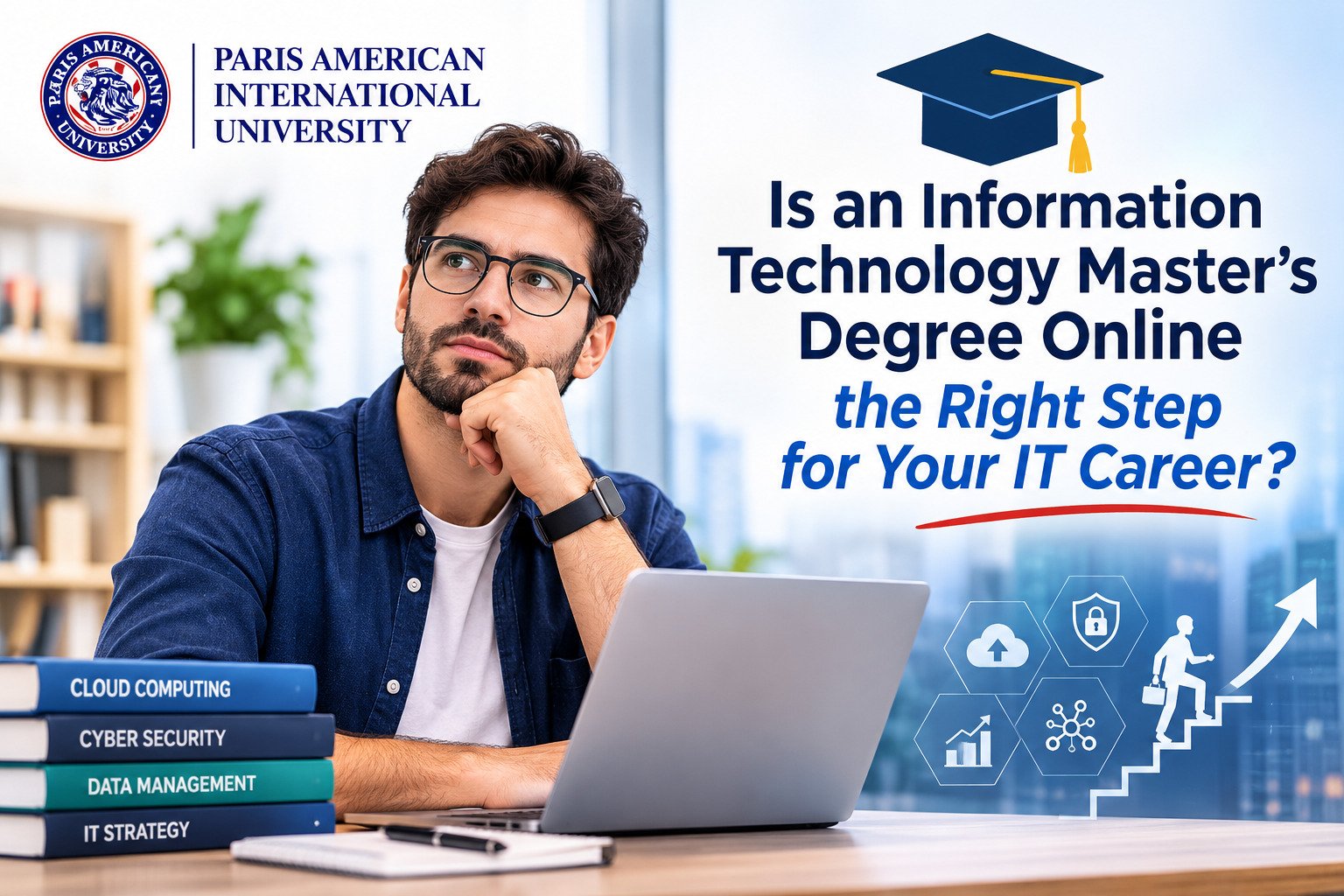
You have been working in IT for a few years. Maybe you fix systems, manage a network, or support software users. Then a thought creeps in: should I go back to school, or is experience enough? It is a fair question, and plenty of professionals ask it quietly before they ask anyone else.
An information technology master’s degree online is one possible answer, but it is not the right one for everyone. This post looks at the decision the way a friend with industry experience might, with honest pros, real trade-offs, and a few questions to ask yourself. By the end, you should know whether this path fits your goals, your schedule, and your budget.
The Short Answer: It Depends on Where You Want to Go
If your goal is to stay a hands-on technician, certifications and practice may serve you well. If you want to lead teams, design systems, or shape technology strategy, a graduate degree can help. Many senior roles value both technical depth and the ability to manage people, budgets, and risk.
Think about where you want to be in five years. Then look at job postings for that role. If most of them ask for or prefer a graduate degree, that is a strong signal.
What a Graduate IT Program Usually Covers
Programs differ, but most build on core areas such as:
- Systems architecture and cloud computing
- Information security and risk management
- Data management and analytics
- Project and IT service management
- Technology policy, ethics, and governance
The aim is not only to teach tools, since tools change quickly. It is to teach how to evaluate technology, communicate with non-technical leaders, and make sound decisions when options compete. That kind of judgment is hard to pick up from tutorials alone.
Do You Need an Undergraduate Background First?
Most graduate programs expect a related first degree. A bachelor of science in information technology is the most direct route, though applicants from computer science, engineering, or business backgrounds are often considered too. Some schools accept people from unrelated fields if they complete bridging courses or can show relevant work experience.
Always read the admission criteria before applying. Requirements can include a minimum grade average, a résumé, a statement of purpose, or proof of language ability. Knowing these early saves time and avoids disappointment.
Is an Information Technology Master’s Degree Online Worth the Effort?
Here is the honest part. A graduate degree takes time, money, and energy, and it will not guarantee a promotion. What it can do is widen your options and strengthen your case when opportunities come up.
Consider the likely benefits:
- Access to leadership, architecture, or specialist roles
- A deeper grasp of security, data, and systems planning
- A professional network of classmates and instructors
- Greater confidence when advising managers or clients
Consider the costs too. You will give up evenings and weekends for a while. Before enrolling, estimate your weekly study hours and talk with your family or employer. Some employers offer tuition support, so it is worth asking.
How Online Study Fits a Working Life
Online learning exists for people who cannot pause their careers. You can study after work, review lectures when it suits you, and join discussions from anywhere. For many professionals, that flexibility is the deciding factor.
It does require discipline, though. Nobody will remind you to log in. A simple routine helps: fixed study blocks, a quiet space, and a calendar that includes assignment deadlines.
Also look at how the program supports students. Can you reach instructors easily? Are there virtual labs and group projects? Good support often matters more than flashy features.
Choosing a Program You Can Trust
Because online options are everywhere, quality checks matter. Start with recognition. Make sure the institution is properly accredited or officially recognized in its country, and confirm that its qualifications are accepted where you plan to work.
International exposure can add value, particularly in a field where companies operate across borders. For example, Paris American International University offers an international setting that can help students understand how technology, regulation, and business practices differ between regions.
Be wary of programs that promise guaranteed jobs or very fast completion with little effort. Real learning takes time, and trustworthy institutions are open about that.
A Simple Way to Decide
Try this quick exercise. Write down your current role, the role you want, and the gap between them. Then ask whether that gap is mostly about knowledge, credentials, or experience.
If it is knowledge or credentials, further study may be a good fit. If it is experience, a stretch assignment or a new project at work could help more. Sometimes the best answer is a mix: gain experience first, then study with real examples to draw on.
Your Next Move Starts With One Honest Question
So, is an information technology master’s degree online the right step for you? If you want deeper expertise, leadership opportunities, and a recognized credential, it very well might be. If your goals are mainly hands-on and immediate, other routes may serve you better for now.
Whatever you choose, make the decision on purpose. Compare curricula, check recognition, and speak with people already working in the roles you want. Then act. A good career move rarely feels dramatic in the moment, but a year or two later, it can look like the turning point.