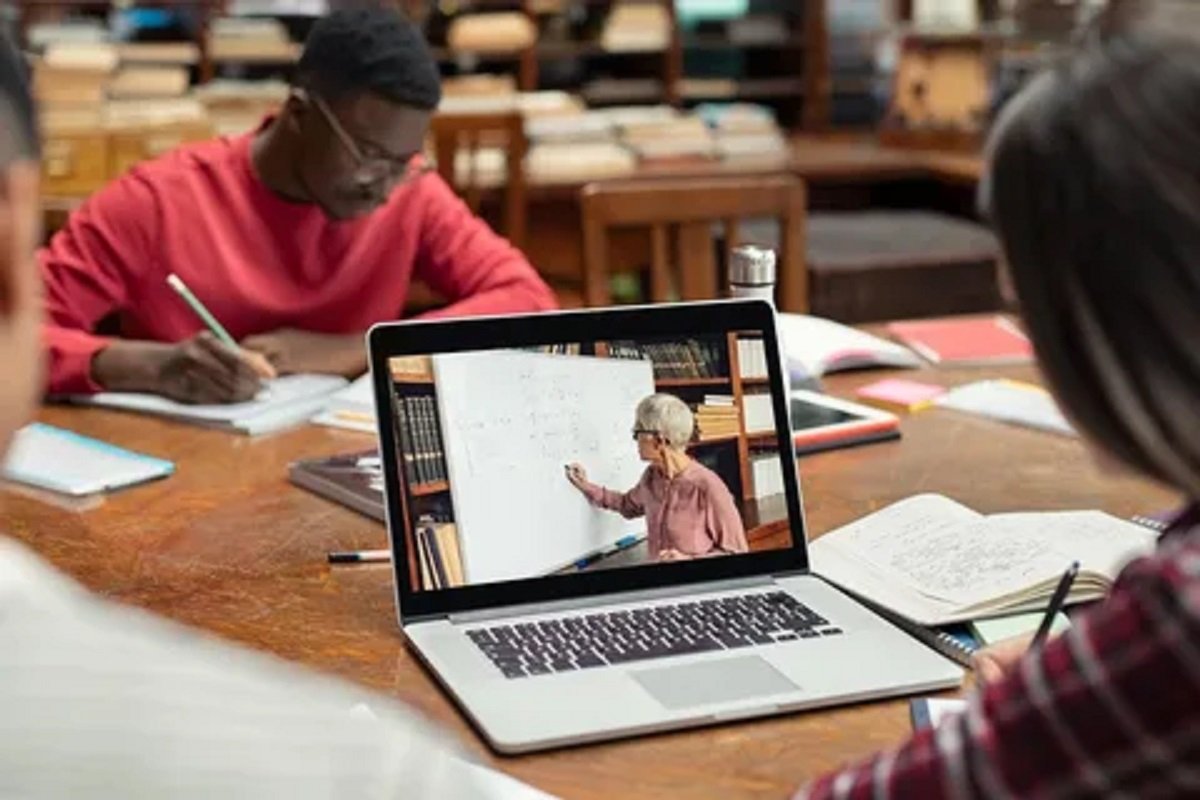
Ask ten students why they picked their college, and you’ll get ten different answers. One wanted to stay near home. Another had a night shift and nowhere else to fit lessons. A third simply liked the idea of walking into a classroom. There’s no single right answer here, but there is a right answer for you, and it usually comes down to your week, not the brochure.
So let’s look at how online and traditional college really compare, what each one does well, and where each one lets people down.
The basic difference
At a traditional college you go to a building. You sit in a room with a tutor and other students, you follow a timetable, and you leave when the lesson ends. An online study college moves all of that onto a screen. You read or watch the lessons when it suits you, send your work in online, and get feedback from a tutor by message or video call.
The qualification at the end can be exactly the same. A Level 3 diploma doesn’t become a lesser thing because you studied it on your laptop. What changes is how you get there.
Why people choose online
Mostly, it’s about work and money. In a government-backed survey of part-time learners, the most common reasons for choosing part-time over full-time study were having a job they wanted to keep (67%) and not being able to afford to study full-time (28%). That tells you something. For a lot of adults, studying online isn’t about preferring screens. It’s the only version of study that fits around the rest of life. ioe
Add shift work, childcare or a long commute to the nearest campus, and the appeal is obvious. You can study at 6am, on your lunch break or after the kids are in bed.
The honest downsides of online study
Flexibility comes at a price, and it’s worth knowing what it is. Researchers looking at different study modes have pointed out that true flexibility usually involves a trade-off with interactivity. In plain terms, the more freedom you have over when you study, the fewer chances you get to talk things through with other people in real time. qaa
There’s also the isolation problem. Studies of online students describe growing evidence that online learning can lead to feelings of isolation, and the same research notes that retention is particularly difficult for students who choose online study for flexibility. Nobody notices if you quietly stop logging in. That’s why the support a provider offers matters so much, and why you should ask about it before paying.
Online college: pros and cons
What works well
- You choose when to study, which helps if your hours change from week to week.
- It’s often cheaper, since there’s no commuting and you may not need to cut your hours at work.
- You can go at your own speed, quickly through what you know and slowly through what you don’t.
- Where you live stops mattering.
What can go wrong
- Self-discipline is entirely on you.
- Support varies a lot between providers. Some give you a named tutor, others give you a help email.
- You miss out on classroom conversation and friendships.
- Practical subjects are hard to learn through a screen.
Traditional college: pros and cons
What works well
- You can ask a question the moment it occurs to you.
- The timetable does half the motivating for you.
- Libraries, workshops and study spaces are on hand.
- Practical courses like construction, hairdressing and engineering are far easier to learn in person.
- Classmates often become the reason you keep turning up.
What can go wrong
- A fixed timetable is hard to combine with a full-time job or caring duties.
- Travel costs time and money.
- The class moves at one speed, whether it suits you or not.
- You’re limited to colleges you can realistically reach.
What the research says makes online study work
If you do go online, the same research points to a few things that make a real difference. Studies of successful online learners highlight a strong instructor presence, chances to connect with other students and good time management. You can check for the first two before you enrol. Ask how fast tutors reply, whether you can speak to one on the phone or video, and whether there’s any way to meet other students. The third one is down to you.
Are online qualifications recognised?
If a recognised awarding body issues the qualification, yes. In England, regulated qualifications are approved by Ofqual, and employers and universities don’t treat them differently because you studied online. Scotland, Wales and Northern Ireland have their own regulators.
The real risk is unregulated courses. Some are perfectly useful for learning, but they don’t carry the same weight as a regulated diploma. So skip the question “is it online?” and ask “who awards it?” You can check on the Ofqual register, and a decent provider will tell you straight away.
So, which should you choose?
Here’s the plain version.
Go online if you work or look after someone, you need your study to bend around your week, and you’re fairly comfortable working on your own. Pick a provider with real tutor support, because that’s what keeps people going.
Go traditional if you’re a school leaver, you like routine, you learn best by talking things through, or your course needs hands-on practice. Courses for 16 to 18 year olds may also be free to study full-time.
Consider a blend if you want both. Some providers mix online study with occasional classroom or workshop sessions.
One question settles most cases. Be honest: will you actually turn up to a fixed timetable every week? If the answer is no, online will probably suit you better. If yes, and you like having people around, campus is worth the effort.
Final thoughts
Neither option is the “smart” choice or the “easy” one. Both lead to real qualifications, and both can fail if they don’t fit your life. Check who awards the course, add up the full cost including extras, and think about how you really learn rather than how you’d like to learn. That’s more useful than any ranking.