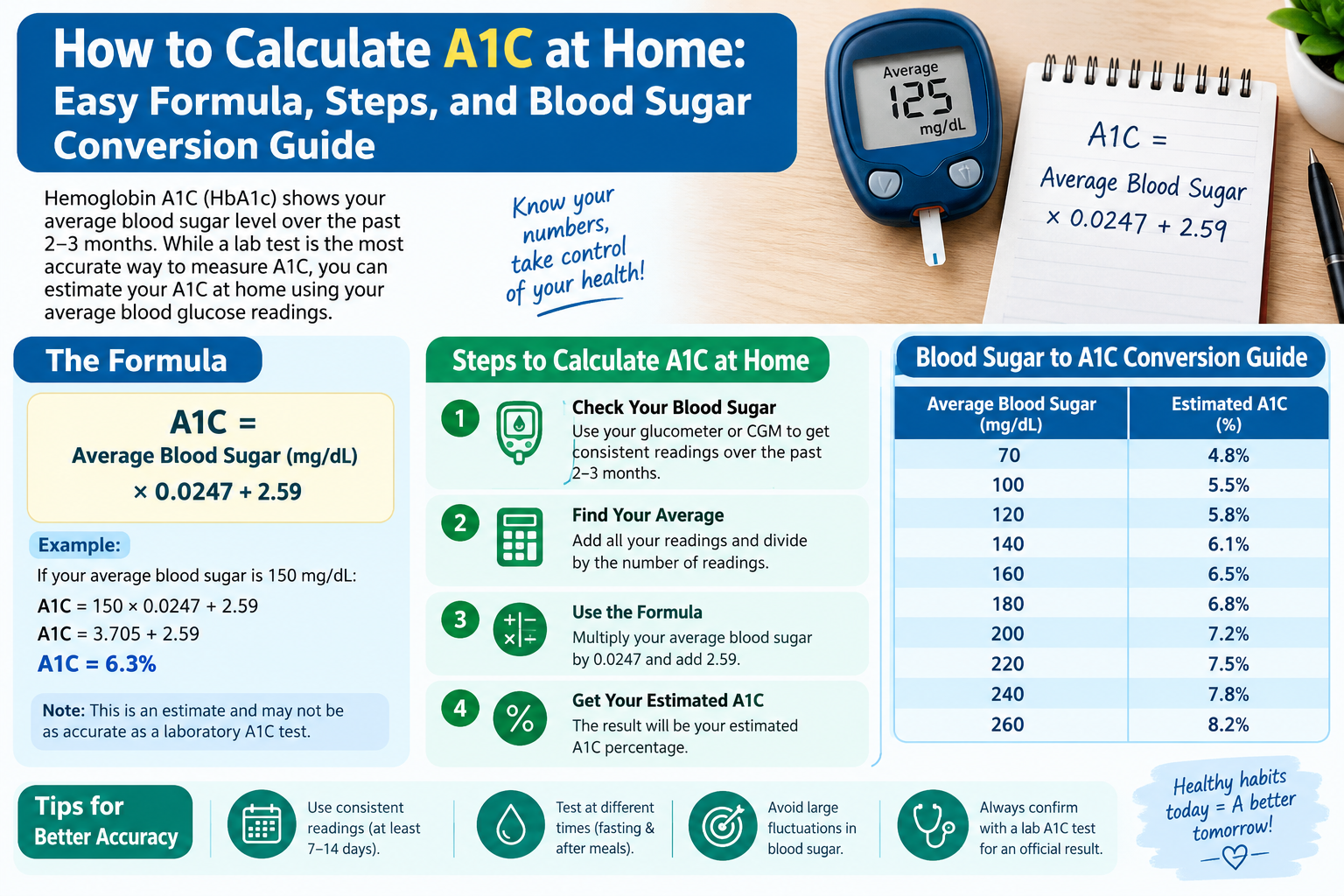
Understanding your blood sugar levels is an important part of maintaining good health, especially if you have diabetes or are at risk of developing it. One of the most useful measurements for monitoring long-term blood sugar control is Hemoglobin A1C. It provides an overview of your average blood glucose levels over approximately the past two to three months.
If you are wondering how to calculate A1C at home, you can estimate your A1C using average blood glucose readings from a glucose meter or continuous glucose monitor (CGM). Although this method cannot replace a laboratory blood test, it can help you understand your estimated blood sugar trends.
In this guide, we will explain the A1C calculation formula, how to convert average blood sugar into an estimated A1C percentage, and what your results may mean.
What Is A1C and Why Is It Important?
Hemoglobin A1C, also called HbA1c or simply A1C, is a blood test that measures the percentage of hemoglobin in red blood cells that has glucose attached to it.
When glucose circulates in your bloodstream, some of it naturally attaches to hemoglobin. Since red blood cells typically live for around three months, the A1C test provides an indication of your average blood sugar levels during that period.
A1C is important because it helps identify whether blood sugar levels are generally within a healthy range. Healthcare professionals use it to screen for prediabetes and diabetes and monitor diabetes management.
How to Calculate A1C at Home Using Average Blood Sugar
You can estimate your A1C at home by collecting regular blood glucose readings and calculating your average.
The estimated A1C formula is:
A1C = (Average Blood Glucose + 46.7) ÷ 28.7
This formula uses average blood glucose measured in mg/dL.
Example of A1C Calculation
Suppose your average blood glucose level over time is 150 mg/dL.
Using the formula:
A1C = (150 + 46.7) ÷ 28.7
A1C = 196.7 ÷ 28.7
Estimated A1C = 6.85%
This means your estimated A1C is approximately 6.9%.
Remember that this is only an estimate. Your actual laboratory A1C result may be different because home glucose readings do not capture every blood sugar fluctuation.
Steps to Estimate Your A1C at Home
Follow these simple steps to calculate your estimated A1C using home blood glucose readings.
Step 1: Check Your Blood Sugar Regularly
Use a reliable blood glucose meter or continuous glucose monitor to record your blood sugar levels. Depending on your healthcare professional’s advice, readings may include fasting measurements, before meals, and after meals.
Step 2: Record Your Glucose Readings
Maintain a daily record of your blood glucose measurements. Try to collect consistent readings over several weeks or longer. A longer and more representative record generally provides a better estimate.
Step 3: Calculate Your Average Blood Glucose
Add all your recorded glucose readings and divide the total by the number of readings.
For example:
- Morning reading: 120 mg/dL
- Afternoon reading: 145 mg/dL
- Evening reading: 155 mg/dL
- Night reading: 140 mg/dL
Total = 560 mg/dL
Average = 560 ÷ 4 = 140 mg/dL
Step 4: Apply the A1C Formula
Now use the average glucose level in the A1C formula:
A1C = (140 + 46.7) ÷ 28.7
Estimated A1C = 6.5%
This gives you an approximate idea of your long-term blood sugar levels.
A1C to Average Blood Sugar Conversion Chart
The following chart shows the relationship between estimated A1C percentages and average blood glucose levels.
| A1C Percentage | Estimated Average Blood Sugar (mg/dL) |
|---|---|
| 4.0% | 68 |
| 5.0% | 97 |
| 5.5% | 111 |
| 6.0% | 126 |
| 6.5% | 140 |
| 7.0% | 154 |
| 7.5% | 169 |
| 8.0% | 183 |
| 8.5% | 197 |
| 9.0% | 212 |
| 10.0% | 240 |
| 11.0% | 269 |
| 12.0% | 298 |
These values are approximate and are intended for understanding the relationship between average glucose and A1C.
What Is a Normal A1C Level?
A1C results are generally divided into three categories for nonpregnant adults:
- Normal: Below 5.7%
- Prediabetes: 5.7% to 6.4%
- Diabetes: 6.5% or higher
If you already have diabetes, your personal A1C target may be different depending on your age, health, medications, and other medical factors.
For many nonpregnant adults with diabetes, an A1C target below 7% is commonly recommended, but individual targets should be discussed with a healthcare professional.
Can You Calculate A1C Without a Blood Test?
Yes, you can estimate your A1C without taking a laboratory blood test by using average glucose readings from a glucose meter or CGM.
However, this calculation does not provide an actual A1C measurement. It depends on how frequently you check your glucose and whether your readings represent your daily blood sugar patterns.
For example, checking blood sugar only in the morning may not reflect increases after meals or overnight changes.
The most accurate way to measure your A1C is through a laboratory blood test or an appropriate healthcare-approved A1C testing device.
Tips for Monitoring Your A1C at Home
Here are some practical tips to help you monitor your blood sugar more effectively:
- Track readings consistently: Record glucose measurements at the times recommended by your healthcare professional.
- Use a reliable glucose meter: Make sure your device is properly maintained and used according to its instructions.
- Maintain a food diary: Record meals and snacks to identify possible blood sugar patterns.
- Stay physically active: Regular physical activity can support healthy blood glucose management.
- Follow a balanced diet: Include vegetables, fiber-rich foods, lean proteins, and appropriate portions of carbohydrates.
- Discuss unusual readings: Contact your healthcare professional if your glucose levels are repeatedly outside your recommended range.
Conclusion
Learning how to calculate A1C at home can help you better understand your blood sugar patterns and monitor your progress. By recording regular glucose readings, calculating your average blood sugar, and applying the A1C conversion formula, you can estimate your A1C percentage.
However, remember that home calculations are not a substitute for laboratory testing. Factors such as missing glucose readings, changes in red blood cell lifespan, anemia, and certain medical conditions can affect the relationship between average glucose and A1C.
For an accurate assessment of your blood sugar health, get an appropriate A1C test and discuss your results with a qualified healthcare professional.