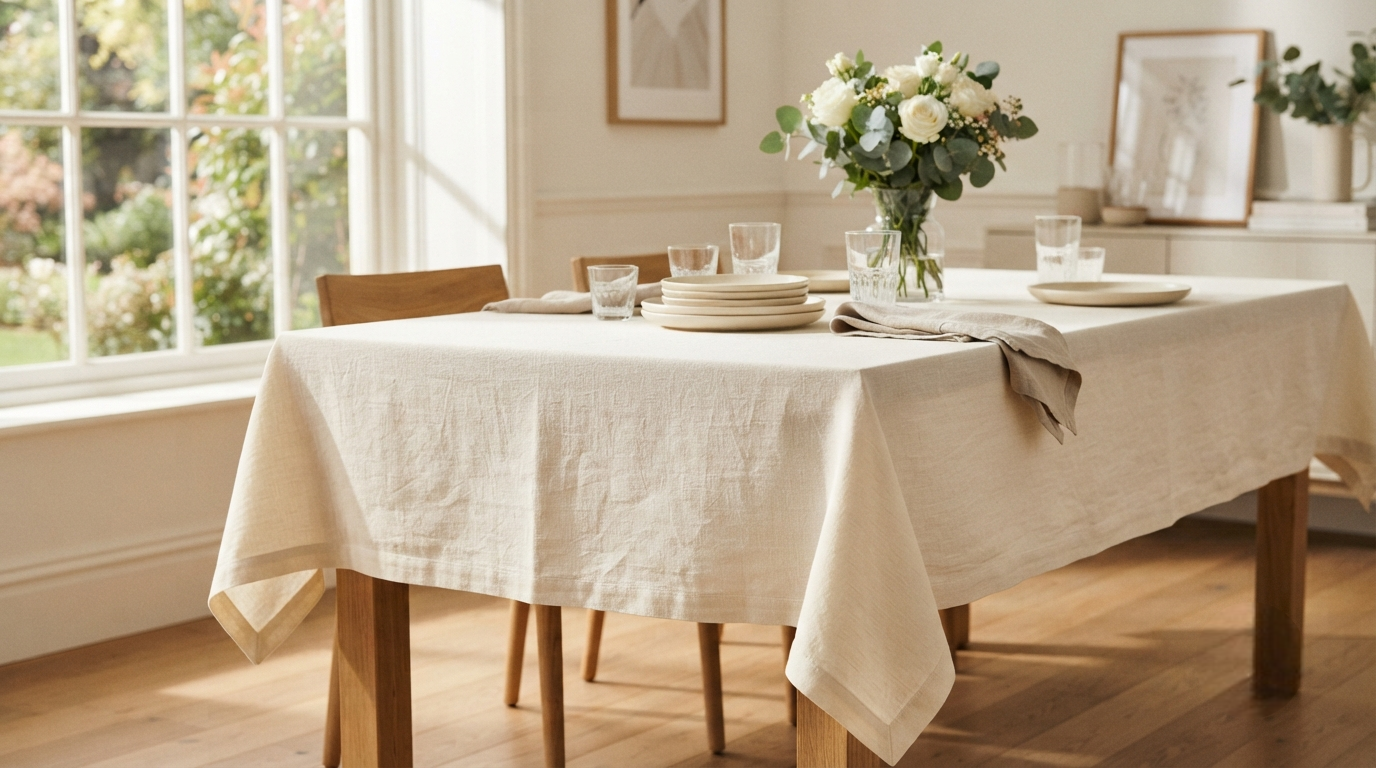
Natural light can change the way a dining room looks throughout the day. Morning sunlight may bring out warm tones in wooden furniture, while afternoon light can make fabrics appear brighter or reveal details that are less noticeable in the evening. A dining table positioned near a bright window can become one of the most visually appealing areas in the home.
Choosing a tablecloth for this setting requires attention to color, fabric, and how the material responds to daylight. Rather than focusing only on its appearance under artificial lighting, consider how the table will look during different parts of the day. A few thoughtful choices can help create a dining arrangement that feels balanced, comfortable, and naturally inviting.
1. Observe How Sunlight Falls on the Dining Table
Before selecting a tablecloth, notice how sunlight reaches the dining area. Some tables receive direct morning sun, while others remain bright with indirect daylight throughout the day.
Direct sunlight can make certain colors appear more vivid, while shaded areas may reveal more subtle undertones. Observing these changes can help you decide whether you prefer a warm neutral, a cooler shade, or a deeper accent color.
A simple Table cloth can provide a consistent visual foundation. Choose a shade that looks comfortable in the room’s natural lighting rather than relying only on how it appears in a store or online photograph.
2. Choose Fabric That Looks Natural in Daylight
Sunlight highlights the details of a fabric, including its weave, folds, and surface finish. Materials with subtle texture can look particularly appealing in a naturally bright dining room.
A cotton table cloth can add softness and a relaxed character to the table. Its woven surface may create gentle variations in appearance as light moves across the fabric.
For a bright room, consider a natural finish rather than an overly reflective surface. A softly textured covering can help maintain a comfortable visual balance while complementing the daylight.
3. Match the Tablecloth to the Table Shape
A well-fitted tablecloth helps maintain a neat appearance, especially when the dining table is positioned in a prominent, naturally lit area.
For a circular tabletop, round table cloths create a balanced outline and allow the fabric to fall evenly around the edges.
A long dining table can be styled with a rectangle table cloth. Its shape follows the tabletop and can create a clean appearance alongside windows or long architectural lines.
For a compact square table, square table cloths can provide symmetrical coverage. Measure the tabletop and add twice the desired drop to both dimensions when calculating the finished tablecloth size.
4. Select Colors That Work With Changing Light
Natural light can influence how colors appear in a room. Warm whites may look creamy in morning sunlight, while cooler grays can appear more pronounced under bright daylight.
Consider testing fabric shades near the dining table before making a final decision. Look at them in the morning, afternoon, and evening to understand how they interact with the room.
Soft beige, ivory, muted blue, sage, and dusty green can create a comfortable appearance. If the dining area has pale walls and light furniture, a black table cloth can introduce contrast and give the table a more defined presence.
Balance stronger colors with light dinnerware and simple accessories so the table remains inviting rather than visually heavy.
5. Use Window Views as Part of the Table Styling
If the dining table faces a garden, trees, or an attractive outdoor view, keep the tabletop arrangement simple enough to preserve the visual connection.
A low vase with fresh greenery can echo the outdoor setting without competing with it. Natural wood, ceramic pieces, and clear glassware can complement the view while adding subtle texture.
Avoid tall centerpieces that obstruct the window or create unnecessary visual distractions. The tablecloth should support the room’s atmosphere rather than draw attention away from the natural surroundings.
6. Balance Sunlight With Practical Dining Needs
A table near a sunny window may experience changes in temperature and light exposure throughout the day. Consider how the tablecloth will be used and maintained in that location.
Follow the fabric’s care instructions, especially if it is regularly exposed to direct sunlight. Prolonged sunlight may cause some fabrics or colors to fade over time, so rotating coverings or adjusting the arrangement occasionally can help reduce uneven exposure.
Choose a tablecloth drop that allows comfortable seating and keeps the fabric away from chair legs. The table should remain easy to use for meals, reading, or casual conversation.
7. Keep the Overall Arrangement Simple
A naturally bright dining room does not need many decorative elements. Sunlight already adds movement and visual interest through changing shadows and reflections.
A small centerpiece, neatly arranged dinnerware, and a thoughtfully selected tablecloth may be enough. Keep the tabletop open and avoid combining too many patterns, textures, or colors.
If you want to refresh the arrangement seasonally, change one element at a time. A new tablecloth shade or a different vase can create a noticeable difference without altering the entire room.
Conclusion
Natural light can make a dining table feel more inviting while highlighting the details of its fabric and surrounding furniture. Choose a tablecloth that looks balanced at different times of the day, complements the window view, and fits the table comfortably. Simple accessories and thoughtful color choices can help create a dining space that feels fresh and connected to its surroundings. All Cotton and Linen offers tablecloth styles that can help bring a natural, coordinated finish to your dining room.