
Hair is far more than just a biological feature. Across cultures and centuries, it has served as a symbol of identity, health, youth, and personal expression. From an evolutionary perspective, it protected our ancestors’ scalps from harsh UV radiation and insulated the brain.
Today, it influences our psychology so deeply that a “good hair day” can tangibly boost confidence, while unexpected shedding can spark severe emotional distress. Understanding how hair works, why we lose it, and how modern science allows us to restore it is key to reclaiming control over your personal aesthetic.
How Your Hair Grows: The Three Stages
To understand hair health, we have to look beneath the surface of the scalp. Each human head hosts roughly 100,000 hair follicles, and every single one operates on its own independent biological clock. Hair growth occurs in a continuous cycle divided into three distinct phases:
- The Anagen Phase (Growth): This is the active stage where hair cells divide rapidly and build the shaft. Around 85% to 90% of your hair is in this phase at any given moment, and it typically lasts anywhere from two to seven years. The length of your anagen phase determines how long your hair can naturally grow.
- The Catagen Phase (Transition): Lasting only two to three weeks, this short transitional phase signals the end of active growth. The hair follicle shrinks slightly and detaches from the dermal papilla—the blood supply that feeds it.
- The Telogen Phase (Resting & Shedding): For roughly three months, the old hair rests while a new hair begins to form beneath it. Eventually, the old strand sheds naturally. Losing 50 to 100 hairs a day is completely normal and simply indicates that the cycle is functioning properly.
Why Do We Lose Hair?
When shedding outpaces regeneration, or when new hairs grow back significantly thinner, it points to underlying imbalances. Hair loss, medically known as alopecia, stems from a variety of roots.
1. Genetics and Hormones
The most common culprit behind thinning is Androgenetic Alopecia, or male/female pattern baldness. This condition is triggered by genetic sensitivity to dihydrotestosterone (DHT), a derivative of testosterone. DHT binds to susceptible hair follicles, gradually shrinking them over time in a process called miniaturization. The growth phase shortens, and the hairs become so fine they eventually stop breaking through the surface.
2. Chronic Stress and Lifestyle
Severe physical or emotional stress can shock the body’s system, forcing an abnormally high number of follicles out of the growth phase and prematurely into the resting phase. This condition, called Telogen Effluvium, results in widespread, noticeable thinning a few months after the stressful event. Nutritional deficiencies—specifically a lack of iron, zinc, vitamin D, and sufficient protein—can also starve the follicle of the raw building blocks it needs to thrive.
The Landscape of Modern Hair Restoration
For generations, individuals facing pattern baldness had very few reliable options beyond hats, hairpieces, or temporary topical lotions. However, the medical community has transformed hair restoration into a highly precise, highly predictable blend of artistry and microsurgery.
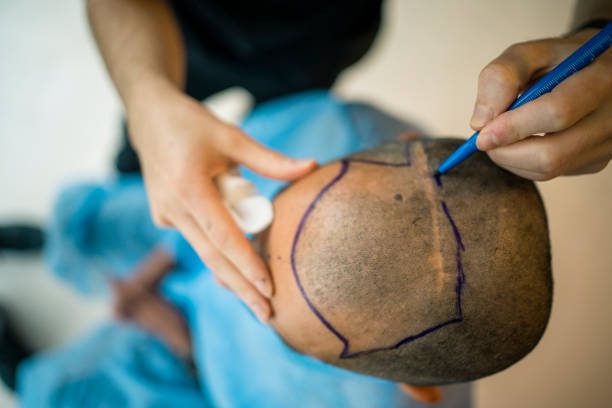
Today’s gold standards focus on redistributing healthy, DHT-resistant hair follicles from the back and sides of the head (the donor area) to the thinning zones (the recipient area).
When exploring top-tier clinical care, location and medical infrastructure matter immensely. For those looking for a seamless blend of elite medical expertise and advanced clinical environments, undergoing a hair transplant in Dubai has become one of the premier global choices. The city hosts state-of-the-art facilities utilizing cutting-edge techniques that guarantee natural-looking density with minimal downtime.
The Standard-Setting Surgical Techniques
Modern clinical settings rely primarily on two advanced harvesting methods that eliminate the need for large, linear surgical scars.
| Technique | How It Works | Ideal For |
|---|---|---|
| Follicular Unit Extraction (FUE) | Follicles are extracted individually using a microscopic punch tool (often under 0.8mm). The surgeon then makes tiny incisions in the balding area to place the grafts. | Patients wanting a shorter recovery time and those who prefer to wear their hair short, as it leaves tiny, dot-like scars. |
| Direct Hair Implantation (DHI) | A specialized pen-like device (the Choi Implanter) extracts and simultaneously implants the follicle into the scalp without requiring pre-made incisions. | Reconstructing a precise, high-density hairline, and patients who prefer not to completely shave their heads. |
The Technological Leap: Modern variants of these techniques use ultra-sharp Sapphire blades instead of traditional steel. Sapphire blades allow surgeons to create smaller, cleaner micro-channels in the skin. This minimizes scalp trauma, reduces bleeding, accelerates the healing process, and allows grafts to be placed closer together for maximum natural density.
Preserving Your Results: Post-Procedure Care
A successful restoration is a team effort between surgical precision and diligent aftercare. Immediately following a procedure, the newly transplanted grafts are vulnerable. For the first week, patients must sleep with their heads elevated, avoid touching or scratching the scalp, and use a specialized, gentle washing technique to clean away microscopic scabs.
Over the subsequent months, the transplanted shafts will initially drop out—a entirely normal process called “shock loss.” The root remains safely embedded under the skin, and by month three or four, brand-new, permanent hair begins to sprout. Full, mature density is typically realized between 12 and 18 months, giving you a completely natural, permanent crown that can be cut, styled, and washed just like the hair you grew up with.