Security is no longer simply about locking doors and installing a few cameras around a property. Businesses need a well-planned surveillance system that can identify potential risks, provide useful evidence when incidents occur, and support everyday operations. From offices and retail stores to warehouses and residential communities, effective CCTV monitoring has become an important part of modern property management.
However, purchasing cameras is only one part of the process. Camera placement, image quality, storage capacity, network performance, privacy, and ongoing maintenance all influence how well a system performs. This is why businesses considering CCTV camera installation Abu Dhabi should look beyond equipment prices and focus on building a surveillance solution that meets their actual security requirements.
Why Is Proper Camera Planning So Important?
A surveillance system is only useful when cameras capture the right areas with sufficient detail. Installing several cameras without a proper assessment can leave important locations unmonitored while wasting resources on overlapping views.
For example, a commercial building may need clear coverage of reception areas, entrances, parking spaces, corridors, loading zones, and restricted rooms. A warehouse may require additional attention around storage sections, delivery points, and external boundaries.
A professional site assessment helps identify these priorities before installation begins. It also allows the installer to consider lighting conditions, camera height, viewing angles, potential obstructions, and the distance between cameras and the areas being monitored.
The objective should not simply be to install more cameras. It should be to achieve useful coverage with minimal blind spots.
Which CCTV Camera Features Matter Most?
Modern surveillance technology offers several camera types, each designed for different environments. Choosing the right equipment depends on what a property needs to monitor.
IP cameras transmit video over a network and can offer high-resolution footage, remote monitoring, and integration with compatible security systems. They are commonly used in offices, commercial buildings, and larger facilities.
Dome cameras have a compact design and are often suitable for indoor spaces such as reception areas, shops, and corridors. Their appearance also makes it less obvious which direction the camera is facing.
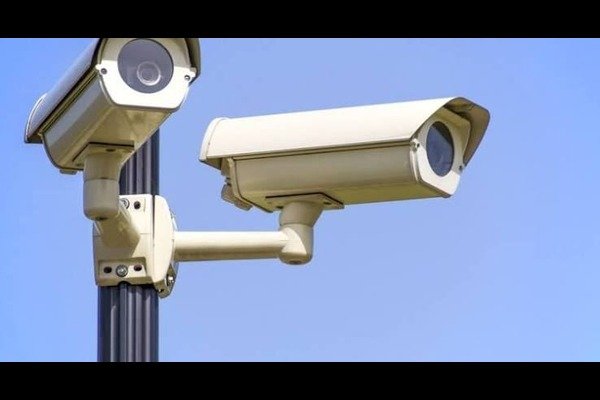
Bullet cameras are frequently used for outdoor monitoring because their shape makes them suitable for observing entrances, boundaries, and parking areas.
PTZ cameras allow operators to pan, tilt, and zoom, making them useful in locations that require active monitoring across larger spaces. Their suitability depends on the property’s surveillance requirements and applicable approvals.
Night vision is another important consideration, particularly for outdoor areas and locations with limited lighting. Motion detection can also help users identify relevant activity without constantly reviewing hours of recordings.
The best choice is not necessarily the camera with the longest feature list. It is the equipment that delivers dependable results in the intended environment.
How Does CCTV Support Daily Business Operations?
Although surveillance is primarily associated with security, it can also help management understand how a workplace operates.
Retail businesses can review activity around entrances, checkout counters, and stock areas. Warehouse managers can monitor loading and unloading operations, while office administrators can review access to designated areas when investigating reported incidents.
Recorded footage can also help clarify disagreements, establish timelines, and support internal investigations. When integrated with suitable access control equipment, surveillance may provide additional context about activity around secured doors and entry points.
Remote monitoring is particularly useful for business owners who manage multiple locations. Depending on the system configuration, authorised users can view live footage through compatible computers or mobile devices without being physically present at the property.
These capabilities can improve visibility, but they should be supported by clear internal policies governing who can access recordings and how the information is used.
Why Should Businesses Pay Attention to Abu Dhabi’s CCTV Requirements?
Regulatory compliance is an essential part of planning a surveillance project. Abu Dhabi has specific requirements for surveillance systems, and the applicable process can depend on the type of property and its classification.
The Monitoring and Control Centre (MCC) oversees surveillance-related standards and compliance in the emirate. In November 2026, the Abu Dhabi Media Office announced the MCC’s Reassuring Vision campaign, which focuses on improving CCTV compliance and system readiness across residential buildings, communities, and commercial properties. The announcement also emphasised using companies licensed and accredited by the Centre for installation, upgrades, and maintenance.
Businesses should therefore verify the relevant requirements before beginning work. Depending on the premises, this may involve confirming approval procedures, camera coverage, technical specifications, recording arrangements, and the credentials of the service provider. Requirements should be checked with the relevant authority rather than assumed to be identical for every property.
Privacy deserves equal attention. Cameras should be positioned for legitimate security purposes and should not unnecessarily capture neighbouring private spaces or areas where people reasonably expect privacy. Access to recorded footage should be restricted to authorised individuals, and recordings should be stored securely.
The UAE’s Personal Data Protection Law also establishes a framework for protecting personal information and maintaining appropriate data confidentiality. Businesses should consider these responsibilities when designing their surveillance policies.
What Makes a CCTV System Reliable Over Time?
Even a high-quality surveillance system can become ineffective if it is not maintained. Dust, damaged cables, power interruptions, outdated firmware, insufficient storage, and network problems can all affect performance.
A practical maintenance programme should include periodic camera inspections, lens cleaning, recording checks, storage assessments, network testing, and verification of remote access. Businesses should also confirm that system time settings are accurate, as incorrect timestamps can complicate investigations.
Cybersecurity is equally important for network-connected cameras. Default passwords should be changed, strong credentials should be used, firmware should be updated, and unnecessary access permissions should be removed. Where appropriate, surveillance equipment should operate on a properly secured network.
It is also sensible to review whether the recording system has enough storage for the required retention period. The appropriate capacity depends on the number of cameras, video resolution, recording schedule, compression settings, and applicable regulatory requirements.
How Can Businesses Choose the Right Installation Partner?
Selecting an installation company should involve more than comparing quotations. Businesses should ask potential providers about their experience, equipment recommendations, technical capabilities, licensing, maintenance arrangements, and familiarity with applicable local requirements.
A dependable provider should be willing to assess the property before recommending a solution. The proposal should explain camera locations, equipment specifications, recording arrangements, network requirements, and any additional work needed to complete the installation.
It is also worth discussing after-sales support. A system that stops recording without anyone noticing can create a false sense of security. Clear maintenance arrangements and a reliable support process help reduce this risk.
Businesses looking for professional CCTV camera installation Abu Dhabi can explore the surveillance solutions offered by AMJ Technology Solutions. Its services include CCTV installation and maintenance for residential and corporate environments across the UAE.
Conclusion
An effective surveillance system begins with understanding the property, identifying security priorities, and choosing equipment that suits the environment. Careful camera positioning, reliable recording, secure network configuration, privacy protection, and regular maintenance all contribute to long-term performance.
For businesses in Abu Dhabi, compliance should be considered from the planning stage rather than treated as an afterthought. Working with a qualified installation provider can help organisations create a surveillance system that supports security, operational visibility, and responsible monitoring. Ultimately, the value of CCTV is not measured by the number of cameras installed, but by how effectively the complete system protects the property and serves its users.