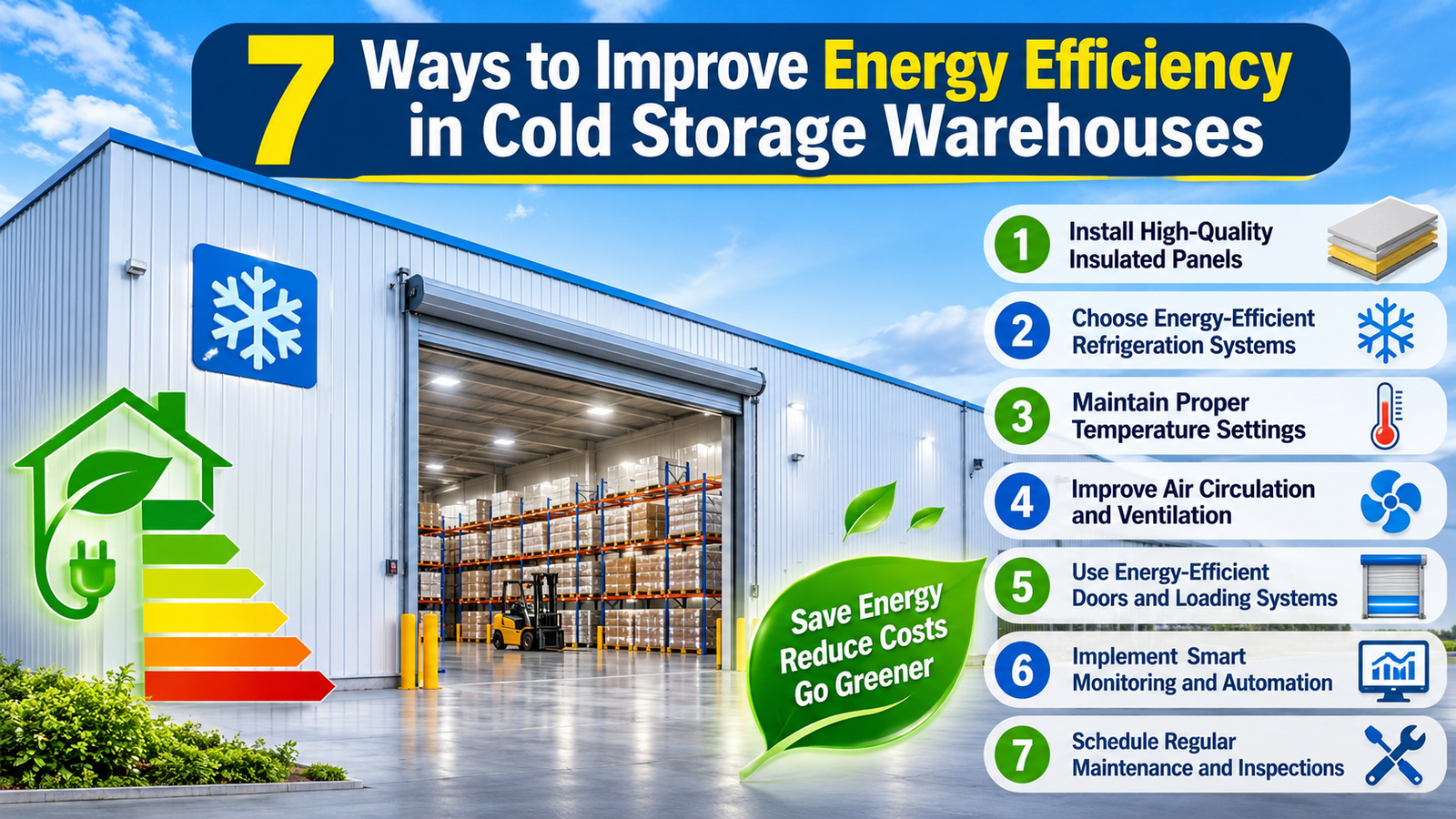
Cold storage warehouses play an essential role in preserving perishable goods, pharmaceuticals, food products, and other temperature-sensitive materials. However, maintaining controlled temperatures requires significant energy consumption, making efficiency an important consideration for warehouse operators. Businesses must focus on effective insulation, advanced refrigeration systems, and smart temperature management to reduce operating costs while maintaining product quality. Experienced cold storage warehouse manufacturers understand these requirements and develop facilities that support reliable temperature control and long-term energy savings. TSSC Group recognizes the importance of modern building solutions in creating efficient industrial storage environments.
1. Install High-Quality Insulated Panels
Insulation is one of the most important factors affecting energy efficiency in cold storage warehouses. Poor insulation allows outside heat to enter the facility, forcing refrigeration systems to work harder to maintain the required temperature.
High-quality insulated panels help minimize heat transfer and maintain stable indoor conditions. Insulated metal panels are particularly useful because they provide thermal performance, structural strength, and efficient installation. Working with knowledgeable cold storage warehouse manufacturers can help businesses select suitable panel thicknesses and insulation materials based on their storage requirements.
2. Choose Energy-Efficient Refrigeration Systems
Refrigeration equipment accounts for a significant portion of energy consumption in cold storage facilities. Older or inefficient systems may consume excessive electricity while struggling to maintain consistent temperatures.
Investing in modern refrigeration equipment can improve cooling performance and reduce unnecessary energy usage. Variable-speed compressors, efficient evaporators, and advanced cooling technologies allow systems to adjust their operation according to actual temperature requirements.
Regular equipment assessments also help identify outdated components that may need replacement.
3. Maintain Proper Temperature Settings
Setting the correct temperature is essential for balancing product preservation and energy consumption. Operating a cold storage warehouse at unnecessarily low temperatures increases electricity usage without providing additional benefits for many products.
Warehouse operators should establish temperature settings according to the specific requirements of stored materials. Different products, including frozen foods, fresh produce, and pharmaceuticals, may require different storage conditions.
Regular temperature monitoring helps maintain suitable conditions while preventing excessive refrigeration.
4. Improve Air Circulation and Ventilation
Proper airflow ensures that cold air reaches all areas of a storage facility. Poor air circulation can create temperature variations, resulting in some sections becoming warmer than others.
Installing appropriately designed air distribution systems helps maintain consistent cooling throughout the warehouse. Operators should also avoid blocking evaporators, ventilation outlets, and airflow pathways with stored products.
Effective warehouse layouts and organized inventory arrangements support better air circulation and help refrigeration systems operate efficiently.
5. Use Energy-Efficient Doors and Loading Systems
Warehouse doors are another important source of energy loss. Frequent opening and closing allow warm air to enter refrigerated spaces, increasing the workload on cooling equipment.
Installing insulated doors, high-speed automatic doors, and suitable air curtains can help reduce unwanted heat exchange. Strip curtains may also provide an additional barrier in frequently accessed areas.
Businesses should train employees to minimize unnecessary door openings and ensure that loading activities are organized efficiently.
6. Implement Smart Monitoring and Automation
Modern monitoring technologies make it easier to manage energy consumption in cold storage warehouses. Digital temperature sensors, automated controls, and building management systems provide useful information about facility performance.
These technologies can identify temperature fluctuations, monitor refrigeration equipment, and alert operators when unusual conditions occur.
Automated systems can also adjust cooling operations according to changing storage demands. This helps prevent unnecessary energy consumption while supporting consistent environmental conditions.
7. Schedule Regular Maintenance and Inspections
Preventive maintenance is essential for maintaining refrigeration efficiency. Dust accumulation, damaged door seals, refrigerant issues, and poorly maintained equipment can increase energy consumption over time.
Regular inspections help identify these problems before they affect warehouse performance. Cleaning condenser coils, checking insulation, inspecting electrical connections, and maintaining refrigeration components can improve system reliability.
A planned maintenance schedule also helps reduce unexpected equipment failures and costly operational interruptions.
The Role of Modern Construction Solutions
Energy efficiency begins during the planning and construction stages of a cold storage facility. Building orientation, insulation quality, structural design, airtight construction, and refrigeration requirements should all be considered before development begins.
Experienced cold storage warehouse manufacturers can help businesses understand the technical requirements of temperature-controlled facilities and select appropriate construction solutions.
TSSC Group offers building envelope and insulated panel solutions that support the development of modern industrial facilities. High-performance insulated panels can contribute to better thermal control, making them an important consideration for businesses developing temperature-sensitive storage infrastructure.
Conclusion
Improving energy efficiency in cold storage warehouses requires a combination of effective insulation, modern refrigeration equipment, proper airflow, smart monitoring, and regular maintenance. These seven strategies can help businesses reduce unnecessary electricity consumption while maintaining suitable storage conditions. Choosing reliable cold storage warehouse manufacturers and investing in quality building materials can also support long-term operational performance. With advanced insulated building solutions from companies such as TSSC Group , businesses can work toward developing more efficient, dependable, and sustainable cold storage facilities.