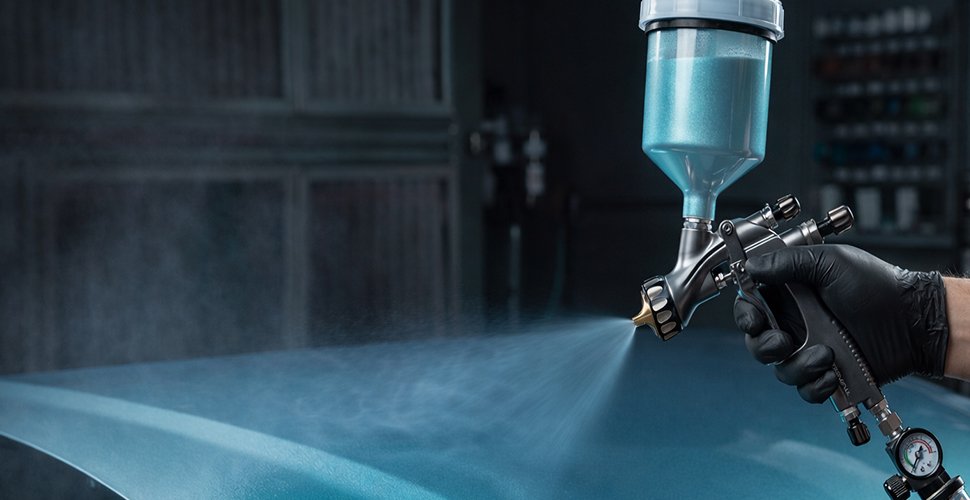
Choosing the right spray gun can make or break the quality of your paint job. Two of the most popular options on the market today are LVLP (Low Volume Low Pressure) and HVLP (High Volume Low Pressure) spray guns. While both are designed to deliver a smooth, professional finish with minimal waste, they operate differently and suit different types of users. In this guide, we’ll break down how each technology works, compare their strengths and weaknesses, and help you decide whether an LVLP spray gun or an HVLP spray gun is the better fit for your workshop.
What Is an HVLP Spray Gun?
HVLP stands for High Volume Low Pressure. These guns use a large volume of air delivered at low pressure (typically around 10 PSI at the air cap) to atomize paint. The idea is simple: by using high air volume rather than high pressure, HVLP guns produce a soft, controlled spray pattern with very little overspray and bounce-back.
HVLP technology became the industry standard after environmental regulations targeted older high-pressure guns, which wasted a significant amount of paint into the air. Most modern HVLP guns achieve a transfer efficiency of around 65% or higher, meaning more paint ends up on the surface and less ends up in the air or on your floor.
The downside? HVLP spray guns are air-hungry. Because they require a large volume of air to function, they typically need a powerful compressor—often one that delivers 8 to 14 CFM or more at the required pressure. That makes them less practical for hobbyists with smaller, entry-level compressors.
What Is an LVLP Spray Gun?
LVLP stands for Low Volume Low Pressure. An LVLP spray gun takes a similar low-pressure approach to atomization but uses a much smaller volume of air to get the job done. Where an HVLP gun might need 10+ CFM, many LVLP guns run comfortably on just 3 to 6 CFM.
This lower air consumption is the LVLP spray gun’s biggest selling point. It allows painters to achieve professional-quality atomization with smaller compressors, making it an attractive option for home garages, small shops, and mobile painters who don’t have access to industrial air systems.
Despite using less air, modern LVLP spray guns still deliver excellent transfer efficiency—often comparable to HVLP—and produce fine atomization that results in a smooth, even finish on everything from car panels to furniture.
Key Differences Between LVLP and HVLP Spray Guns
1. Air Consumption and Compressor Requirements
This is the most significant difference. HVLP guns demand a high-volume air supply, usually requiring a compressor with a 60-gallon tank or at least a 5 HP motor for continuous spraying. An LVLP spray gun, on the other hand, can run effectively on smaller compressors, sometimes as small as 2 to 3 HP. If your compressor is modest, LVLP is often the only viable choice of the two.
2. Transfer Efficiency
Both technologies are efficient compared to conventional high-pressure guns. HVLP guns typically achieve 65–75% transfer efficiency, while a quality LVLP spray gun can reach similar numbers. In real-world use, the difference is minor—your technique, paint viscosity, and gun setup matter just as much as the technology itself.
3. Finish Quality
Both can produce show-quality finishes when used correctly. HVLP guns have a long track record in professional body shops and are favored for base coats and clear coats on vehicles. Modern LVLP spray guns have closed the gap considerably, and many users report finishes that are virtually indistinguishable from HVLP results. Fine atomization on LVLP guns makes them especially good for clear coats and detail work.
4. Speed of Application
HVLP guns generally offer slightly faster material flow, allowing you to cover large surfaces more quickly. LVLP guns may require a bit more patience on big jobs, though the difference is not dramatic for most users.
5. Cost and Accessibility
Because LVLP spray guns don’t demand expensive compressor setups, the total cost of entry is lower. You can pair an affordable LVLP gun with a mid-range compressor and get professional results—something that’s harder to do with HVLP.
When Should You Choose an LVLP Spray Gun?
An LVLP spray gun is the smarter choice if:
- You have a small or mid-sized compressor. If your compressor delivers fewer than 8 CFM, LVLP is practically made for you.
- You’re a hobbyist or DIY painter. For garage projects, motorcycle parts, furniture, and small auto repairs, an LVLP spray gun offers pro-level results without pro-level equipment.
- You work in a mobile or on-site setting. Lower air demands make LVLP guns easier to run with portable compressors.
- You want to reduce energy costs. Less air volume means your compressor cycles less often, saving wear and electricity.
When Should You Choose an HVLP Spray Gun?
HVLP remains the better option if:
- You run a professional shop with a large compressor. If air supply isn’t a constraint, HVLP’s proven reliability and speed shine.
- You spray high volumes daily. Production environments benefit from HVLP’s faster coverage and established parts availability.
- Local regulations require it. Some jurisdictions and shops have specific rules favoring HVLP-certified equipment.
The Verdict: Which One Is Right for You?
For most home users, hobbyists, and small shops, the LVLP spray gun is the clear winner. It delivers professional atomization and finish quality while working with the smaller compressors most people already own. Unless you have an industrial air supply and a production-level workload, paying for an HVLP setup often means buying a bigger compressor than you actually need.
On the other hand, if you’re a full-time professional painter with a large shop compressor, HVLP remains a dependable, time-tested workhorse.
Ultimately, the best spray gun is the one that matches your equipment, your projects, and your budget. If flexibility, efficiency, and accessibility top your list, an LVLP spray gun deserves a spot at the top of your shopping list.