At the beginning of a school term, new students need identification cards, teachers may require updated credentials, and replacement cards must be issued to students who have lost theirs.
A similar situation occurs in businesses that regularly welcome new employees or contractors.
Organisations traditionally handle these requirements through external printing providers. However, producing cards internally can offer greater control over timing and personalisation.
Purchasing a printer for plastic cards may be worthwhile when cards are needed frequently, but it is not automatically the most economical choice for every organisation.
Understanding the advantages and limitations of in-house printing can help schools and businesses decide which arrangement suits them.
Why Do Organisations Consider Internal Card Printing?
The ability to produce identification cards when required is one of the main reasons organisations invest in printing equipment.
Instead of placing an external order, authorised staff can prepare and print cards using an internal system.
Faster Response to Routine Changes
Schools regularly experience changes involving new enrolments, replacement cards and staff identification.
Businesses may need identification for newly hired employees, temporary contractors or visitors.
Internal printing can reduce dependence on an external production schedule.
However, the organisation must have trained employees and appropriate materials available to operate the system.
How Can In-House Printing Benefit Schools?
Educational institutions often manage large numbers of identification cards.
Student photographs, names and enrolment details may need updating each academic year.
Creating Student Identification Cards
Suitable card printers can produce identification cards using approved photographs and personal information.
Schools may use these cards for visual identification, library services or other campus-related activities.
Where electronic access features are required, additional compatibility checks are necessary.
Replacing Lost Cards
Students may misplace or damage identification cards during the year.
An internal printer can allow authorised staff to prepare replacements without submitting a separate external printing order.
Managing Student Information Responsibly
Card production involves personal information, particularly photographs and identification numbers.
Schools should follow applicable privacy requirements and limit access to student records.
Templates, printing permissions and secure data handling practices should form part of the identification process.
What Advantages Can Businesses Gain?
For businesses, internal printing can simplify employee onboarding and identification management.
A company operating several departments may need different badge designs for staff, contractors and temporary visitors.
Maintaining Consistent Branding
Reusable card templates can help organisations produce identification with consistent colours, logos and information placement.
This creates a more organised appearance than relying on different designs prepared over time.
Professional badge printers may also support membership and event applications, depending on the chosen system.
Supporting Workplace Identification
A properly designed badge can help people recognise authorised employees and identify visitors.
However, printed identification alone does not prevent unauthorised access.
Businesses should continue to use appropriate access control procedures and other security measures.
When Might Outsourcing Be More Practical?
In-house printing offers flexibility, but external services remain useful for many organisations.
Low Printing Volumes
A small business issuing only a handful of cards annually may not justify the cost of purchasing equipment.
Outsourcing can eliminate the need to maintain a printer or store consumables.
Specialised Production Requirements
Certain cards require advanced printing methods, secure personalisation or manufacturing processes that may not be practical internally.
Before purchasing card printers, establish whether the equipment can produce every required type of card.
A suitable external provider may be preferable for specialised work.
Compare the Financial Costs of Both Options
The cost of in-house printing includes more than the initial machine purchase.
Consumables, maintenance and staff time should also be considered.
Estimate Annual Card Production
Review how many cards were ordered during the previous year.
Include:
- New student or employee cards.
- Replacements for damaged cards.
- Temporary identification.
- Membership renewals.
- Changes to card designs.
- Additional cards during peak periods.
These figures provide a basis for comparing internal production with outsourcing.
Calculate a Realistic Break-Even Point
Suppose an organisation spends $2,500 on equipment and saves an estimated $4 per card compared with outsourced printing.
Ignoring other costs, the purchase would reach a simple break-even point after approximately 625 cards.
This is a hypothetical calculation, not an actual market quotation.
Maintenance, staffing and software expenses would change the result.
What Equipment Is Needed for Internal Printing?
A printer is only one component of a complete identification system.
Organisations may also require card design software, compatible ribbons, blank plastic cards and identification accessories.
Build a Practical Printing Station
Place the equipment in a suitable workspace with adequate access for staff responsible for card production.
Maintain appropriate consumable stock and follow the manufacturer’s cleaning instructions.
For organisations using badge printers, consider whether cardholders, clips and lanyards should also be available.
Preparing the complete process before installation can reduce operational interruptions.
How Important Is Staff Training?
Even straightforward printers require some familiarisation.
Employees should understand how to edit approved templates, replace printing ribbons and respond to common operating messages.
Establish Clear Responsibilities
Assign responsibility for verifying cardholder details before printing.
Prevent Incorrect Card Issuance
An incorrect name, photograph or access credential can create administrative and security problems.
Introduce a verification process before cards are issued.
For schools and businesses, accuracy matters just as much as printing speed.
Why Choose InteractCard Australia?
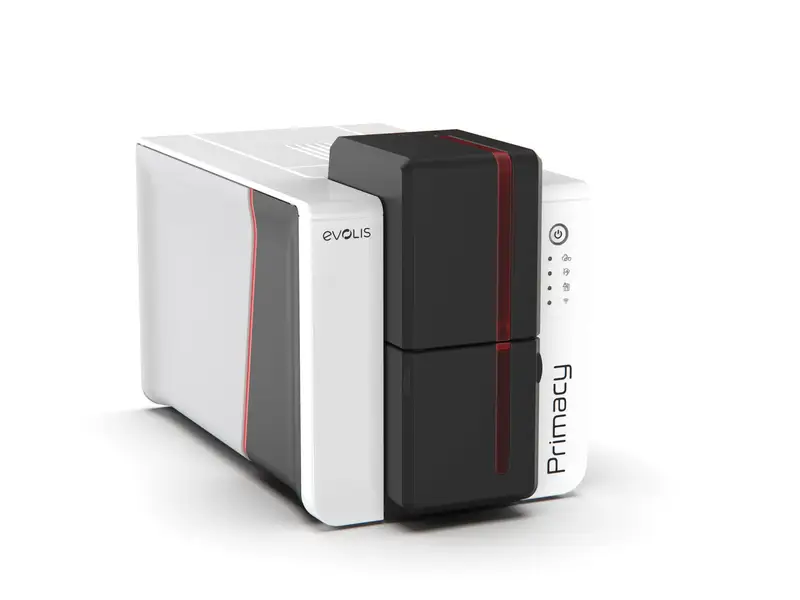
InteractCard Australia supplies Evolis printing equipment and associated products for identification card applications.
Its range includes desktop card printers, design software, blank cards and printing consumables.
Schools and businesses considering internal card production can compare available systems according to printing volume, card layout and technical requirements.
The product range also includes identification accessories relevant to everyday badge use.
About Us – InteractCard Australia
InteractCard Australia provides plastic card-printing products for organisations requiring identification and membership solutions.
Its available equipment supports applications such as employee badges, student cards and other printed credentials.
Customers evaluating a printer for plastic cards can explore different models and related supplies according to their card production requirements.
Is Internal Printing the Right Decision?
In-house printing can offer practical advantages when organisations regularly produce or replace identification cards.
It may reduce reliance on external production schedules and make updating card information more convenient.
However, low-volume users may find outsourcing more economical.
Before investing, compare annual card demand, equipment costs and available staff resources. The right decision is the one that provides accurate, dependable identification while fitting the organisation’s budget and workflow.