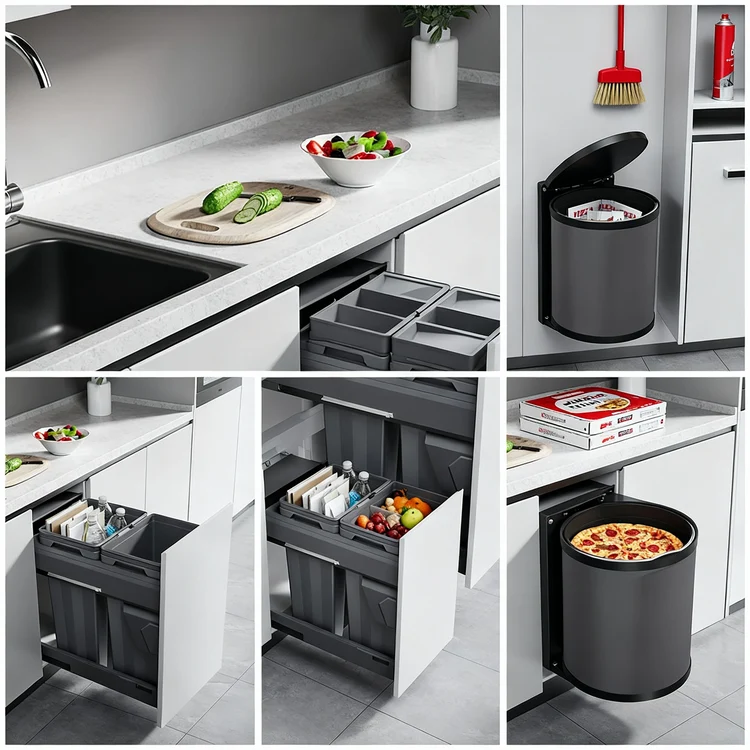
Installing a bin inside a kitchen cupboard door sounds straightforward. Attach the mounting bracket, position the container and close the door.
In practice, a successful installation requires more careful planning.
The cupboard door must support the bin, the mounting position must allow the door to close correctly, and the container needs to remain convenient to empty.
For homeowners considering door mounted kitchen bins, understanding these details before drilling can help prevent damage to cabinetry and avoid purchasing an unsuitable system.
The following considerations will help you prepare for installation.
Understand How a Door-Mounted Bin Works
A door-mounted bin is fixed to the inside of a cabinet door using suitable hardware.
The container generally moves with the door, making it accessible when the cupboard opens.
Door-Mounted and Door-Operated Are Not Always the Same
Some concealed bins attach directly to a door.
Other systems remain mounted inside the cabinet but use a mechanism connected to the door to operate the lid.
These designs can have different installation requirements.
Before purchasing a cupboard door mounted bin, check exactly how the product attaches and moves.
Check Whether the Cabinet Door Is Suitable
A cupboard door must be able to support the additional weight of the bin and its contents.
Older or damaged cabinetry may not provide a secure mounting surface.
Inspect the Door and Hinges
Look for loose hinges, cracked panels or existing damage around screw locations.
Also identify the door material and thickness.
Why Fixing Length Matters
A screw that is too long can penetrate the front surface of a cabinet door.
A fixing that is too short may not provide adequate support.
Use the hardware and installation method specified by the manufacturer.
If the supplied fixings are unsuitable for your cabinetry, obtain appropriate advice before proceeding.
Measure the Cabinet’s Internal Clearance
Even compact bins require space to move.
A bin that fits inside an open cupboard may collide with the cabinet frame as the door closes.
Check the Complete Movement
Before installing a cupboard door mounted bin, measure the available depth and width.
Consider the position of internal shelves, hinges and plumbing.
You should also check whether the container will interfere with items already stored in the cupboard.
A simple measurement of the bucket alone may not include the lid or mounting bracket.
Decide Where the Bin Should Sit
The mounting position affects how comfortably the container can be used.
Installing it too low may require awkward bending, while placing it too high could interfere with the cabinet opening.
Consider the Main User
Think about who will use the bin most frequently and how the kitchen is arranged.
A door mounted waste bin beside the food preparation area may be more convenient than one positioned far from the benchtop.
However, the mounting location must remain compatible with the manufacturer’s instructions.
Avoid choosing a position based only on convenience if it compromises secure installation.
Review the Container Capacity
A larger bucket can hold more rubbish, but it also creates greater load when full.
For door-mounted systems, this matters because the weight is carried through the mounting hardware and cabinet door.
Select a Practical Size
Consider:
- Number of household members.
- Daily food waste.
- Frequency of rubbish removal.
- Availability of recycling containers.
- Suitable bin liner sizes.
- Maximum supported load.
A small kitchen may benefit from a compact container emptied regularly.
Door mounted kitchen bins should be selected according to both usable capacity and mounting suitability.
Understand Lid and Bucket Removal Features
Everyday convenience depends partly on how the bin opens and how easily its contents can be removed.
Does the Lid Open Automatically?
Some systems feature mechanical lid-opening arrangements.
Others require the user to lift or remove the lid manually.
When reviewing a door mounted waste bin, confirm the operating mechanism and whether additional space is needed above the container.
Can You Remove the Bucket Without Tools?
A removable inner bucket can simplify emptying and cleaning.
Check whether the container can be lifted out without removing the mounting bracket.
This is particularly useful when washing the bucket after food spills.
Prepare for Installation Properly
Before fixing the system, read the supplied instructions completely.
Identify the recommended installation height, fixing points and required tools.
Test the Position Before Drilling
Where possible, mark the mounting location and check the intended clearance.
Make sure the door opens and closes without the bin striking the frame.
Avoid drilling into unknown areas where fittings or other components may be present.
A cupboard door mounted bin should sit securely and remain stable during ordinary movement.
What If You’re Installing One in a Rental Property?
Tenants should check their rental agreement and obtain necessary permission before making permanent changes.
Screwing brackets into cupboard doors may leave holes.
Consider the Alternatives
If drilling is not permitted, a freestanding cupboard bin or another compatible removable system may be preferable.
Do not rely on unsuitable adhesive or improvised fixings to support a heavy container.
The installation must remain secure during use.
How Should You Maintain the Bin After Installation?
Regular maintenance helps preserve cleanliness and reduce unnecessary wear.
Wash removable buckets, replace damaged liners and clean spills promptly.
Inspect the Hardware Periodically
Check mounting screws and cabinet hinges for signs of loosening.
Do not exceed the specified load capacity.
If the door begins to sag or the mechanism becomes difficult to operate, investigate the cause rather than forcing it closed.
A door mounted waste bin should remain easy to use without placing excessive stress on the cupboard.
Why Choose The Kitchen Organiser?
The Kitchen Organiser offers door-mounted and door-operated kitchen waste storage options alongside other concealed bin systems.
Its range allows customers to compare different capacities, mounting arrangements and operating mechanisms.
For buyers investigating door mounted kitchen bins, reviewing these product-specific details can help identify a suitable configuration.
The store also offers related kitchen organisation accessories and replacement components.
About Us – The Kitchen Organiser
The Kitchen Organiser supplies kitchen storage products for Australian households.
Its collections include cupboard-mounted waste bins, sliding bin systems, interior fittings and replacement buckets.
Customers considering a cupboard door mounted bin can explore options designed for different cabinet layouts and household requirements.
Install for Convenience and Long-Term Use
A door-mounted bin can help keep kitchen rubbish concealed while preserving valuable floor space.
However, the benefits depend on secure installation, suitable capacity and adequate cabinet clearance.
Check the door structure, understand the mounting mechanism and follow the manufacturer’s instructions.
A little preparation before installation can make the finished system safer, easier to clean and more convenient for everyday use.