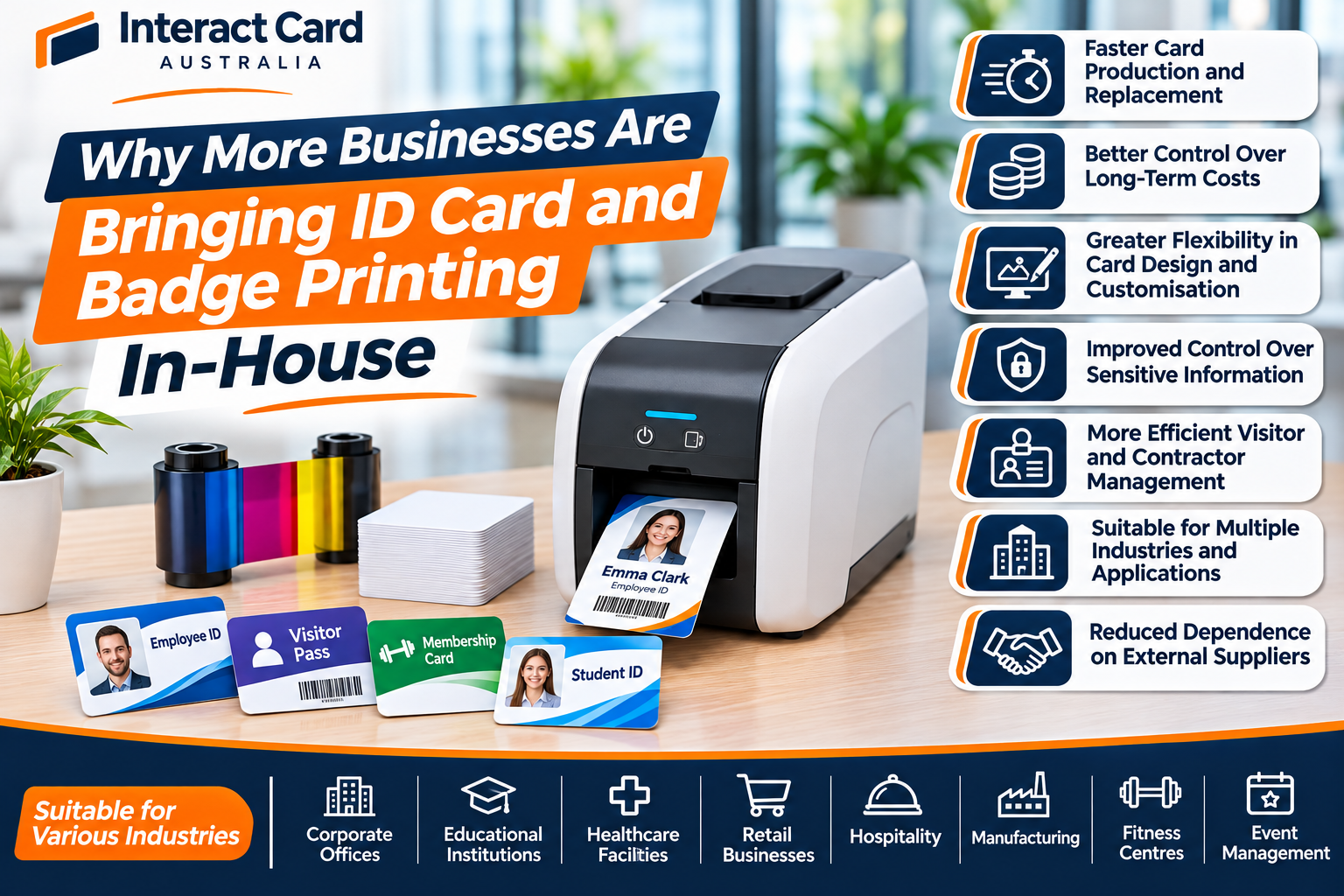
Employee identification cards and visitor badges play an important role in keeping workplaces organised, professional and secure. From corporate offices and educational institutions to healthcare facilities and retail businesses, identification cards have become part of everyday operations.
Traditionally, many organisations outsourced their card printing requirements to external service providers. However, waiting for deliveries, managing minimum order quantities and paying for frequent card replacements can create unnecessary complications.
Investing in modern card printers allows businesses to take greater control over their identification processes while reducing their dependence on third-party printing services.
So, what makes in-house card printing an attractive option for businesses? Let’s explore the practical benefits.
1. Faster Card Production and Replacement
One of the biggest advantages of printing identification cards internally is convenience.
When a new employee joins an organisation, waiting several days for an identification card can delay certain onboarding activities. Similarly, replacing a lost or damaged card through an external supplier may take longer than expected.
With an in-house printing system, businesses can produce cards whenever required.
This is particularly beneficial for organisations that experience:
- Frequent employee onboarding
- Seasonal recruitment
- Regular visitor registrations
- Lost or damaged identification cards
- Changes in employee roles and departments
- Temporary contractor appointments
Rather than waiting for an external printing service, authorised staff can create and issue replacement cards directly from the workplace.
2. Better Control Over Long-Term Printing Costs
Outsourcing card printing may appear affordable initially, especially for businesses with occasional printing requirements. However, recurring orders, delivery charges and small-batch printing fees can gradually increase operational expenses.
Purchasing a dedicated printer involves an initial investment, but it may offer better long-term value for organisations with regular printing requirements.
What Expenses Can In-House Printing Help Reduce?
Depending on the organisation’s printing volume, internal card production may reduce expenses associated with:
- Third-party printing services
- Frequent delivery charges
- Minimum order quantities
- Urgent replacement orders
- Unused or outdated printed cards
Businesses can also print cards individually rather than ordering large quantities in advance.
However, equipment prices, consumables, software and maintenance expenses should be considered when comparing in-house printing with outsourcing.
3. Greater Flexibility in Card Design and Customisation
Business requirements rarely remain the same. Companies may update their branding, introduce new departments, change employee roles or redesign identification cards.
Outsourced printing often requires submitting revised designs and waiting for approval or production.
Having a dedicated printer for plastic cards gives organisations greater flexibility when updating card designs and personalising information.
What Information Can Businesses Customise?
Depending on the card design software and printing equipment, organisations can include:
- Employee names and photographs
- Company branding and logos
- Job titles and department details
- Barcodes and QR codes
- Membership numbers
- Card expiry dates
- Visitor identification details
This flexibility is particularly useful for businesses that manage multiple departments, locations or categories of cardholders.
It also helps maintain consistent branding across different identification cards without requiring separate external printing orders.
4. Improved Control Over Sensitive Information
Employee identification cards often contain personal information, including names, photographs, identification numbers and departmental details.
When card production is outsourced, organisations may need to share certain employee information with external printing providers.
Bringing card production in-house can reduce the need to transfer this information outside the organisation.
Supporting Workplace Security
Depending on the equipment and software selected, businesses may also incorporate features such as:
- Magnetic stripe encoding
- Contactless smart card encoding
- Barcodes for identification
- UV printing
- Protective card overlays
These features can support identification and access management when integrated with compatible workplace systems.
However, in-house printing does not automatically guarantee data security. Organisations should implement appropriate access permissions, secure data storage and card issuance procedures.
5. More Efficient Visitor and Contractor Management
Businesses that regularly welcome visitors, contractors and temporary workers often need a flexible identification process.
Pre-printed badges may not always provide sufficient information about individual visitors or their purpose on-site.
Dedicated badget printer enable organisations to produce personalised identification badges according to their immediate requirements.
For example, a manufacturing facility could issue contractor badges displaying the individual’s name, company and authorised work period. A corporate office could create visitor badges that distinguish guests from permanent employees.
This approach can support reception teams, improve visual identification and contribute to more organised visitor management procedures.
6. Supporting Different Industries and Business Applications
In-house card printing is not limited to large corporations. Businesses and institutions across various industries can benefit from producing identification cards internally.
| Industry | Common card printing applications |
| Corporate offices | Employee IDs and visitor badges |
| Educational institutions | Student and staff identification cards |
| Healthcare facilities | Staff IDs and contractor badges |
| Retail businesses | Loyalty and membership cards |
| Hospitality | Staff identification and compatible access cards |
| Manufacturing | Contractor and employee identification |
| Fitness centres | Gym membership cards |
| Event management | Attendee passes and identification badges |
The versatility of plastic card printing equipment allows organisations to select solutions based on their specific operational requirements.
7. Reduced Dependence on External Suppliers
External printing services can be convenient, but businesses have limited control over production schedules, delivery times and order processing.
Supplier delays can become particularly inconvenient when identification cards are needed urgently.
An internal printing system allows businesses to manage their own production schedules and respond to unexpected requirements more efficiently.
Maintaining an appropriate stock of blank cards, printing ribbons and cleaning supplies can also help organisations avoid unnecessary interruptions.
What Should Businesses Consider Before Bringing Card Printing In-House?
Although internal card printing offers several benefits, choosing suitable equipment is essential.
Before investing, businesses should evaluate their expected printing volume, preferred card quality, software compatibility, single-sided or dual-sided printing requirements, encoding options and ongoing consumable costs.
Organisations with occasional printing needs may still find outsourcing more economical, while businesses with frequent identification requirements may benefit from greater internal control.
Frequently Asked Questions
Is in-house ID card printing cheaper than outsourcing?
In-house printing can be more economical for organisations that regularly produce identification cards. Actual savings depend on printing volume, equipment costs, consumables and external printing charges.
Can businesses print employee ID cards and membership cards using the same printer?
Yes, many dedicated plastic card printers support multiple applications, provided the card materials, dimensions and printing requirements are compatible with the equipment.
Do small businesses benefit from in-house badge printing?
Small businesses with frequent employee changes, visitor registrations or membership requirements may benefit from internal badge printing. Businesses with very low printing volumes should compare costs before investing.
About Interact Card Australia
Interact Card Australia specialises in card printing and identification solutions for Australian businesses and organisations. Its product range supports various applications, including employee identification, membership cards, student cards and professional badges.
Why Choose Interact Card Australia?
Businesses exploring in-house card production can benefit from working with a supplier focused on dedicated identification equipment. Interact Card Australia offers card printing solutions and related supplies, allowing organisations to explore equipment based on printing requirements, card applications and operational needs.
Final Thoughts
Bringing ID card and badge printing in-house can help businesses improve operational efficiency, personalise identification cards and gain greater control over production schedules and costs.
While outsourcing remains a practical option for some organisations, businesses with regular card printing requirements may find that investing in suitable equipment provides greater flexibility and long-term value.
By understanding their printing requirements and selecting compatible equipment, organisations can establish a practical identification system that supports their everyday operations and future growth.