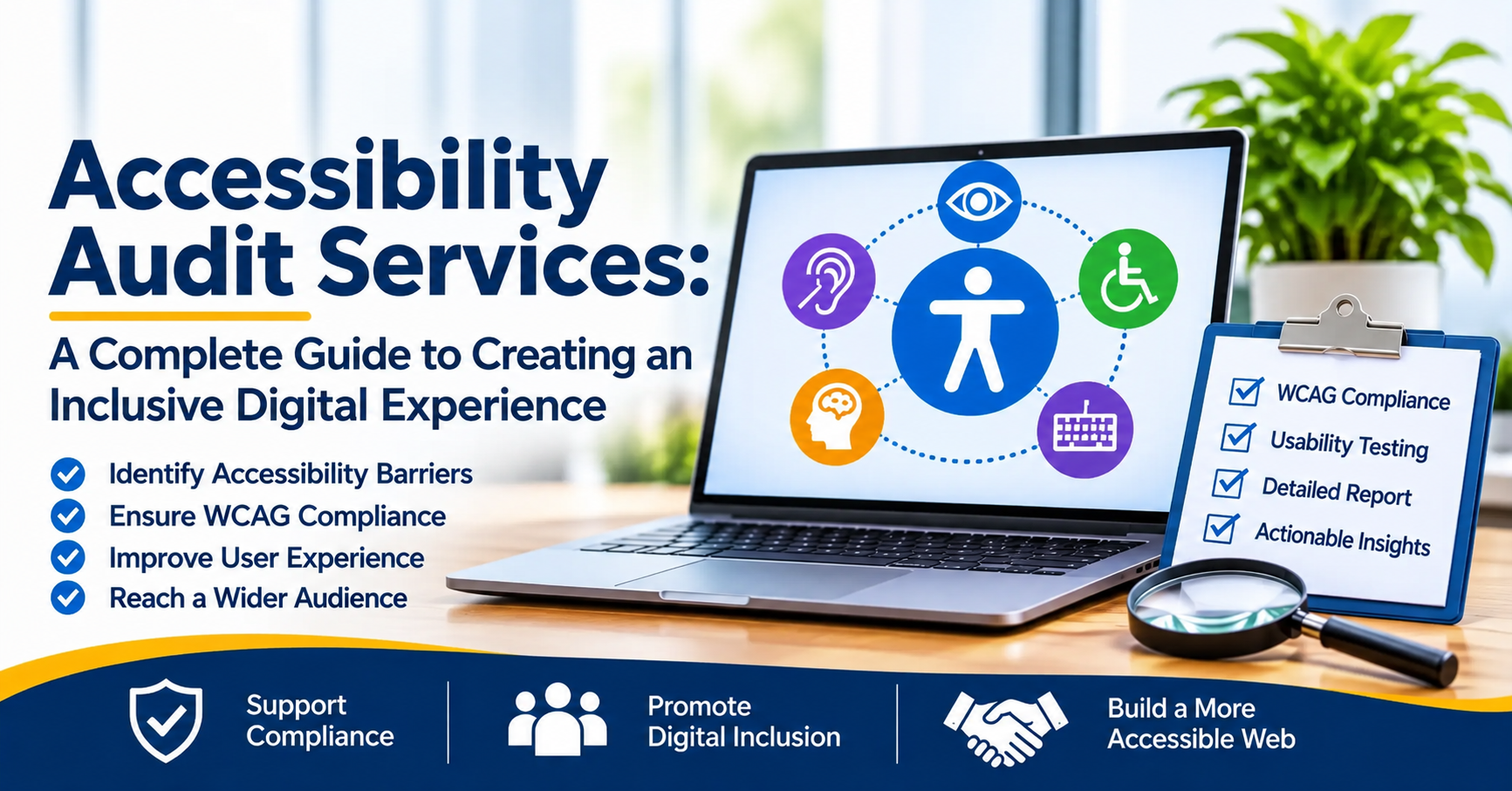
The digital world has transformed how people interact with businesses, access information, and use online services. Websites, mobile applications, and digital platforms have become essential for everyday activities. However, not every digital experience is accessible to everyone. People with disabilities may encounter barriers that prevent them from navigating websites, understanding content, or completing important online tasks. This is where accessibility audit services play an important role.
An accessibility audit helps businesses identify and resolve digital accessibility barriers, making their websites and applications more inclusive, usable, and accessible to a wider audience. By evaluating digital platforms against recognized accessibility standards, organizations can improve user experiences while supporting their digital inclusion goals.
What Are Accessibility Audit Services?
Accessibility audit services involve a detailed evaluation of websites, mobile applications, and other digital platforms to identify accessibility issues that may affect people with disabilities.
These audits assess whether digital content can be accessed and used by individuals with visual, hearing, motor, and cognitive disabilities. The evaluation generally follows established guidelines, such as the Web Content Accessibility Guidelines (WCAG).
A professional accessibility audit may examine several elements, including:
- Website navigation and keyboard accessibility
- Color contrast and text readability
- Alternative text for images
- Screen reader compatibility
- Form labels and error messages
- Heading structure and content organization
- Accessible buttons and interactive elements
- Video captions and multimedia accessibility
The purpose is to identify potential barriers and provide actionable recommendations for improving accessibility.
Why Are Accessibility Audits Important for Businesses?
Digital accessibility is not just a technical requirement; it is an important part of delivering a positive user experience. Businesses that overlook accessibility may unintentionally exclude users who rely on assistive technologies.
Here are some key reasons why accessibility audits are valuable.
1. Improve Website Usability
An accessible website provides a better experience for all visitors. Clear navigation, readable content, descriptive links, and properly structured pages make it easier for users to find information and complete tasks.
Accessibility improvements can also benefit people using mobile devices, older users, and individuals experiencing temporary limitations.
2. Support WCAG Compliance
WCAG provides internationally recognized recommendations for making web content more accessible. Accessibility audits help organizations evaluate their digital platforms against relevant WCAG success criteria.
Businesses can identify accessibility gaps and take appropriate steps toward meeting their selected compliance targets, such as WCAG 2.2 Level AA.
3. Reach a Wider Audience
Millions of people worldwide experience disabilities and may depend on accessible digital experiences. When businesses improve website accessibility, they make their products and services easier to discover and use.
An inclusive website can help organizations connect with a broader audience and create better customer experiences.
4. Reduce Accessibility Risks
Accessibility regulations and legal requirements vary by country, industry, and organization. Regular accessibility assessments help businesses identify potential issues and address them proactively.
Although an accessibility audit does not guarantee legal compliance, it can support an organization’s broader accessibility and risk-management strategy.
What Does a Professional Website Accessibility Audit Include?
A comprehensive website accessibility audit examines different aspects of a digital platform to identify usability and accessibility problems.
Automated Accessibility Testing
Automated testing tools help identify common accessibility issues, including missing alternative text, insufficient color contrast, and certain HTML structure problems.
However, automated tools cannot detect every accessibility barrier. They should be used alongside manual testing.
Manual Accessibility Testing
Manual testing allows accessibility specialists to examine website functionality and identify issues that automated tools may overlook.
This process may include checking keyboard navigation, focus indicators, content structure, and interactive components.
Screen Reader Testing
Screen reader testing evaluates how assistive technologies interpret website content. It helps identify problems with headings, labels, links, forms, and other elements that may affect users with visual disabilities.
Keyboard Accessibility Testing
Some users navigate websites without a mouse. Keyboard accessibility testing checks whether visitors can access menus, buttons, forms, and interactive elements using keyboard commands.
Accessibility Reporting
After completing the assessment, specialists provide a detailed report explaining the identified issues, their potential impact, and recommended solutions.
This report helps development teams prioritize accessibility improvements and create an actionable remediation plan.
Benefits of Investing in Accessibility Audit Services
Working with experienced accessibility professionals can provide several long-term benefits.
- Better User Experience: Accessible websites are easier to navigate and interact with.
- Improved Digital Inclusion: Businesses can make their online services available to more people.
- Technical Improvements: Accessibility audits can reveal issues in website structure, coding, and functionality.
- Stronger Brand Reputation: Demonstrating a commitment to accessibility helps build trust with customers.
- Ongoing Accessibility Progress: Regular assessments help organizations monitor improvements and identify new issues.
How Often Should Businesses Conduct Accessibility Audits?
Accessibility should be treated as an ongoing process rather than a one-time activity.
Businesses should consider conducting an initial accessibility audit before launching a website or application. Additional assessments are recommended after major redesigns, content updates, new feature releases, or changes to website functionality.
Regular testing helps ensure that new development work does not introduce additional accessibility barriers.
Organizations with frequently updated websites can also establish an ongoing accessibility testing process to monitor digital experiences consistently.
Choosing the Right Accessibility Audit Services Provider
Selecting the right accessibility partner is essential for identifying issues accurately and implementing effective solutions.
Before choosing a provider, businesses should consider the following factors:
- WCAG Expertise: Look for professionals familiar with current WCAG guidelines and accessibility standards.
- Manual and Automated Testing: Choose a provider that combines automated tools with expert manual evaluation.
- Assistive Technology Experience: Screen reader and keyboard testing experience is important.
- Detailed Reporting: Reports should include clear findings, severity levels, and practical remediation recommendations.
- Ongoing Support: Consider providers that can support accessibility improvements and follow-up testing.
A reliable accessibility partner should focus on practical improvements instead of simply generating automated test results.
Conclusion
Creating an accessible digital experience is essential for businesses that want to serve diverse audiences and improve website usability. Professional accessibility audit services help organizations identify digital barriers, evaluate their websites against established accessibility standards, and develop practical strategies for improvement.
By combining automated testing, manual evaluation, screen reader testing, and continuous monitoring, businesses can make meaningful progress toward digital inclusion. Investing in accessibility today helps create a more usable, inclusive, and welcoming digital environment for everyone.