Cordyceps militaris indoor farming is becoming an interesting opportunity for individuals interested in mushroom cultivation, modern agriculture, and agricultural entrepreneurship. With increasing interest in specialty mushrooms and controlled-environment farming, Cordyceps militaris cultivation offers an opportunity to explore a specialized form of mushroom production.
Unlike traditional mushroom farming, Cordyceps militaris is generally cultivated indoors under carefully controlled environmental conditions. The cultivation process involves selecting a healthy fungal culture, preparing a suitable nutrient substrate, sterilization, inoculation, incubation, fruiting, and harvesting. Each stage requires proper technical knowledge, hygiene, and environmental management to achieve consistent results.
For beginners, practical training and small-scale cultivation trials can help develop the skills required to establish and manage a Cordyceps militaris farming unit.
What Is Cordyceps Militaris?
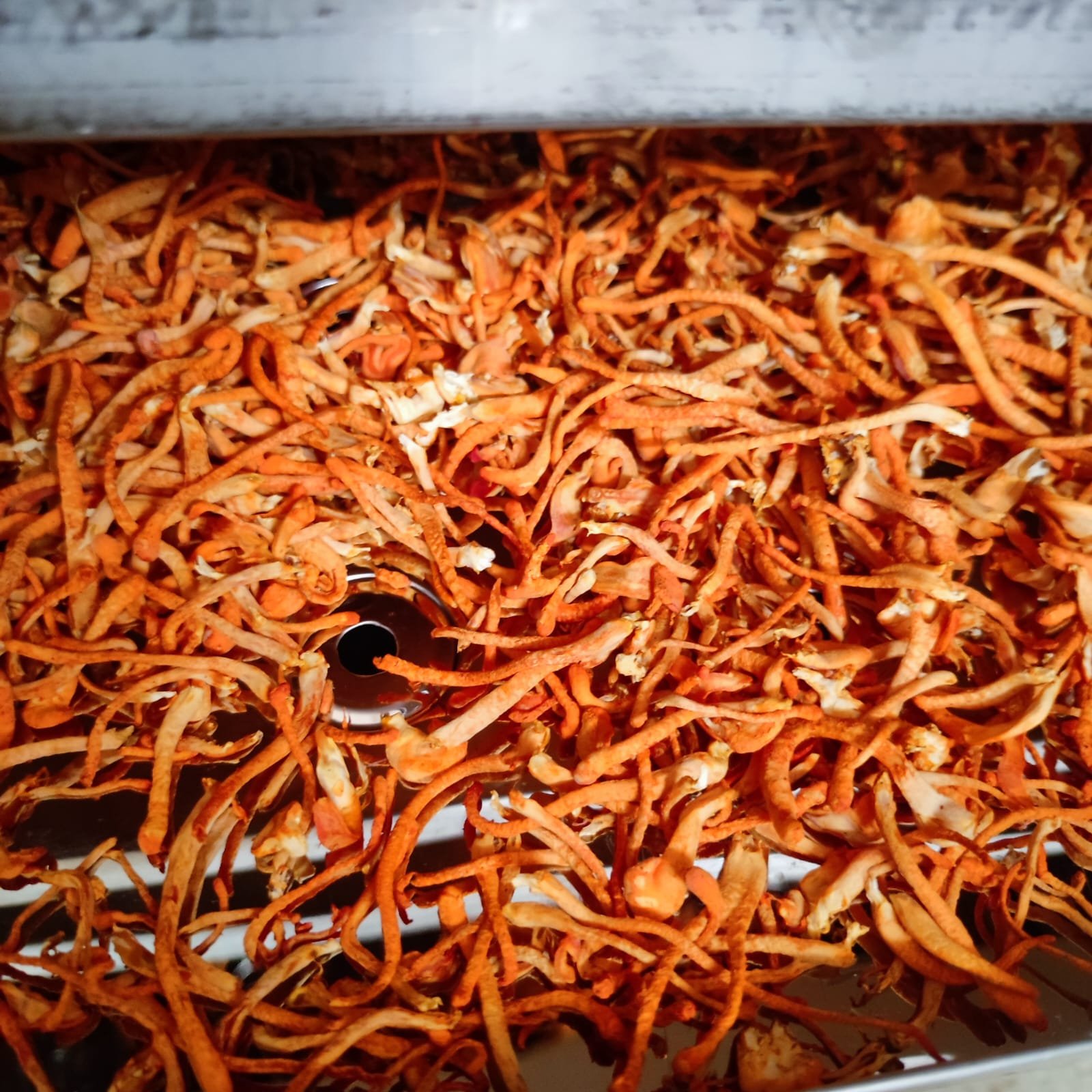
Cordyceps militaris is an orange-colored fungus belonging to the Cordycipitaceae family. It is widely studied for its bioactive compounds and is cultivated commercially under controlled indoor conditions.
The fungus is commonly grown in transparent glass jars or suitable cultivation containers containing a nutrient-rich substrate, often prepared using brown rice and other nutritional ingredients.
Unlike conventional agricultural crops, Cordyceps militaris does not require agricultural land or large outdoor farming areas. Instead, it can be cultivated in a dedicated indoor room equipped with sterilization facilities, temperature control, lighting, humidity monitoring, and ventilation systems.
This makes it an interesting option for people exploring small-scale specialty mushroom farming.
Steps Involved in Cordyceps Militaris Indoor Farming
Successful cultivation involves several important stages. Each step must be performed carefully to minimize contamination and support healthy fungal development.
1. Culture Selection
The first step is obtaining a healthy and reliable Cordyceps militaris culture from a trusted supplier or laboratory. Culture quality plays an important role in cultivation performance, growth consistency, and final product quality.
Beginners should select cultures from suppliers who can provide information about strain characteristics, culture purity, and cultivation requirements.
2. Substrate Preparation
The substrate provides the nutrients required for fungal growth. Brown rice is commonly used as a base ingredient, along with suitable nutritional supplements and water.
The ingredients are mixed in appropriate proportions and transferred into cultivation jars or containers. Proper substrate preparation helps create a suitable growing environment for the fungus.
3. Sterilization
Sterilization is one of the most important stages of Cordyceps cultivation. Since the nutrient-rich substrate can also support unwanted microorganisms, proper sterilization is necessary to reduce contamination risks.
Cultivation jars, substrate, and other required materials must be sterilized using suitable equipment and validated procedures.
Maintaining cleanliness throughout this process helps improve the chances of successful cultivation.
4. Inoculation
After sterilization and cooling, the prepared substrate is inoculated with the selected Cordyceps militaris culture.
This process should be carried out in a clean and controlled workspace to prevent unwanted microorganisms from entering the cultivation containers.
Proper laboratory hygiene, sterilized tools, and careful handling are essential during inoculation.
5. Incubation
Following inoculation, the cultivation containers are maintained under suitable environmental conditions to encourage mycelial growth.
During this stage, the fungus gradually develops throughout the substrate. Temperature, cleanliness, and other environmental parameters should be monitored regularly.
Any unusual changes in appearance or signs of contamination should be identified and managed appropriately.
6. Fruiting
Once the mycelium has developed sufficiently, environmental conditions are adjusted to encourage fruiting body formation.
Lighting, temperature, humidity, and air exchange are important factors during this stage. Suitable LED lighting and environmental monitoring systems can help maintain consistency across cultivation batches.
Healthy Cordyceps militaris fruiting bodies generally develop a distinctive orange appearance.
7. Harvesting and Drying
Harvesting is carried out when the fruiting bodies reach the desired maturity and quality.
The harvested material is carefully separated from the substrate and cleaned using appropriate methods. It is then dried under controlled conditions to reduce moisture and support proper storage.
Good post-harvest handling is important for maintaining product quality, appearance, and storage stability.
Equipment Required for Cordyceps Militaris Farming
Setting up an indoor Cordyceps cultivation unit requires specialized equipment to maintain a clean and controlled growing environment.
Some essential equipment includes:
- Clean cultivation room: A dedicated space for carrying out cultivation activities.
- Sterilization equipment: An autoclave or suitable sterilization system for preparing the substrate and containers.
- Inoculation workspace: A laminar airflow cabinet or suitable clean workspace for culture transfer.
- Cultivation jars: Transparent glass jars or appropriate containers for growing the fungus.
- Temperature monitoring instruments: Thermometers and temperature controllers for maintaining suitable conditions.
- Humidity monitoring instruments: Hygrometers and humidification systems where required.
- LED lighting: Suitable lights and timers for managing the fruiting environment.
- Air conditioning and ventilation: Systems for maintaining temperature and adequate air exchange.
- Harvesting and drying equipment: Tools and dryers for post-harvest processing.
The equipment required depends on the proposed production capacity, available space, and investment budget.
Benefits of Cordyceps Militaris Farming Training
Practical training can be particularly valuable for beginners because Cordyceps militaris cultivation involves several technical processes.
A structured training program introduces learners to culture handling, substrate preparation, sterilization, inoculation, incubation, fruiting management, and harvesting techniques.
Training also helps participants understand laboratory hygiene, contamination prevention, environmental monitoring, and quality control.
In addition to cultivation skills, business-oriented training can introduce learners to production planning, equipment selection, investment estimation, operating expenses, and basic marketing strategies.
Hands-on experience is especially useful because it allows learners to understand the challenges that may arise during actual production.
Common Challenges in Cordyceps Militaris Cultivation
Although indoor farming offers greater environmental control, it also involves certain challenges.
Contamination: Unwanted microorganisms can affect the substrate and reduce successful production. Proper sterilization and hygiene are essential.
Inconsistent growth: Poor-quality cultures, unsuitable substrates, or incorrect environmental conditions can result in uneven mycelial development.
Environmental management: Maintaining suitable temperature, lighting, humidity, and ventilation requires regular monitoring.
Low yields: Inadequate cultivation practices or unsuitable growing conditions may affect fruiting body development and final production.
Post-harvest quality: Improper harvesting, drying, or storage can reduce product quality and shelf life.
Maintaining production records, monitoring environmental conditions, and conducting small-scale trials can help growers identify and address these problems.
Business Opportunities in Cordyceps Militaris Farming
Cordyceps militaris cultivation may offer opportunities in the specialty mushroom and functional ingredient markets. Potential business models include dried mushroom production, bulk supply to ingredient processors, and partnerships with businesses involved in mushroom-based products.
However, commercial success depends on several factors, including cultivation efficiency, production costs, contamination rates, product quality, market demand, and selling prices.
Before investing in a commercial-scale unit, aspiring entrepreneurs should conduct market research and understand applicable food safety, licensing, labeling, and regulatory requirements.
It is also advisable to begin with a small cultivation setup, evaluate multiple production batches, calculate the cost per successful batch, and identify potential buyers before expanding operations.
A realistic business plan should include equipment investment, raw materials, electricity, labor, packaging, drying, quality testing, and marketing expenses.
Conclusion
Cordyceps militaris indoor farming is an emerging area of specialty mushroom cultivation that combines laboratory techniques with controlled-environment agriculture. Although it offers interesting opportunities for agricultural entrepreneurs, successful production requires technical knowledge, patience, proper hygiene, and consistent environmental management.
For beginners, practical training and hands-on cultivation experience can provide a strong foundation for understanding the complete production process.
Starting with a small setup, selecting reliable cultures, maintaining cleanliness, monitoring growing conditions, and learning from every production cycle are important steps toward developing a successful Cordyceps militaris cultivation unit.
With proper planning, quality management, and a clear understanding of market requirements, Cordyceps militaris farming can become a promising area to explore in the specialty mushroom cultivation industry.