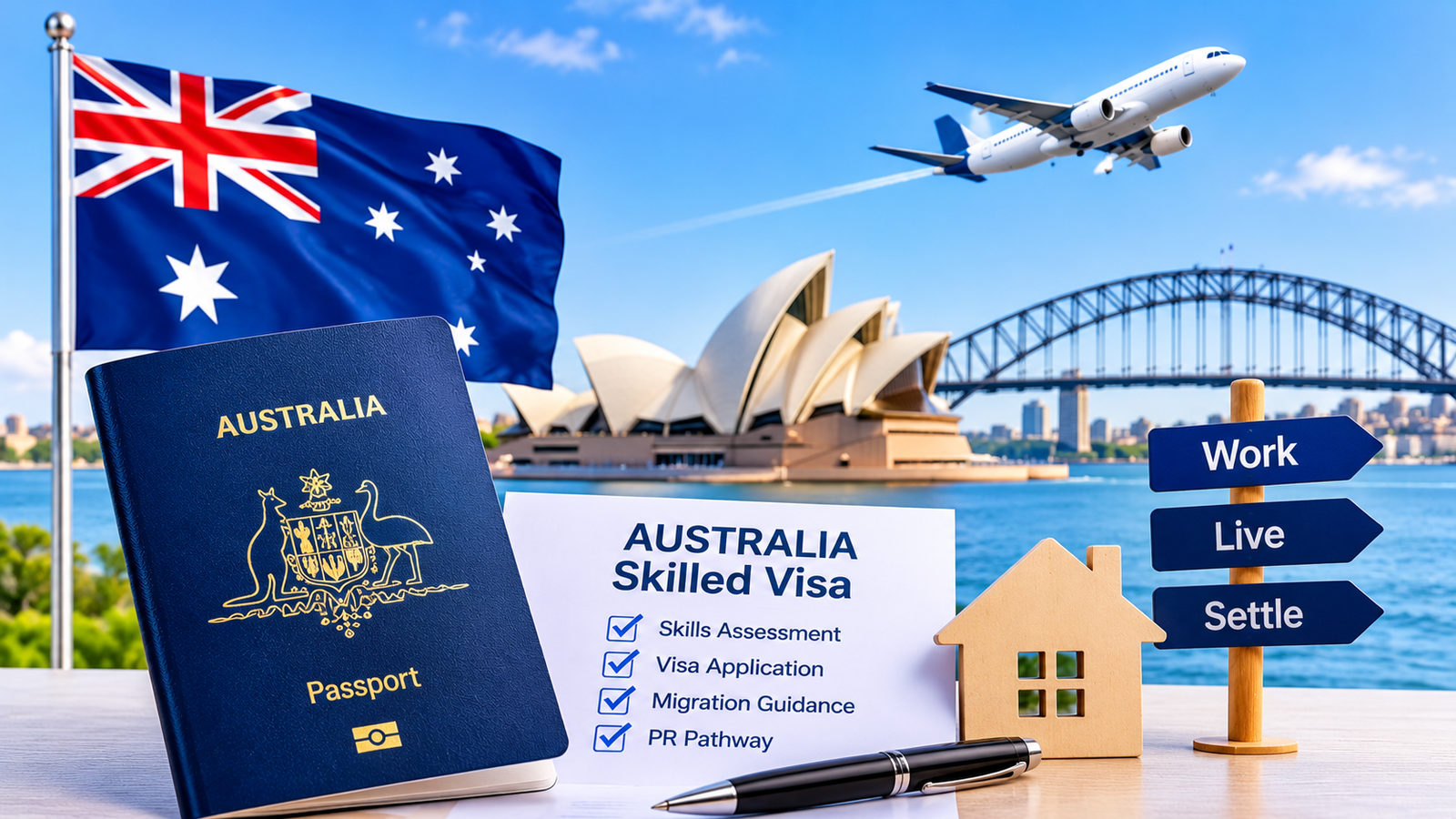
When Ahmed moved to Abu Dhabi for an engineering job, he expected to spend a few years building his career. Over time, however, he began thinking about settling in Australia. He had relevant qualifications and professional experience, but he was unsure whether his occupation was eligible, how his skills would be assessed, or which visa pathway matched his plans.
Like many professionals living in the UAE, Ahmed discovered that moving to Australia involves more than finding a visa application form. Applicants need to understand occupation requirements, skills assessments, points, English-language standards, and state or employer pathways. An Australia skilled visa consultant in the UAE may help explain these requirements and organize the process, while the applicant makes informed decisions based on their circumstances.
Start by Checking Whether Your Occupation Is Eligible
Australia’s skilled migration system is designed to address particular workforce needs. However, not every occupation is available under every skilled visa pathway.
Begin by identifying your actual occupation and comparing your duties with the relevant Australian occupation classification. Your job title may differ from the occupation description used by Australian authorities. For example, someone working as a project engineer might perform duties that need to be assessed against a specific engineering occupation rather than a general management role.
Check the current occupation list and visa requirements through the Australian Department of Home Affairs. Occupation availability can change, so avoid relying on old online lists or another applicant’s experience.
Understand the Main Skilled Visa Options
Australia offers several skilled migration routes, each with different conditions. Three commonly discussed options include:
- Subclass 189 – Skilled Independent visa: A points-tested permanent visa that does not require state or employer sponsorship.
- Subclass 190 – Skilled Nominated visa: A points-tested permanent visa requiring nomination by an Australian state or territory.
- Subclass 491 – Skilled Work Regional (Provisional) visa: A provisional pathway involving eligible regional nomination or sponsorship arrangements, with conditions for living and working in designated regional areas.
These options are not interchangeable. Each has its own eligibility rules, nomination conditions, and invitation process. Compare them before deciding which route deserves your attention.
Arrange the Correct Skills Assessment
A skills assessment is an important part of many skilled migration applications. It checks whether your qualifications and professional experience meet the standards set by the relevant assessing authority for your nominated occupation.
The responsible organisation depends on your occupation. Engineers, accountants, healthcare professionals, and information technology specialists may have different assessment procedures.
Prepare your degree certificates, academic transcripts, employment references, and other requested records. Some occupations may require detailed descriptions of previous work or evidence of professional projects.
Do not assume that a degree with a familiar title will automatically receive a positive assessment. The assessing authority examines the relevant criteria and supporting evidence.
Calculate Your Points and Identify Areas for Improvement
For points-tested visas, applicants must meet the minimum points threshold to submit an Expression of Interest (EOI). Points may be awarded for factors such as age, English-language ability, skilled employment, qualifications, and other eligible circumstances.
Meeting the minimum threshold does not guarantee an invitation. Invitations depend on factors including the visa subclass, occupation, available places, and selection arrangements.
A practical assessment can help you understand where you stand. For instance, an applicant might improve their points position by achieving a higher English test result or obtaining a recognised qualification assessment. However, any strategy should be based on the actual rules rather than assumptions about guaranteed invitations.
Prepare for English-Language Testing Early
English-language ability can influence both eligibility and points. Applicants may need to take an approved test and achieve the required score for their visa pathway.
Commonly accepted tests include IELTS, PTE Academic, and other tests specified by the Department of Home Affairs. The accepted tests, score requirements, and rules should always be checked against current official guidance.
If you are living in the UAE, consider booking your test early enough to allow preparation and a possible retake. Practising under timed conditions can help identify weaker areas, especially writing and speaking.
Explore State Nomination and Regional Opportunities
State and territory nomination can provide another route for eligible applicants. However, each state or territory sets its own nomination priorities and may focus on particular occupations, work experience, employment arrangements, or connections to the region.
Regional migration can also offer opportunities for people whose occupations and circumstances match the relevant requirements. Before choosing a location, research its employment market, housing costs, transport, schools, and lifestyle.
A nomination pathway should not be selected only because it appears easier to access. Consider whether you can genuinely meet its conditions and whether the location suits your long-term plans.
Organise Your Documents Before Submitting an EOI
Accurate records make the application process easier to manage. Create a document folder containing your passport, educational qualifications, skills assessment, English test results, employment evidence, and other relevant records.
Employment references should accurately describe your responsibilities, working hours, dates, and position. A simple letter confirming your job title may not provide enough detail for an assessment.
Check that the information in your Expression of Interest matches your supporting evidence. Incorrect claims about work experience, qualifications, or English scores can cause serious problems. Never include information simply to increase your points total if you cannot support it.
Understand What Happens After an Invitation
An Expression of Interest is not a visa application. It indicates that you wish to be considered for a skilled migration invitation.
If invited, you must submit the visa application within the specified period and provide the required evidence. This may include identity documents, police certificates, health examinations, and additional records depending on your circumstances.
Applicants should monitor official messages and meet deadlines. Processing times vary, and an invitation does not mean that a visa has already been granted.
Plan Your Settlement Before Leaving the UAE
A successful move involves more than receiving a visa. Think about where you intend to live, how you will find employment, and what your initial expenses may be.
Research rental costs, transport, healthcare arrangements, and professional registration requirements. Some occupations require additional licensing before you can work in Australia, even if your migration skills assessment is positive.
Prepare a realistic settlement budget that includes flights, temporary accommodation, rental deposits, everyday expenses, and a financial reserve. Planning these matters early can make the transition less stressful.
Conclusion
Moving from the UAE to Australia through a skilled migration pathway requires careful research and realistic preparation. Understanding occupation eligibility, skills assessments, points, English requirements, and nomination options can help you make better decisions.
Professional guidance may help clarify the process and identify missing information, but applicants should verify advice through official Australian government sources. Choose a pathway that matches your qualifications and genuine plans rather than relying on promises of quick invitations or guaranteed approval.
Frequently Asked Questions
1. Can UAE residents apply for Australian skilled visas?
Yes. UAE residents can apply if they meet the requirements of an available Australian skilled migration pathway. Eligibility depends on the applicant’s circumstances and the visa criteria.
2. Is a skills assessment required for Australian skilled migration?
Many skilled visa pathways require a suitable skills assessment for the nominated occupation. The relevant assessing authority depends on the occupation.
3. Does meeting the points threshold guarantee an invitation?
No. Meeting the minimum threshold allows eligible applicants to be considered, but invitations depend on selection arrangements and available places.
4. Can I apply for an Australian skilled visa without an employer?
Some skilled migration pathways do not require an employer sponsor. Subclass 189 and certain state-nominated or regional routes have their own eligibility and nomination requirements.
5. Where can I check current Australian skilled visa rules?
The Australian Department of Home Affairs website provides official information about occupation lists, visa conditions, points, skills assessments, and application procedures.