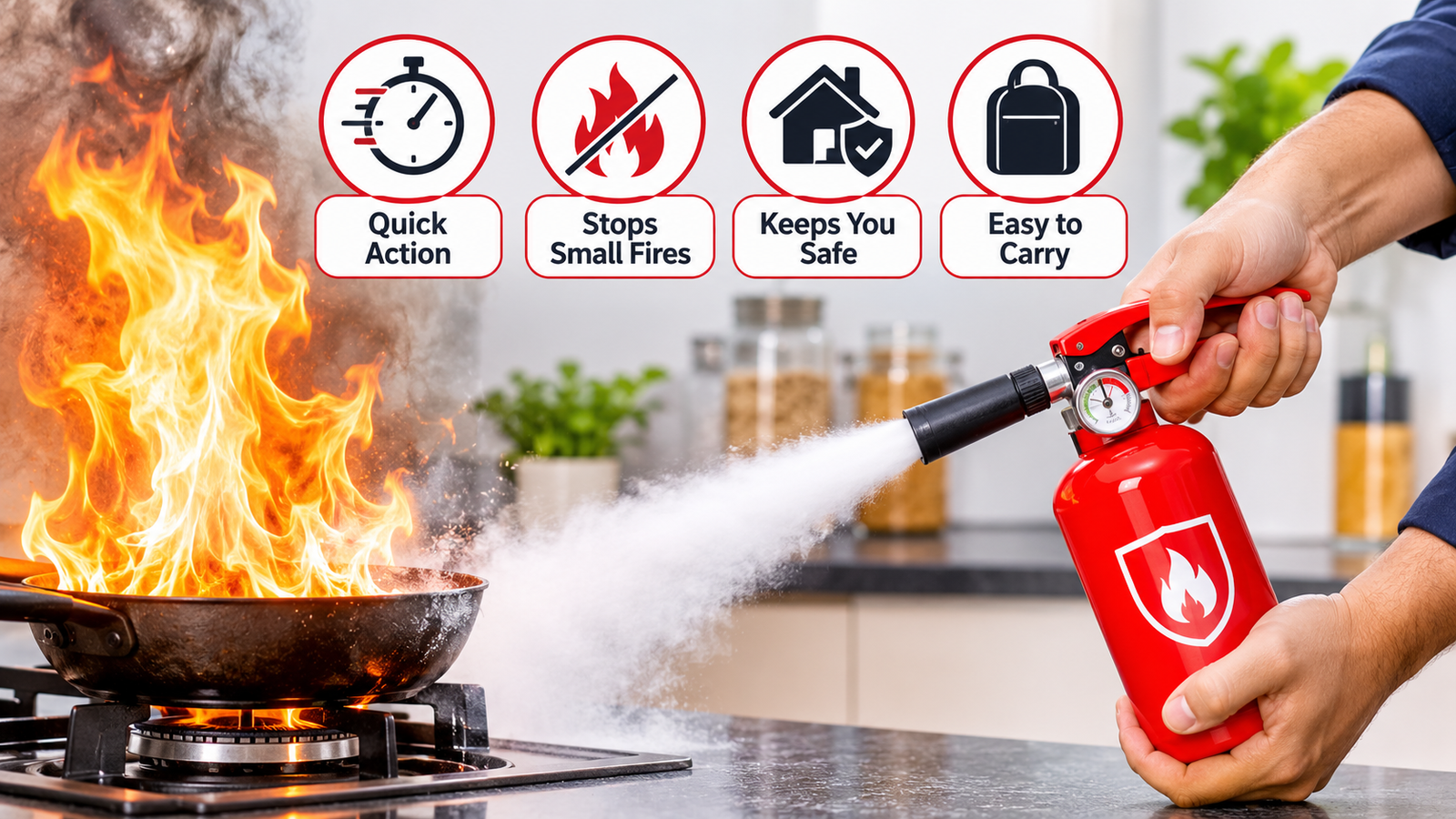
Fire incidents involving computers, control panels, communication devices, and other electronic equipment can create two types of damage: destruction caused by flames and additional damage caused by the extinguishing agent. A Halotron Fire Extinguisher is designed to control certain fires using a clean agent that evaporates after discharge without leaving the powder residue associated with conventional dry chemical extinguishers. This makes it a useful option for selected areas where protecting equipment from contamination is an important consideration.
What Makes Halotron Different From Conventional Extinguishers?
Traditional extinguishers use agents such as water, foam, or dry chemical powder, each designed for specific fire hazards. While these agents can be effective, their residue or moisture may create additional cleanup challenges around sensitive electronic components.
Halotron uses a clean gaseous or liquefied-gas extinguishing agent, depending on the formulation, which is discharged to suppress the fire. It evaporates after application, helping prevent powder deposits from accumulating on computers, circuit boards, and equipment surfaces.
Its key characteristics include:
- Residue-free discharge after the agent evaporates.
- Electrically non-conductive properties for suitable rated applications.
- Reduced cleanup requirements compared with powder-based extinguishers.
- Suitability for certain sensitive equipment environments.
The specific fire rating and operating limitations should always be verified from the individual extinguisher’s label.
How Does Halotron Suppress Flames?
When the extinguisher is activated, the agent is released through its nozzle and directed towards the fire. Halotron works primarily by interfering with the combustion process and absorbing heat, helping to interrupt the chemical reaction that sustains flames.
Unlike extinguishers that leave a layer of powder or foam behind, the clean agent evaporates following discharge. This can reduce post-fire contamination in areas where electronic equipment, valuable components, or technical instruments need to remain easier to inspect and clean.
However, suppression of visible flames does not necessarily mean that every source of heat has been eliminated. Burning materials may reignite if the underlying hazard remains.
Why Is Residue-Free Fire Protection Important for Electronics?
Electronic equipment can be vulnerable even after the fire itself has been controlled. Dry chemical powder can enter vents, connectors, circuit boards, switches, and other small openings. Removing this contamination may require specialised cleaning, and equipment downtime can affect daily operations.
Halotron can help reduce these secondary cleanup concerns because its agent evaporates without leaving the typical powder deposits. This feature is particularly relevant in locations where even a small amount of contamination could interrupt operations or damage equipment.
Sensitive environments that may benefit from suitable clean-agent protection include:
- Server rooms and data centres.
- Telecommunication equipment rooms.
- Control rooms and monitoring stations.
- Electrical panels and sensitive machinery.
- Laboratories containing electronic instruments.
The protection required should still be determined by the fire hazards and the equipment present in the area.
Which Types of Fires Can a Halotron Extinguisher Handle?
Halotron extinguishers are commonly used for certain Class B flammable liquid hazards and Class C electrical hazards, while some models may also carry Class A ratings. The exact fire classifications depend on the specific formulation and extinguisher certification.
Before using one, check whether its approved rating covers the material involved in the fire. It should not be assumed suitable for cooking oils, combustible metals, or every type of industrial chemical.
Electrical equipment should be isolated whenever it is safe and practical to do so. If flames are spreading, smoke is increasing, or the fire threatens the exit, evacuation should take priority over extinguisher use.
Where Is Halotron Fire Protection Commonly Used?
Halotron is often considered for places where fire suppression and protection against extinguishing-agent residue are both important. Offices with computer equipment, communication facilities, technical rooms, and control areas may have requirements that differ from ordinary storage spaces.
During facility planning, managers may also evaluate other safety expenses, such as emergency exit light prices in Pakistan, when budgeting for emergency lighting, exit visibility, and supporting fire safety equipment. These provisions serve different functions: Halotron helps suppress certain fires, while emergency exit lighting helps occupants identify evacuation routes during power failure or reduced visibility.
Selecting equipment according to the building’s actual hazards and emergency requirements helps avoid relying on one product to solve every fire safety concern.
What Limitations Should Users Know Before Operating It?
Although Halotron can be useful around sensitive equipment, it is not harmless under every condition. Discharge in confined or poorly ventilated spaces can create exposure concerns, and the agent may produce hazardous decomposition products when exposed to flames or extreme heat.
Users should understand these important precautions:
- Avoid breathing the discharged agent or fire-related gases.
- Do not remain in a confined area after discharge unless it is confirmed safe.
- Ventilate the affected area when conditions permit.
- Follow the extinguisher’s operating instructions and exposure warnings.
- Evacuate immediately if the fire is spreading or escape routes are threatened.
The clean-agent designation refers to its residue characteristics, not the absence of every safety risk.
How Should Halotron Extinguishers Be Inspected and Maintained?
An extinguisher may become unreliable because of pressure loss, physical damage, leakage, or deterioration of its components. Regular inspection helps identify these problems before the unit is needed.
The inspection should include the cylinder’s physical condition, pressure indication where fitted, safety pin, tamper seal, hose, nozzle, and product label. The mounting arrangement should also be checked to ensure the extinguisher remains accessible.
Maintenance and recharging should be performed by qualified personnel according to the manufacturer’s requirements and applicable standards. A used, damaged, or overdue extinguisher should not be treated as ready for another emergency.
How Does Clean-Agent Protection Support Business Continuity?
Fire damage can interrupt more than the physical operation of equipment. Businesses may lose access to stored information, communication systems, monitoring controls, and important digital services. Recovery can take time if components require replacement or specialised cleaning.
Using a suitable clean-agent extinguisher in the appropriate risk area may help reduce residue-related damage and simplify recovery after a fire. However, it should form part of a broader fire safety plan that includes detection, alarms, evacuation arrangements, appropriate suppression systems, and routine maintenance.
Protecting sensitive equipment is most effective when fire prevention, early detection, safe evacuation, and suitable extinguishing equipment work together.
Frequently Asked Questions
1. What is a Halotron fire extinguisher used for?
It is used for certain fire hazards involving flammable liquids and electrical equipment, and some models may have additional fire ratings. It is often selected for areas containing sensitive electronics because it evaporates without leaving powder residue.
2. Does Halotron damage computers or circuit boards?
Halotron is designed to avoid the residue associated with powder extinguishers, which can help reduce contamination of electronic equipment. However, exposure to heat, flames, smoke, and the fire itself can still damage electronics.
3. Can Halotron be used on electrical fires?
Suitable Halotron models are rated for certain energised electrical fire hazards. Users should check the product label and follow electrical safety procedures before operating the extinguisher.
4. Is Halotron suitable for server rooms?
It may be suitable for selected server room fire hazards where clean-agent protection is required. The extinguisher’s rating, room conditions, and installation requirements should be reviewed before selection.
5. Does a Halotron extinguisher require refilling after use?
If it has been discharged, it must be inspected and professionally serviced or recharged according to the manufacturer’s requirements before being returned to service.
Conclusion
Halotron offers a clean-agent fire suppression option for environments where protecting sensitive equipment from extinguishing-agent residue is an important priority. Its ability to suppress certain fires without leaving powder deposits can help reduce cleanup difficulties involving electronics and technical equipment. Correct selection, suitable fire ratings, safe operating conditions, regular inspections, and professional maintenance remain essential for dependable fire protection.