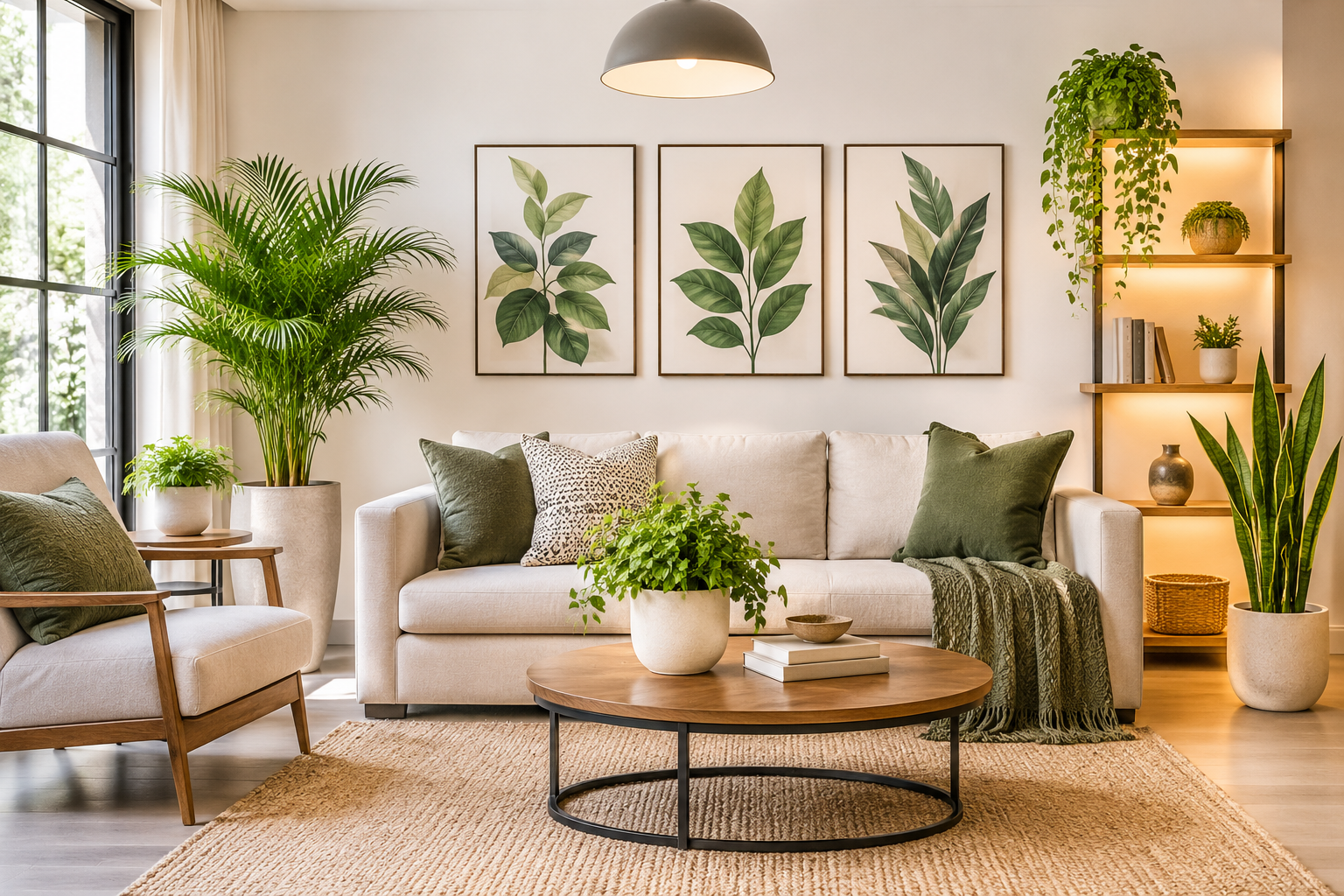
floor, and the calm disappears. If a room feels crowded even though every plant looks healthy, the problem sits in placement, not in the plant count.
Look at any
interior design living room with plants that works, and one pattern shows up: the greenery follows a plan. This post shows how scale, grouping, and restraint keep a plant-filled room beautiful instead of busy.
Treat Plants Like Furniture, Not Decor
Plants take up visual space, just like a chair or a console. A tall fiddle-leaf fig carries as much weight as an armchair, while a small pothos barely registers. Designers sketch the plants onto the floor plan alongside the sofa and tables, so every plant gets a planned spot. This one habit stops the common mistake of squeezing greenery into whatever gaps remain.
How Many Plants Are Too Many in a Living Room?
No magic number exists, because size matters more than count. Count groups instead of pots. Many rooms stay calm with two or three clear plant zones: one by the window, one beside the sofa, and one small accent on a shelf or table. Beyond that, the eye has nowhere to rest. A strong layout keeps open wall and floor space between each zone, so every group reads as its own moment.
Place Plants with Three Simple Rules
Three rules do most of the work:
- Anchor the Corners: Put one tall plant in an empty corner to frame the room and draw the eye upward.
- Group in Odd Numbers: Three pots of different heights look intentional, while four identical pots look like a shop display.
- Keep Surfaces Clear: Leave coffee tables and shelves mostly open, and let floor plants and hanging plants carry the greenery.
Match Pots, Palette, and Plant Shapes
Repetition calms a busy room. Pick two pot colors that echo the sofa, rug, or curtains, then repeat them across every plant. Mix leaf shapes with purpose: one large-leaf plant, one trailing plant, and one upright, spiky plant give variety without chaos. A calm
interior design living room with plants never uses a new pot style for every plant.
Try It in a Small Living Room
Picture a 12-by-14-foot room with one window. A tall plant in the corner nearest the window, a trailing plant on a high shelf, and a small group of three pots beside the sofa fill the space. The coffee table stays empty. The room gains life, yet nothing competes with the furniture.
Keep Plants Looking Tidy
Dust, brown leaves, and leaning stems create clutter faster than extra pots do. Rotate each plant every few weeks so growth stays even, trim dead leaves, and wipe large leaves with a damp cloth. Saucers and plant stands also hide drip marks and keep floors neat.
Know When a Specialist Makes Sense
Some rooms resist DIY fixes: open-plan spaces, double-height ceilings, and low-light apartments. Professional plant design services match species to light, size containers to the room, and set a care schedule so the layout stays tidy after the first season. A designer also spots problems early, such as a tall plant blocking a window or a thirsty species sitting near a heating vent.
FAQ
How do you decorate a living room with plants?
Start with one tall plant in a corner, then add a small group beside the sofa and a trailing plant on a shelf. Repeat two pot colors throughout, and leave tables mostly clear so the plants support the room instead of crowding it.
What are the best plants for a living room?
Fiddle-leaf figs, snake plants, rubber plants, and monstera suit most living rooms because they grow large, hold their shape, and handle indoor conditions well. Pick plants that match the light in the room, since healthy plants look neater than struggling ones.
Which plants work in a living room with low light?
Snake plants, ZZ plants, and pothos tolerate low light better than most houseplants. Place them a few feet from a window or under a grow light, and water sparingly, since slow growth in dim rooms means the soil stays wet longer.
Where should you put plants in a small living room?
Use vertical space first: corner stands, wall shelves, and hanging planters keep floor area open. These spots leave surfaces clear, so the room feels larger and the plants stay in view. Choose slim planters and skip wide pots that eat into walkways.
Do plant design services work for homes?
Yes, many providers work with homeowners as well as businesses, from a single living room to a whole home. A designer reviews light, space, and style, then recommends plants, containers, and placement. Ongoing care visits can keep the room looking tidy once the new plants settle in.
In a Nutshell
A beautiful interior design living room with plants comes down to planning as much as restraint. Professional
plant design services can help create a balanced arrangement by treating each plant like furniture, limiting the room to a few clear zones, repeating pot colors, and keeping surfaces open. These simple choices turn a crowded corner into a calm, living space.
Every room has different light, so adjust the plan to the windows and the layout. Grab a notepad today, sketch the room, mark two or three plant zones, and start with a single tall plant in the emptiest corner. Add the rest slowly, and let each new plant earn its place before the next one arrives.