Water feels like the simplest part of gardening. You fill a can, you pour, and the job is done. Yet more plants suffer from wrong watering than from almost any other cause. The damage is slow and quiet, so many gardeners never connect the yellowing leaves or the weak growth with the way they water.
The good news is that watering well is not complicated. It mostly comes down to paying attention to the soil, the roots, and the weather rather than following a fixed routine. Once you understand the most common mistakes, you can correct them in a single season and watch your plants respond. Most of these mistakes come from habit rather than neglect, which is exactly why they are so easy to repeat season after season.
Watering Too Often Instead of Deeply
Many people give their plants a small drink every day. It feels caring, but it teaches roots to stay near the surface where the moisture always arrives. Shallow roots make a plant fragile, because the top layer of soil dries out fast on a hot or windy day. The roots stay lazy near the surface, and the plant never learns to search for moisture on its own.
A better habit is to water less often and more deeply. A thorough soak pushes moisture down where roots can follow it, and deeper roots find water and food on their own. Let the top of the soil dry a little between waterings, and most plants will grow stronger for it. Plants watered this way often sail through a dry week that would leave a shallow rooted neighbour struggling.
Watering the Leaves Instead of the Roots
Plants drink through their roots, not through their leaves. When water lands mostly on the foliage, much of it dries in the sun before it ever reaches the soil. Wet leaves also invite fungal problems, especially in warm and still weather.
Aim the water at the base of the plant, low and slow, so it sinks in where it is needed. Morning is a kind time to water, because any splashes on the leaves dry quickly in the early sun. In the evening, try to keep leaves as dry as you can. Watering in the heat of the day also wastes a share of every pour to sun and wind before it can soak in.
Ignoring What the Soil Is Telling You
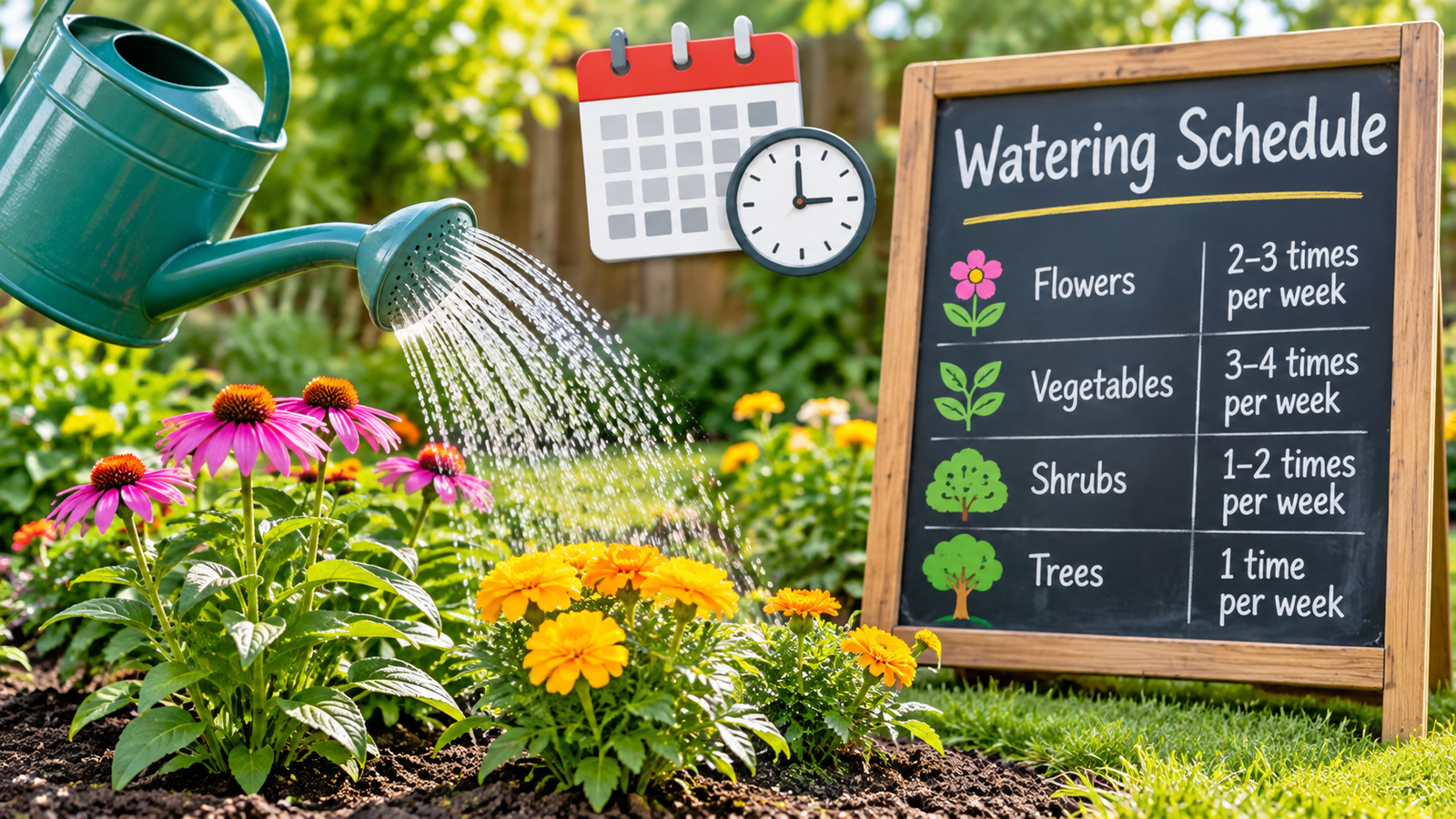
A calendar cannot tell you when a plant is thirsty. Rain, wind, shade, and soil type all change how fast the ground dries. Watering on a strict schedule means you will sometimes soak soil that is already wet and sometimes leave dry soil waiting.
Push a finger into the soil up to the second joint before you reach for the can. If it feels moist down there, wait another day, and if it feels dry, water well. Gardeners who want to build this kind of simple, observant routine can learn a lot from garden care guides and planting tips, which cover soil, planting, and plant care in plain steps. Your finger and your eyes will teach you more than any timetable.
Giving Every Plant the Same Amount
A row of thirsty tomatoes and a pot of lavender do not want the same drink. Some plants love steady moisture, while others prefer their soil to dry well between waterings. Treating the whole garden alike pleases almost none of it.
Group plants with similar needs together when you can, and learn the few that break the general rules. New plants and young seedlings need gentler and more frequent watering until their roots settle. Established plants with deep roots usually need far less help than people expect. A little patient observation in the first weeks saves a great deal of guessing later on.
Forgetting That Pots Play by Different Rules
Plants in pots live in a small world of soil that heats up and dries out far faster than open ground. A pot that felt fine on Monday can be bone dry by Wednesday in warm weather. Pots also suffer at the other extreme, because water with nowhere to go will sit at the bottom and rot the roots. Terracotta dries out faster than plastic, so the pot itself is quietly part of the watering plan.
Check pots more often than beds, and always make sure each pot has drainage holes that stay clear. Lift the pot now and then, because a light pot is a thirsty pot. In a hot spell, moving pots into light shade for the hardest hours can save them a great deal of stress. Grouping pots close together in hot weather also helps, because they shade one another and the soil dries more slowly for all of them.
A Calmer Way to Water
Good watering is mostly about attention. Look at the soil before you pour, aim at the roots, water deeply and less often, and adjust for the weather instead of the calendar. None of this takes more time than the habits it replaces. It simply spends the same water where it does the plant the most good.
Start with one bed or a few pots and practise the finger test for a couple of weeks. You will soon read your garden the way experienced growers do, by touch and by sight. When watering becomes a response to what the plants actually need, the quiet damage stops, and growth takes care of itself. Your plants will show the difference in colour, posture, and steady growth within a few short weeks.