A bid asks for Maturity Level 3. A client asks how you control quality across teams.
Delivery dates slip while each project runs its own way. Those moments raise one decision: bring in outside help now, or keep working with internal staff.
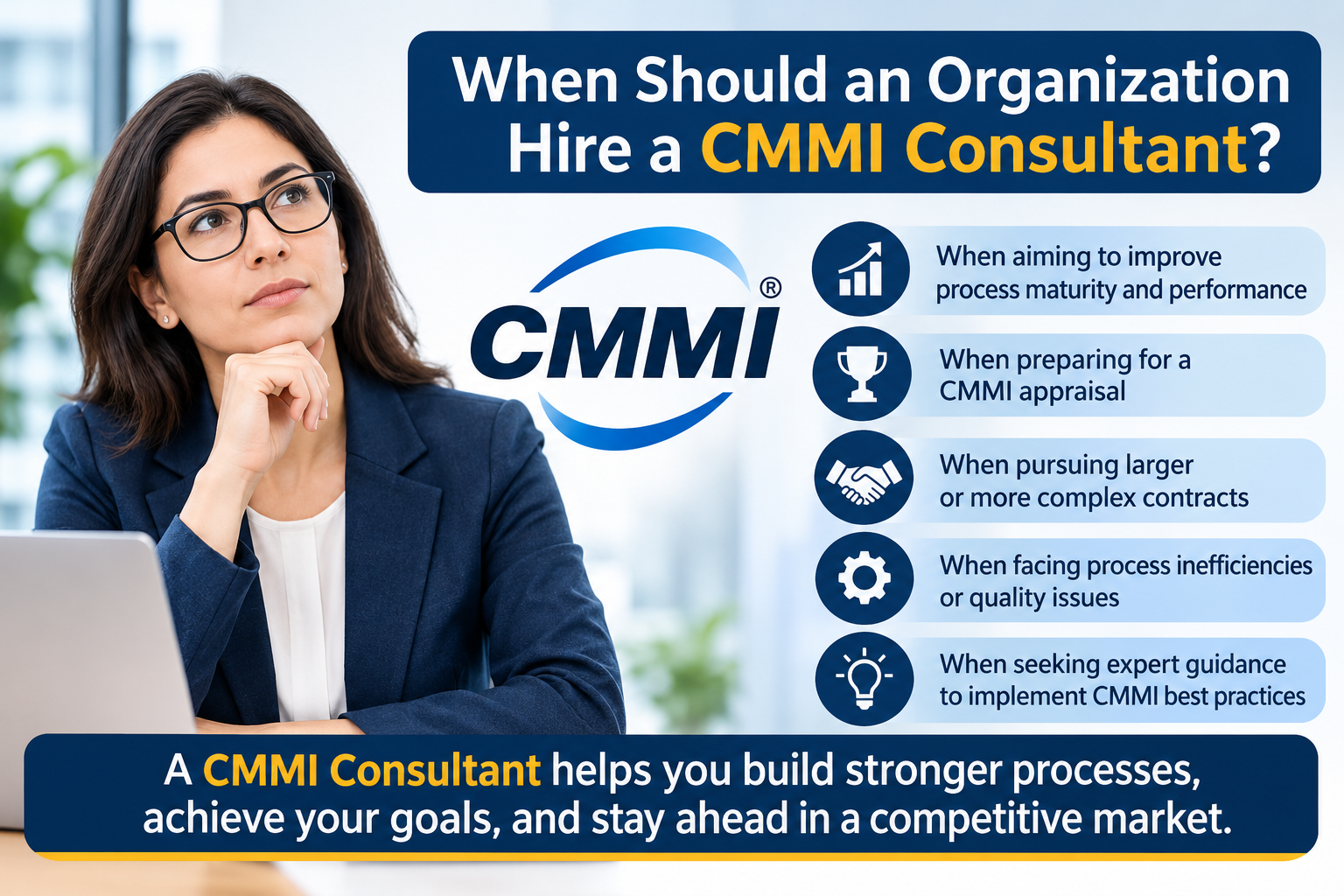
Hire a CMMI consultant when the gap between current habits and the CMMI model is too wide to close on a deadline. The consultant maps work, finds missing practices, and builds evidence.
Hire When a Contract or Client Requires a Maturity Rating
Some requests for proposals set a maturity level as a pass condition. Others ask for proof of defined processes before they shortlist a vendor.
A consultant starts with scope. Which business unit, which projects, and which CMMI view apply? CMMI-DEV fits product development. CMMI-SVC fits service delivery. CMMI-ACQ fits acquisition.
The consultant checks what evidence already exists. Project plans, review records, defect logs, and training records often cover part of the model.
Hire When Delivery Keeps Missing the Mark
Missed dates, repeat defects, and rework point to process gaps, not effort gaps. When teams rely on memory or on one senior engineer, results change when that person is out.
- Requirements change with no record of who approved the change.
- Estimates rest on optimism, not past data.
- Testing starts late, so defects surface near release.
- Lessons from one project never reach the next project.
If two or more patterns sound familiar, an outside review can help.
Hire When Growth Has Outrun Informal Processes
A team of 12 can coordinate by talking across a room. A team of 80 across three locations cannot. New hires learn by shadowing. Managers invent their own checklists. Clients get a different experience by team.
Growth changes risk. A consultant helps turn small-scale habits into written processes, roles, and checks.
Hire When an Appraisal Date Is Set and Evidence Is Thin
An appraisal tests whether practices are in place and can be shown. Appraisers ask for artifacts, interview staff, and look for consistency across projects.
A slide deck that describes a process does not pass if daily work tells a different story.
If your appraisal is three to six months away and evidence is scattered, bring in help early. A consultant can run a gap analysis and an internal assessment that mimics the appraisal.
See How Does a CMMI Appraisal Help Organizations Measure Process Maturity for how the appraisal works and what it measures.
The consultant does not rate the organization. A separate lead appraiser leads the appraisal. That separation keeps the rating independent.
What a CMMI Consultant Does Before an Appraisal
Preparation follows a repeatable sequence. The consultant maps current processes to CMMI practice areas and records where each practice is missing, partial, or present but undocumented.
- Baseline current work with interviews and artifact review.
- Define or revise processes, templates, and roles.
- Train teams on the new process and on what evidence to keep.
- Collect artifacts from live projects, not sample projects built for show.
- Run an internal assessment and close findings before the formal appraisal.
Good preparation uses live work. If teams create documents only for the appraisal, appraisers will see the gap.
When Outside Help May Not Be the Right Move
Outside help does not help if leaders will not change how work runs. If the goal is a certificate for marketing and no time is set aside for training or process work, delay the effort.
A small team with stable delivery and no client pressure may also wait. Start with a short gap analysis or a focused fix for planning or quality checks.
Decide on Timing, Then Set a Clear Scope
Hire when a deadline, a client requirement, or a delivery problem makes the cost of waiting clear. Hire when internal staff lack time to close gaps before an appraisal.
A CMMI consultant can shorten the path when scope is clear and leaders back the changes.
Ask for the timeline, evidence plan, and training plan before you sign. Agree on which projects will supply evidence and who owns each process after the consultant leaves.
Sync Resource, a licensed CMMI partner since 2009, provides this type of gap analysis, documentation, implementation, and appraisal support.
Frequently Asked Questions
How Long Does CMMI Preparation Take?
It depends on scope, starting maturity, and staff time. A narrow scope with strong records moves faster than a broad scope where processes still need definition.
Does a Consultant Guarantee a Maturity Level?
No. A consultant can prepare evidence, train teams, and close gaps. A separate lead appraiser decides the rating after reviewing artifacts and interviews.
Can an Internal Team Do This Without Outside Help?
Yes, if the team knows the model, has time, and can stay objective about its own gaps. Many teams bring in help because daily delivery leaves little time for documentation and training.
What Should We Prepare Before the First Meeting?
Bring projects in scope, current process documents, defect and schedule data, and names of process owners. That material lets a consultant build a baseline fast.
Does CMMI Apply Only to Software Companies?
No. CMMI-DEV fits development, CMMI-SVC fits service delivery, and CMMI-ACQ fits acquisition. Manufacturing, health services, and government suppliers use the model when they need repeatable processes.