You apply deodorant in the morning, get dressed and continue your day. A few hours later, your underarms begin to itch. By evening, you notice redness or an uncomfortable burning sensation.
It’s tempting to blame one ingredient immediately, particularly if you’ve recently changed products.
However, underarm irritation can develop for several reasons. The cause might be a fragrance ingredient, repeated friction, shaving or an individual reaction to the formulation.
Finding the best deodorant for sensitive skin begins with understanding what may be contributing to the symptoms.
This helps you make a more informed decision instead of repeatedly trying products without identifying possible triggers.
What Causes Redness After Using Deodorant?
Underarm redness may result from irritant contact dermatitis or allergic contact dermatitis, among other conditions.
The two can appear similar but have different underlying causes.
Irritant Contact Dermatitis
Irritation occurs when a substance or repeated exposure disrupts the skin’s protective barrier.
Sweat, friction, shaving and certain cosmetic ingredients may contribute.
Allergic Contact Dermatitis
An allergic reaction develops when the immune system responds to a particular substance.
Fragrance ingredients and some preservatives are recognised triggers.
Why the Difference Matters
Changing to another deodorant may help if it removes the responsible ingredient.
However, persistent symptoms can require professional assessment.
A dermatologist may recommend patch testing to help investigate suspected contact allergies.
Ingredient 1: Fragrance and Perfume
Fragrance is one of the first ingredients worth reviewing when deodorant repeatedly causes irritation.
Both synthetic fragrances and naturally derived aromatic ingredients can trigger reactions in susceptible people.
Does Fragrance-Free Mean Better?
A fragrance-free formula may be useful for someone who reacts to scented products.
However, removing fragrance does not guarantee that every other ingredient will be tolerated.
Look for the ingredients list and check whether the formula includes added perfume or potentially relevant fragrance allergens.
If you have a known allergy, compare products against the substances identified by your clinician.
Ingredient 2: Sodium Bicarbonate
Sodium bicarbonate, sometimes called bicarbonate of soda, appears in several natural deodorant formulations.
It can help manage odour, but its alkaline nature may be uncomfortable for some skin types.
When Should You Consider a Bicarbonate-Free Formula?
If you consistently develop irritation with bicarbonate-containing deodorants, comparing alternatives without this ingredient may be worthwhile.
For shoppers researching the best aluminum free deodorant, this is an important reminder that aluminium-free and bicarbonate-free are not equivalent.
A product can exclude aluminium while still containing sodium bicarbonate.
Ingredient 3: Alcohol-Based Formulations
Certain personal care products contain alcohol-based ingredients for formulation or application purposes.
Some users may experience stinging when these products contact recently shaved or irritated skin.
Consider the Condition of Your Skin
Alcohol is not automatically harmful, and different alcohol ingredients have different properties.
However, people with reactive underarms may prefer comparing formulations without high levels of drying alcohol.
A natural deodorant for sensitive skin should be evaluated as a complete product rather than assessed using one ingredient alone.
Ingredient 4: Essential Oils and Botanical Extracts
Natural ingredients are often associated with gentle personal care.
Nevertheless, some botanical substances contain components capable of causing allergic reactions.
Why Natural Doesn’t Always Mean Non-Irritating
Essential oils may contain fragrance allergens.
Certain plant extracts can also be unsuitable for individual users.
When selecting a natural deodorant for sensitive skin, avoid assuming that plant-derived ingredients are universally tolerated.
The most useful question is whether the formulation contains anything your skin has previously reacted to.
Could the Problem Be Your Application Routine?
Ingredients are not the only possible explanation.
Applying deodorant too frequently or rubbing the skin vigorously can contribute to discomfort.
Everyday Habits Worth Reviewing
Consider whether you:
- Apply deodorant immediately after shaving.
- Use it on already irritated skin.
- Apply more product than recommended.
- Wear clothing that repeatedly rubs the underarms.
- Use fragranced body washes alongside deodorant.
- Leave sweat and product residue on the skin for extended periods.
A few changes to application habits may improve comfort.
However, recurring irritation should not be managed by repeatedly applying a product that appears to cause symptoms.
What Should You Do If Your Underarms Are Already Irritated?
The priority is allowing the skin to recover.
Stop using the suspected product and avoid introducing several new cosmetics at once.
Keep Skin Care Simple
Gently wash the area using a suitable mild cleanser and avoid harsh scrubbing.
Allow the skin to dry without excessive rubbing.
When Should You Seek Medical Advice?
Seek professional advice if symptoms are persistent, recurrent, severe or accompanied by broken skin, discharge or significant swelling.
A pharmacist, GP or dermatologist can help assess possible causes.
The best deodorant for sensitive skin cannot be identified reliably if an underlying skin condition is contributing to the problem.
How Can You Compare Replacement Products?
Once the skin has settled, focus on formulations that exclude ingredients associated with previous reactions.
Use a Practical Selection Checklist
Review fragrance, bicarbonate, other relevant ingredients, application format and product directions.
Introduce one new product at a time so that any reaction is easier to identify.
The best aluminum free deodorant for one person may be unsuitable for another.
Personal tolerance matters more than online rankings.
Why Choose Oltra Guard?
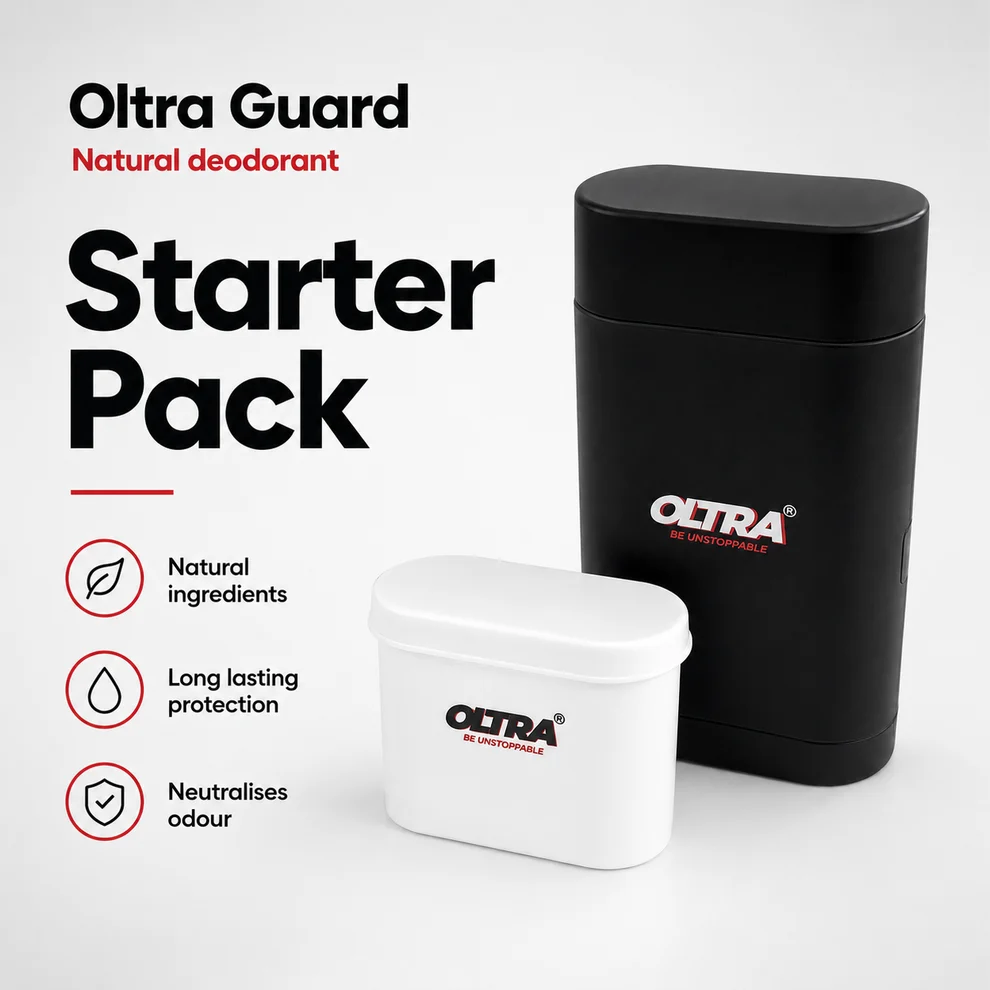
Oltra Guard offers aluminium-free deodorant with formulation choices that include bicarbonate-free and fragrance-free options.
These alternatives may appeal to shoppers who prefer to avoid certain ingredients commonly found in deodorants.
Its refillable applicator provides another feature to consider when comparing everyday personal care products.
The range offers options for customers exploring a natural deodorant for sensitive skin, without implying that any formula is guaranteed to prevent irritation.
About Us – Oltra
Oltra offers UK shoppers an aluminium-free deodorant range centred on refillable packaging and formulation choice.
Its Oltra Guard products include different options for fragrance and bicarbonate preferences.
Customers seeking the best deodorant for sensitive skin can review the available ingredient lists and choose products based on their own requirements.
Find the Cause Before Changing Everything
Itching or redness after deodorant use is a reason to review both ingredients and application habits.
Fragrance, bicarbonate, certain other ingredients and friction may all contribute to discomfort.
Avoid assuming that switching to natural or aluminium-free products automatically resolves the issue.